
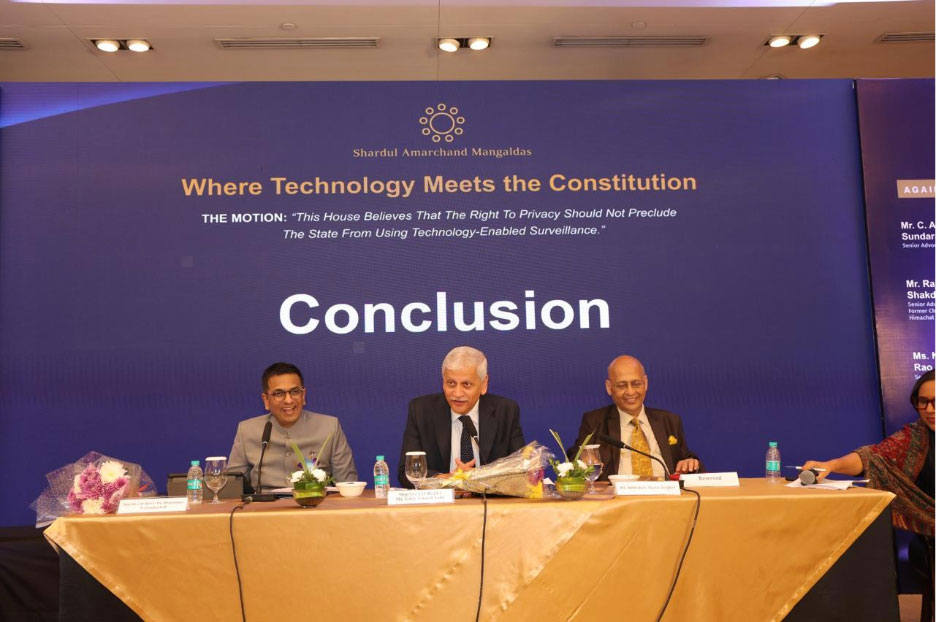
Shardul Amarchand Mangaldas: Hosts Debate on Privacy, State Surveillance
Shardul Amarchand Mangaldas & Co. recently hosted a high-level debate on the critical legal issues surrounding the right to privacy and the permissible limits of State surveillance, featuring adjudication by two former Chief Justices of India and an eminent jurist and parliamentarian, with six distinguished Senior Advocates presenting opposing viewpoints.
This event signifies the profound and ongoing importance of the right to privacy in India's legal landscape, particularly in an era of rapid technological advancement and increasing governmental data collection. For legal practitioners, especially those in constitutional law, technology law, and corporate advisory, such discussions are invaluable as they illuminate the evolving jurisprudential thought, potential policy shifts, and future legislative or judicial developments concerning fundamental rights and state powers. The participation of such eminent legal personalities underscores the weight and complexity of balancing individual liberties against national security and public interest.
The legal context of this debate is firmly rooted in Article 21 of the Indian Constitution, which guarantees the right to life and personal liberty, and its interpretation by the Supreme Court, most notably in the landmark *K.S. Puttaswamy v. Union of India* case, which affirmed privacy as a fundamental right. The discussion also implicitly engages with various statutes and proposed legislation related to data protection, surveillance, and national security, such as the Digital Personal Data Protection Act, 2023, and laws governing the interception of communications. The key parties involved were Shardul Amarchand Mangaldas & Co. as the host, two former Chief Justices of India and an eminent jurist and parliamentarian as adjudicators, and six distinguished Senior Advocates as debaters.
Practitioners should closely follow the discourse emanating from such high-profile legal forums, as the insights shared by leading legal minds often foreshadow future trends in judicial interpretation, regulatory enforcement, and legislative amendments. Understanding the nuanced arguments surrounding the right to privacy and the limits of state surveillance is crucial for advising clients on data handling practices, ensuring compliance with data protection laws, and navigating potential legal challenges related to governmental access to information. This ongoing dialogue is essential for shaping a robust and rights-protective legal framework in India.
How does this affect you?
Get an AI analysis of this article grounded in your jurisdictions, practice areas, and any policy documents you've uploaded to Wansom.
Finish Reading the Full Story and the Expert Analysis.
Get the latest legal & regulatory intelligence in India
Wansom is AI and can make mistakes.