
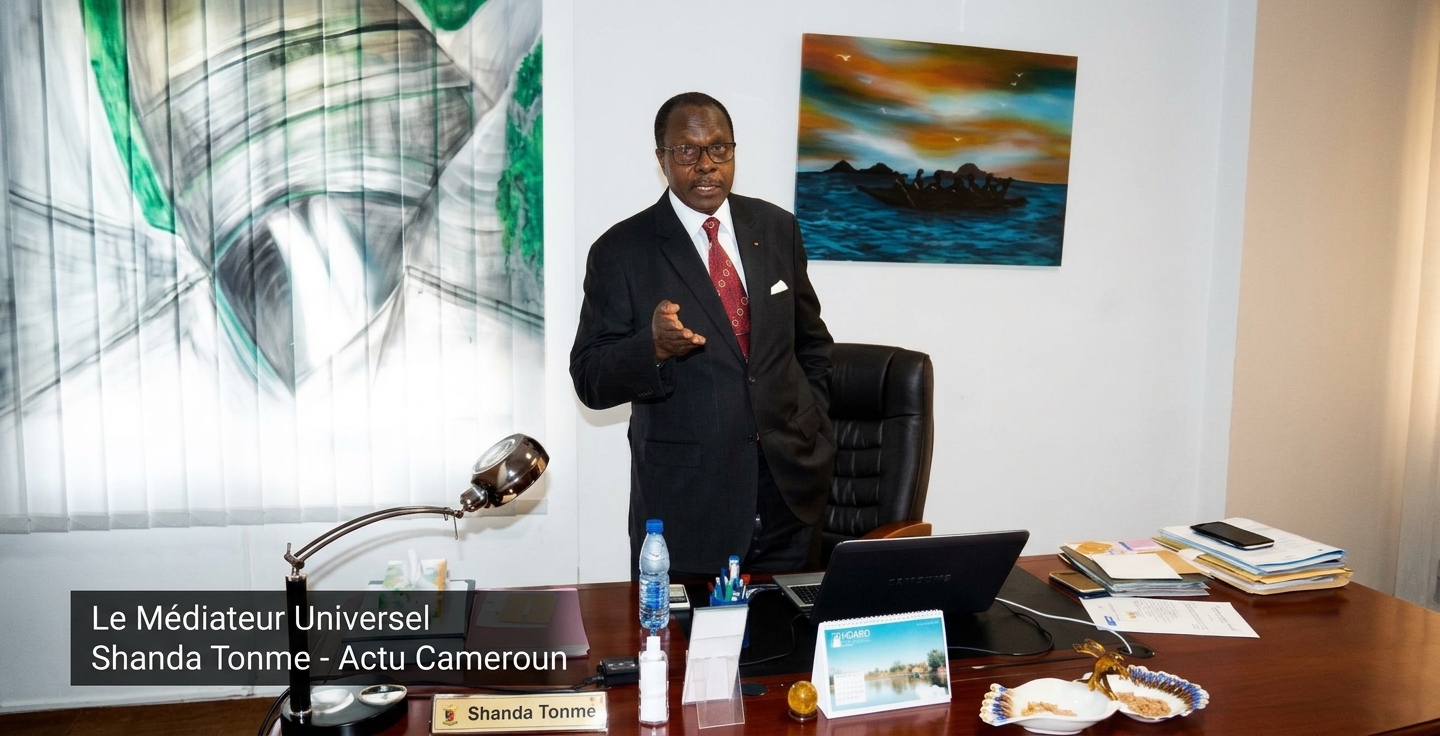
Shanda Tonme: Condemns Inflammatory Public Debates in Cameroon
Summary
- Cameroon's Universal Mediator, Shanda Tonme, has strongly condemned the alarmist and verbally escalating nature of public debates, particularly on television.
- He called for a return to moral responsibility among elites, criticizing the normalization of hate speech and chaos discourse.
- Tonme, who also leads COMICODI and MPDR, specifically denounced inflammatory phrases like "Le Cameroun à feu et à sang."
- He argued that misusing freedom of speech to undermine moral safeguards and public trust is an ignoble temptation.
- The Mediator urged elites to contribute to scientific and technological advancement rather than engaging in fear-mongering rhetoric.
A Call for Responsible Discourse
He characterized the temptation to exploit verbal liberty to dismantle moral and ethical safeguards, thereby eroding public confidence in the protection of individuals and property, as profoundly ignoble.
Shanda Tonme, serving as the Universal Mediator, has issued a strong condemnation regarding the current state of public discourse in Cameroon. He specifically highlighted an alarming trend of verbal escalation and sensationalist rhetoric dominating public debates, particularly on television platforms. As the President of the Independent Commission Against Corruption and Discrimination (COMICODI) and the Popular Movement for Dialogue and Reconciliation (MPDR), Tonme urged a return to ethical conduct and moral responsibility among the nation's elites. He expressed deep concern over the normalization of hate speech and narratives of chaos, advocating instead for public figures to prioritize appeasement and uphold ethical standards in their communications.
The Universal Mediator directly criticized the use of inflammatory language, citing the phrase "Le Cameroun à feu et à sang" (Cameroon in fire and blood) as an example of irresponsible rhetoric. He asserted that individuals in positions of influence should refrain from such pronouncements, especially given the country's complex societal challenges. Tonme's intervention underscores a growing official concern about the impact of divisive language on national cohesion and public trust, signaling a push for more constructive and less confrontational exchanges in the public sphere, particularly within the context of Shanda Tonme débats publics Cameroun.
The Erosion of Ethical Debate
Shanda Tonme elaborated on the profound dangers posed by the misuse of freedom of speech within a society grappling with significant issues. He characterized the temptation to exploit verbal liberty to dismantle moral and ethical safeguards, thereby eroding public confidence in the protection of individuals and property, as profoundly ignoble. Tonme described those who engage in such practices as "poor owls" clumsily delivering sinister and morbid predictions, questioning whether public debate on television has devolved into a mere spectacle where all boundaries are crossed under the guise of free opinion, leading to a loss of core values.
While acknowledging that incisive discourse is not inherently problematic, the Universal Mediator drew a clear line when promises and assertions transform into tools for incitement. He observed a disturbing trend where public figures appear to compete in radical, ostentatious denunciation, employing provocative ridicule and excessive judgments on political futures as a means to gain popularity. This competitive environment, he suggested, resembles a contest among individuals intoxicated by adulterated alcohol, where supporting certain statements, presenting supposed "truths," and trivializing dangers have become the primary methods for public recognition among those participating in the public debate, contributing to the Médiateur Universel Cameroun discours haine.
Reimagining the Role of Elites
The Universal Mediator further criticized the "academics" of public debate for their consistent use of grandiloquent language and repetitive tactics that ultimately fail to provide any substantive information. He lamented that instead of fostering emancipation, knowledge, and enlightenment, these discussions lead to an objective depersonalization of the participants, who appear overly confident in their self-satisfaction with the worst outcomes. Shanda Tonme emphasized that in an era defined by technological advancements that redefine intelligibility and success, the expectation from national elites should not be the display of outdated, dusty knowledge.
Instead, he argued, elites should contribute to the advancement of science, new technologies, and the creation of innovative learning tools, developing instruments that address and challenge social calculations. Tonme questioned the value of alarmist terms such as "death," "flames," "fires," and "blood," asking what positive contribution they make to the daily lives and immediate needs of citizens. He challenged the notion that the analysis of intellectuals, citizens, or ordinary parents should be confined solely to themes, epithets, and concepts that instill fear, disrupt, and mortgage consciences, suggesting that for some, education itself, and even travel, can become detrimental to their moral and mental equilibrium, highlighting the importance of élites camerounaises responsabilité morale and ethical discourse.
Practical Implications
While not a direct legal change, the Universal Mediator's strong condemnation of alarmist public discourse and hate speech signals a heightened official sensitivity to rhetoric in Cameroon. Lawyers should advise clients on public communications and media appearances to ensure adherence to ethical standards and avoid language that could be perceived as inflammatory or divisive, mitigating potential reputational and regulatory risks in this climate.
Source
How does this affect you?
Get an AI analysis of this article grounded in your jurisdictions, practice areas, and any policy documents you've uploaded to Wansom.
Finish Reading the Full Story and the Expert Analysis.
Get the latest legal & regulatory intelligence in Cameroon
Wansom is AI and can make mistakes.