
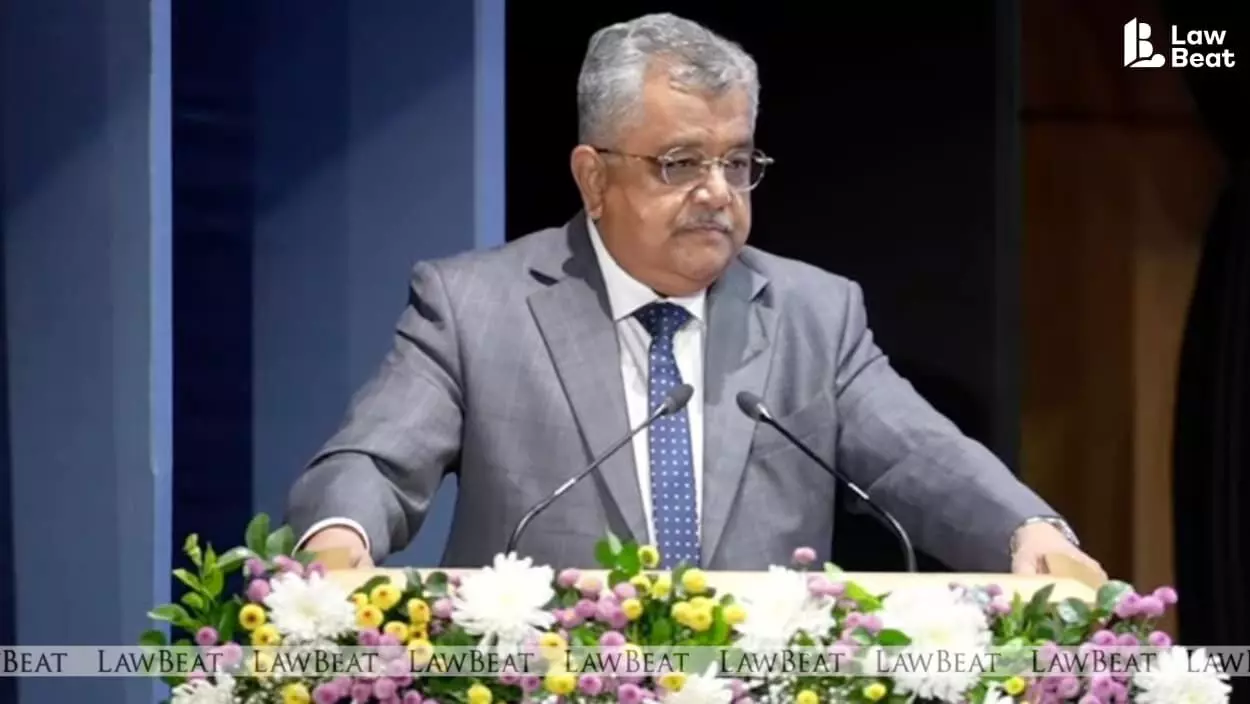
SG Tushar Mehta: Lawyers' 'Pseudo Intellectual' Writing Alienates Common Man
Summary
- Solicitor General Tushar Mehta criticized the legal profession for writing on subjects that interest only other lawyers.
- Mehta described lawyers as "pseudo intellectual" for their choice of insular topics.
- He praised "Freedom on Trial" by Akash Vajpai for making India's freedom struggle accessible to the common man.
- Mehta highlighted historical figures like Sardar Vallabhbhai Patel and Bhulabhai Desai as examples of defiance.
- The Solicitor General encouraged legal professionals to adopt more accessible writing styles to engage a broader public.
A Call for Accessible Legal Writing
Mehta's critique of lawyers as "pseudo intellectual" when their writing fails to connect with the public serves as a powerful call to action.
Solicitor General Tushar Mehta recently challenged the Indian legal profession to broaden its communication, asserting that lawyers often engage in writing that holds little interest for those outside their specialized field. Speaking at the "Freedom on Trial" book launch, Mehta highlighted what he termed a "curse" within the profession: a tendency to produce content primarily for internal consumption. He emphasized the need for legal professionals to shift their focus towards engaging the "common man" with their narratives.
Mehta's remarks came during the unveiling of "Freedom on Trial: Twelve Cases That Shaped India’s Struggle for Freedom," a new book by Akash Vajpai. The Solicitor General commended Vajpai's work for its ability to recount India's struggle for independence in an enjoyable manner for a general audience. This event served as a platform for Mehta to advocate for a new approach to Indian legal profession writing, one that prioritizes public accessibility and broader appeal over insular academic discourse.
Challenging the "Pseudo Intellectual" Label
During his address, Solicitor General Tushar Mehta did not shy away from labeling lawyers as "pseudo intellectual" when it comes to their chosen writing subjects. He argued that much of the output from legal minds fails to captivate anyone beyond their immediate peers. However, Mehta also acknowledged a positive trend, praising a new generation of young lawyers who are now tackling topics that resonate with a wider public.
As an example of this more engaging approach, Mehta cited "The Case for Ram" by Sridhar Potaraju, alongside Vajpai's "Freedom on Trial," as works by legal professionals that successfully address subjects of significant public interest. He specifically lauded Vajpai for crafting his book in a style reminiscent of a novel, ensuring that it remains historically accurate while being accessible and enjoyable for any reader, whether they are a lawyer or not. This perspective underscores a critical assessment of how lawyers communicate complex legal and historical narratives.
Narratives of Defiance and National Identity
Mehta elaborated on the significance of "Freedom on Trial," stating it should be viewed as more than just a collection of twelve trial descriptions. He characterized the book as a powerful narrative of defiance and rebellion, illustrating how various figures like Lokmanya Tilak, Mahatma Gandhi, and Khudiram Bose each expressed their dissent in unique ways. The Solicitor General noted that in an era often marked by "rebels without a cause," this book provides stories of individuals driven by a "very good cause."
The book, according to Mehta, illuminates the profound sacrifices made by the nation to secure the Constitution it possesses today. He identified a unifying theme among these historical figures: despite having opportunities to appease the British authorities, they chose defiance, driven by a sense of duty to protect their homeland. Mehta reinforced this point with several historical anecdotes, including Sardar Vallabhbhai Patel's sarcastic remarks about British "sense of justice" while imprisoned in Sabarmati Central Jail, and his refusal to be grateful for a razor, asserting Indians' self-sufficiency.
Further illustrating courtroom defiance, Mehta recounted Rashbehari Ghosh's sharp retort to a British judge who commented on his large stack of books, with Ghosh replying, "I thought I might try and teach some British law to you." He also referenced Bhulabhai Desai's courageous defense during the Indian National Army trials, where Desai challenged the notion of fighting one's own government by citing the British Parliament's own history of removing a monarch. Mehta highlighted Desai's bold question: "If your Parliament can throw out the king when you have a monarchy, why can a citizen not fight against an empire which is imposed upon my country?" This, Mehta noted, was a remark requiring immense courage from a lawyer. Finally, he recalled Khudiram Bose's reported offer to explain bomb-making to Judge Kingsford during his trial, showcasing the young revolutionary's unwavering spirit.
The Broader Impact on Legal Discourse
Solicitor General Tushar Mehta's observations extend beyond a simple book review, offering a profound commentary on the state of Indian legal profession writing. He underscored the inherent difficulty in presenting historical material that has been extensively documented and reinterpreted over a century, making Vajpai's achievement in creating an engaging yet factual account particularly noteworthy. The core message from the "Freedom on Trial" book launch is a clear encouragement for legal professionals to critically assess their communication style.
Mehta's critique of lawyers as "pseudo intellectual" when their writing fails to connect with the public serves as a powerful call to action. It advocates for a paradigm shift towards writing that is not only accessible and engaging but also relevant to a broader public, moving beyond the confines of specialized legal circles. This implies a pressing need for lawyers to develop more effective public communication strategies, thereby enhancing the understanding and relevance of legal discourse outside the profession and fostering a more informed citizenry.
Practical Implications
This commentary from the Solicitor General encourages legal professionals to critically assess their communication style, advocating for writing that is accessible and engaging to a broader public, not just other lawyers. This implies a need for lawyers to develop more effective public communication strategies to enhance understanding and relevance of legal discourse outside the profession.
Source
Source: Original reporting via Live Law
How does this affect you?
Get an AI analysis of this article grounded in your jurisdictions, practice areas, and any policy documents you've uploaded to Wansom.
Finish Reading the Full Story and the Expert Analysis.
Get the latest legal & regulatory intelligence in India
Wansom is AI and can make mistakes.