
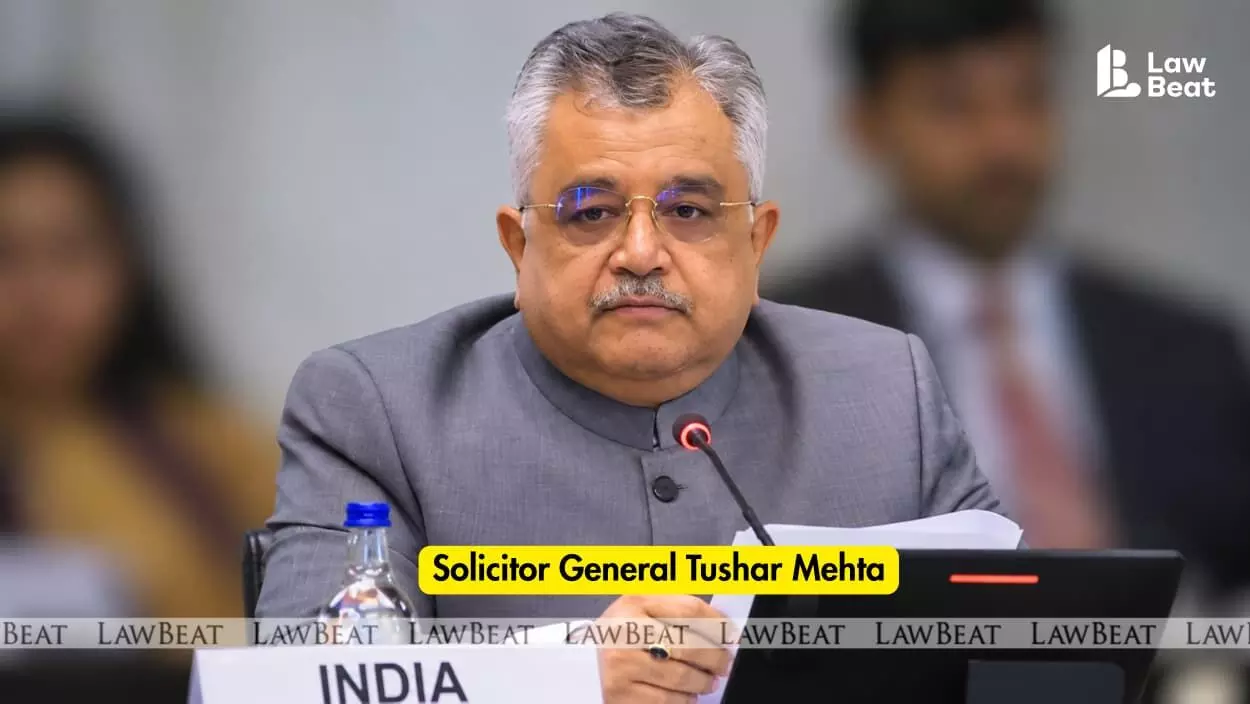
Tushar Mehta: Judicial Independence Not Executive Conflict
Summary
- Solicitor General Tushar Mehta stated that judicial independence does not imply constant conflict with the executive or legislature.
- He argued that courts should not assume the executive's role in policy formulation, emphasizing the executive's mandate from elected citizens.
- Mehta called for a re-examination and potential tweaking of the Indian Contract Act to suit modern India's developed nation aspirations.
- He suggested that the judiciary can contribute to contract law reform through interpretation, citing Lord Denning's approach to unequal contracting parties.
- The Solicitor General criticized certain judicial interventions as 'NGO activism' when not based on fundamental rights violations, asserting that policy innovation belongs to the executive and legislature.
Redefining Judicial Independence
Solicitor General Tushar Mehta recently articulated a nuanced perspective on judicial independence, asserting that India's judiciary is indeed absolutely independent, yet clarifying that this independence should not be misconstrued as an inherent conflict with the executive or legislative branches.
Solicitor General Tushar Mehta recently articulated a nuanced perspective on judicial independence, asserting that India's judiciary is indeed absolutely independent, yet clarifying that this independence should not be misconstrued as an inherent conflict with the executive or legislative branches. Speaking at an event titled "Shaping the Legal Architecture of Viksit Bharat: The Supreme Court and India @ 2047," Mehta emphasized that an independent judge is not one who is perpetually at odds with the executive. He underscored that courts should refrain from assuming the policy-making responsibilities that are constitutionally vested in the executive.
Mehta's remarks, which he presented as his personal views rather than an official government stance, aimed to delineate the appropriate boundaries of judicial intervention. He contended that some interpretations of judicial independence erroneously equate it with constant friction between the judiciary and other arms of government. The Solicitor General highlighted that the executive, unlike a political party, represents all citizens and is accountable to them, having been elected to formulate crucial economic, financial, and technological policies. This perspective is central to understanding the executive's view on the judiciary's role in governance.
The Imperative for Contract Law Reform
During the same forum, Solicitor General Tushar Mehta addressed the necessity for significant contract law reform in India, particularly concerning the Indian Contract Act. He noted that India's national ambition has evolved from merely being a developing country to aspiring for developed nation status. To support this shift, Mehta pointed to India's remarkable digital payments footprint, which he stated is double that of China and two and a half times that of the United States, alongside the addition of a new internet or mobile subscriber every second.
Given the complexities of modern-day disputes and the nation's accelerated growth, Mehta conceded that the existing Contract Act "may need a little tweaking" and requires a thorough "re-examination and reloading." He drew a parallel to the recent overhaul of criminal laws, explaining that while critics questioned the renumbering of sections, the government's rationale was to move beyond the British colonial perspective embedded in the original Indian Penal Code, where sedition was prioritized over offenses like rape. Mehta further suggested that reform does not always necessitate new legislation, citing Lord Denning's 1950s recognition of contracts between unequal parties, such as an insurance company and an insured individual. He posited that the judiciary itself can play a pivotal role in interpreting existing laws to align with contemporary contract-making practices, allowing terms to be challenged even where consent is presumed.
Judicial Limits and Policy-Making
A significant portion of Solicitor General Tushar Mehta's address focused on the boundaries of judicial intervention in policy matters, asserting that while the judiciary must intervene when fundamental rights are violated, it cannot "substitute being an executive." He critically referred to certain judicial actions as "NGO activism," a term for which he acknowledged receiving criticism, stating that such intervention is not permissible within the judiciary unless a clear violation of fundamental rights is demonstrated. Mehta attributed this tendency to a "bona fide temptation" among judges who genuinely believe a different policy might be superior for the nation.
However, he questioned the legitimacy of judges imposing such policies on "140 crore Indians who have not voted them to do that," describing this stance as "party neutral." Mehta also cited specific instances, claiming that some environmental law judgments over the past decade had set India back by "at least one and a half to two decades." He concluded by emphasizing that innovation is the domain of the executive and the legislature, not the judiciary, reinforcing the idea that the judiciary's role is to interpret and uphold the law, not to innovate or dictate policy.
Practical Implications
Solicitor General Tushar Mehta's remarks indicate the executive's stance on the judiciary's role in policy-making and its interpretation of judicial independence, which may influence how courts approach challenges to executive actions or policy. Lawyers should be mindful of this perspective when advising clients on litigation involving government policy or judicial review. Furthermore, his comments on the Indian Contract Act suggest potential future legislative reforms or evolving judicial interpretations, necessitating vigilance for practitioners in contract law.
Source
How does this affect you?
Get an AI analysis of this article grounded in your jurisdictions, practice areas, and any policy documents you've uploaded to Wansom.
Wansom is AI and can make mistakes.