
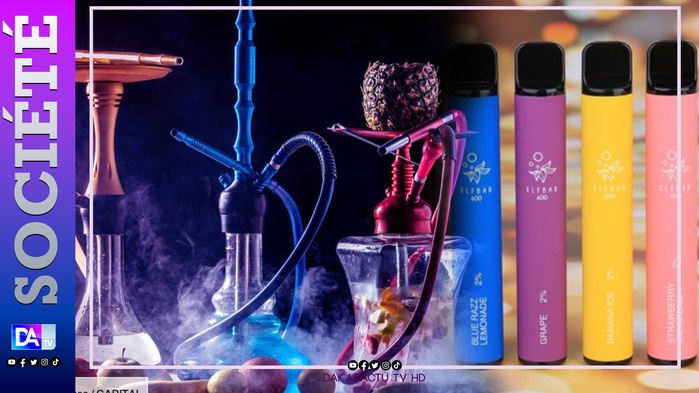
Sénégal: Vide Juridique Interdiction Chicha Empêche Application
Summary
- Senegal's 2020 inter-ministerial decree prohibiting shisha imports, sales, and use lacks specified penal sanctions, rendering the ban unenforceable.
- Despite the prohibition, shisha remains widely available in Senegalese bars and restaurants, as demonstrated by a 2023 seizure operation that saw all confiscated items returned.
- The unenforceability stems from the legal principle that a ministerial act cannot create a criminal offense, and existing law (2014-14) is contested regarding its explicit coverage of shisha.
- Unlike Senegal, Mali has implemented a comprehensive shisha ban with severe penalties, including imprisonment and substantial fines for related offenses.
- The legal void contributes to public health concerns and a perceived discrepancy between official tobacco consumption statistics and the observed reality of shisha use in Senegal.
Persistent Availability Amidst Prohibition
The absence of specified penal sanctions within the decree has rendered the prohibition largely ineffective, creating a significant legal void regarding the interdiction of shisha in Senegal.
Despite an inter-ministerial decree issued in September 2020 that formally prohibited the importation, distribution, sale, and use of shisha, the product remains widely available in Senegalese bars and restaurants. The decree, signed by then-Minister of Health Abdoulaye Diouf Sarr and then-Minister of Commerce Assome Aminata Diatta, mandated a six-month grace period for importers to clear their existing stocks, a deadline that expired in March 2021. While police, gendarmerie, and customs were designated as the enforcing bodies, the absence of specified penal sanctions within the decree has rendered the prohibition largely ineffective, creating a significant legal void regarding the interdiction of shisha in Senegal.
This enforceability gap was starkly illustrated in 2023 when the regional commerce service in Dakar conducted an operation, seizing thousands of shisha devices from eighteen restaurants. However, according to Djibril Wellé of the Senegalese League Against Tobacco, all seized equipment was returned the very next day, reportedly due to "enormous pressure." The stated justification for this reversal was that Law No. 2014-14 of March 28, 2014, does not explicitly mention shisha, an interpretation that public health advocates strongly contest.
The Legal Context and Enforcement Challenges
The core issue undermining the shisha ban in Senegal is the fundamental principle that a ministerial act cannot, on its own, establish a criminal offense or prescribe penal sanctions. Consequently, while the 2020 decree prohibits the practice, it fails to specify any applicable penalties, leaving law enforcement agencies without the necessary legal framework to impose sanctions for non-compliance. This `vide juridique interdiction chicha Sénégal` means that despite the clear intent of the `arrêté ministériel chicha`, its practical `application loi chicha Sénégal` is severely hampered.
The argument that Law No. 2014-14 does not explicitly name shisha is challenged by a broader reading of the legislation. Since July 2016, this law has prohibited smoking in public establishments such as restaurants, bars, hotels, and discotheques, without differentiating between the substances being smoked. Therefore, a lit water pipe used in a restaurant setting should, by this interpretation, fall under the existing smoking ban, irrespective of whether the term "shisha" is explicitly stated. However, without a direct link to penal provisions, the `réglementation chicha bars Sénégal` remains a compliance grey area.
Regional Disparity and Public Health Implications
The situation in Senegal contrasts sharply with neighboring Mali, which adopted a more stringent inter-ministerial decree on July 7, 2026. Mali's comprehensive ban extends to the importation, production, sale, possession, advertising, promotion, and consumption of shisha. Crucially, it includes severe penalties, with production and importation potentially leading to three years of imprisonment and fines of fifteen million francs. Just two weeks after this decision, Mali's Keeper of the Seals, Mamoudou Kassogué, called for "exemplary repression," highlighting a proactive approach to enforcement that is currently absent in Senegal.
This legal vacuum in Senegal not only allows shisha to remain accessible but also contributes to a significant disconnect between national tobacco consumption statistics and the reality observed by public health stakeholders. The GATS 2025 survey, for instance, indicates a more than 25% decrease in adult tobacco consumption compared to 2015, with an estimated smoking prevalence of 4.4% in 2023. However, civil society actors deem these figures unrealistic, citing the persistent availability of shisha in establishments and the non-application of existing regulations. Furthermore, Senegal lacks a dedicated survey on shisha use, meaning the GATS figures do not isolate this specific practice, obscuring its true prevalence and impact.
The documented health risks associated with shisha are substantial. The water in a hookah cools the smoke, which facilitates deeper and longer inhalation. A typical shisha session, lasting between forty and sixty minutes and involving fifty to two hundred puffs, exposes users to significantly higher levels of harmful substances compared to a conventional cigarette (which involves eight to twelve puffs over five to seven minutes). For a forty-five-minute session, the equivalences are approximately 1.5 cigarettes for nicotine, twenty for carbon monoxide, twenty-six for tar, and forty for the volume of smoke inhaled. El Hadj Oumar Diène, President of the National Association of Imams and Ulemas of Senegal, refers to the volume of smoke as equivalent to forty cigarettes. The charcoal used also releases additional carbon monoxide, and shared mouthpieces pose risks for transmitting infectious diseases like tuberculosis, oral herpes, and certain forms of hepatitis, according to health authorities. Workers in shisha cafes are also exposed to these harmful substances.
Practical Implications
Lawyers advising hospitality businesses or importers/distributors in Senegal should note that while an inter-ministerial decree prohibits shisha, the absence of specified penal sanctions means the prohibition is currently unenforceable. Clients face a compliance grey area, and counsel should monitor for future legislative amendments that could introduce punitive measures and alter the risk landscape.
Source
How does this affect you?
Get an AI analysis of this article grounded in your jurisdictions, practice areas, and any policy documents you've uploaded to Wansom.
Wansom is AI and can make mistakes.