
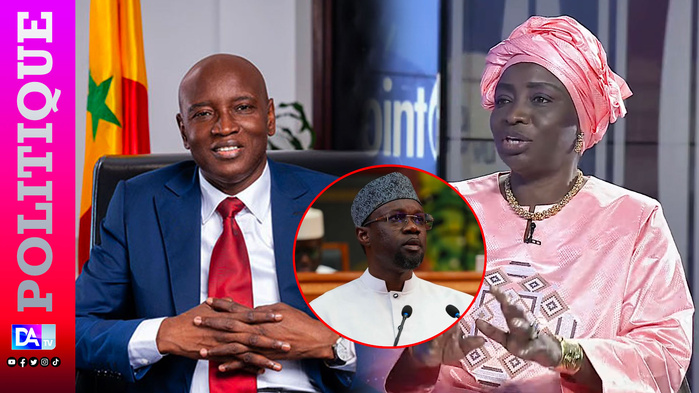
Senegal's Ousmane Sonko Accused of Misusing 1.7 Billion CFA Francs in Special Credits
Summary
- Aminata Touré confirmed Ousmane Sonko received 1.7 billion CFA francs in special credits as Prime Minister.
- Sonko initially denied receiving 'political funds' but later acknowledged the sum.
- Touré expressed concern about the use of these funds and asked for details on their allocation.
- The controversy highlights concerns about transparency and control over political funds.
- Proposed reforms aim to introduce a more robust control regime for social intervention credits and emergency aid funds.
What Happened
She also clarified that she did not benefit from similar credits during her time in office.
Aminata Touré, the former Prime Minister of Senegal, has confirmed that Ousmane Sonko, who is currently the President of the National Assembly, received 1.7 billion CFA francs in special credits during his tenure as Prime Minister. This revelation comes after Aly Ngouille Ndiaye claimed that Sonko was the first Prime Minister to receive such funds. Touré stated that she had 'absolutely no reason' to doubt Ngouille's assertion, and emphasized that this situation is 'unique'. She also clarified that she did not benefit from similar credits during her time in office.
Touré expressed concern about the 1.7 billion CFA francs mentioned by Sonko, asking him to provide details on how the funds were used. She distinguished these special credits from the resources available to her at the Prime Ministry, which were allocated for managing the crisis in Casamance and were accounted for in a separate budget.
The controversy has sparked debate about transparency and control over the use of political funds, potentially leading to a review of rules governing their utilization.
Legal Context
A juridical dispute accompanies this controversy. Maguette Diop, a lawyer, believes that the concept of 'political funds' lacks clear legal basis. These envelopes are voted without specific allocation in budget documents, leaving room for interpretation.
The situation highlights the need for clearer regulations and oversight mechanisms to ensure transparency in the use of these resources. The proposed reforms aim to establish a more robust control regime for all types of social intervention credits and emergency aid funds allocated by institutions such as the Presidency, National Assembly, Prime Ministry, ministries, and agencies.
Why It Matters
The controversy surrounding Ousmane Sonko's use of 1.7 billion CFA francs in special credits raises questions about accountability and transparency in government spending. Following the 2024 presidential election, this issue has sparked calls for greater scrutiny of how public funds are allocated and utilized.
Critics argue that the lack of clear regulations and oversight mechanisms allows for potential abuse of power and misallocation of resources. The proposed reforms aim to address these concerns by introducing a more robust control regime, ensuring that all types of social intervention credits and emergency aid funds are subject to transparent and accountable management.
Practical Implications
Cette controverse soulève des questions sur la transparence et le contrôle de l'utilisation des fonds politiques, ce qui pourrait conduire à une revue des règles d'utilisation et du régime de contrôle applicable à ces ressources.
Source
Source: Original reporting via dakaractu
How does this affect you?
Get an AI analysis of this article grounded in your jurisdictions, practice areas, and any policy documents you've uploaded to Wansom.
Wansom is AI and can make mistakes.