
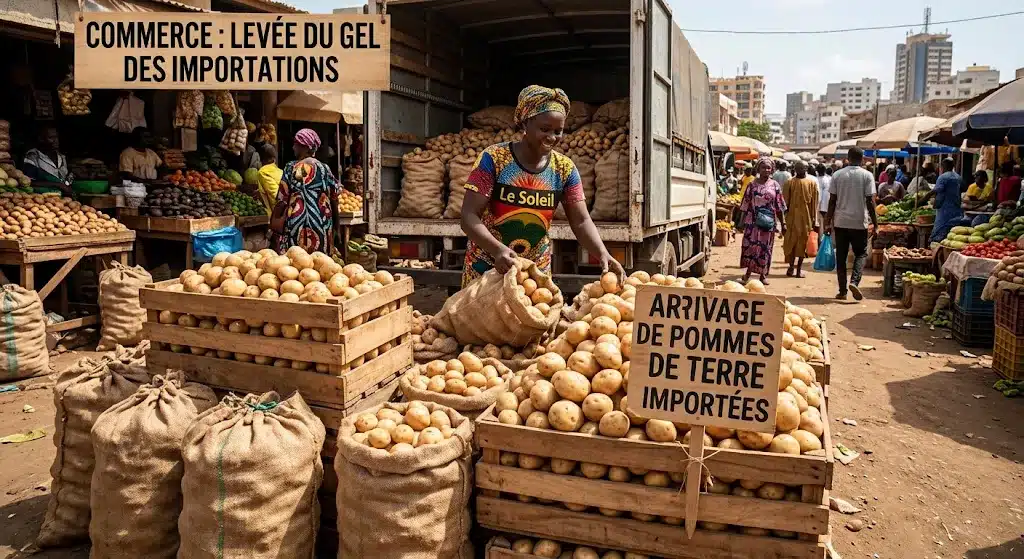
Sénégal: Réouverture Importation Pommes de Terre avec Quota
Summary
- Senegal's Ministry of Industry and Commerce has reopened potato imports, effective November 4, 2026.
- The decision follows ten months of local production meeting national demand, but current local supply is now insufficient.
- Import authorizations will be granted under specific quotas and are valid until an "imperative" deadline of December 20, 2026.
- A wholesaler stock survey was conducted on October 29, 2026, prior to the import resumption.
- The previous import suspension began on January 16, when the national harvest commercialization period started.
What Happened
The imposition of a precise and "imperative" deadline for these import authorizations strongly suggests that this is a carefully calibrated, short-term intervention rather than a fundamental or permanent alteration in national agricultural trade policy.
The Senegalese Ministry of Industry and Commerce has officially announced the resumption of potato imports into the country, with the new policy taking effect on Wednesday, November 4, 2026. This significant decision comes after a ten-month period during which Senegal's local potato production was entirely sufficient to satisfy the nation's consumption requirements. The move to reintroduce imports is a direct consequence of recent governmental assessments, which concluded that the current domestic supply is no longer adequate to meet the prevailing market demand, thereby necessitating action to prevent disruptions in the approvisionnement pommes de terre Sénégal.
The previous mesure suspension importation pommes de terre had been implemented concurrently with the commencement of the national harvest commercialization period on January 16. Throughout these ten months, the country successfully relied on its own agricultural output. This self-sufficiency was largely attributed to well-organized harvesting schedules, strategically planned marketing periods, and significant advancements in cold storage infrastructure. These combined efforts were instrumental in ensuring a consistent supply of potatoes and, as reported by dakar92, contributed to maintaining overall price stability for both agricultural producers and end consumers during the suspension period.
Regulatory Framework
Under the newly established regulations, import authorizations will be granted, but these will be subject to stringent limits defined by specific quota importation pommes de terre. This temporary législation importation Sénégal 2026 is meticulously designed to control the volume of foreign potatoes entering the market, thereby balancing immediate supply needs with the protection of local agricultural interests. A crucial element of this policy is the strict validity period for these import permits, which are set to expire definitively on December 20, 2026.
The official circular disseminated by the Ministry explicitly labels this December 20, 2026, deadline as "imperative," unequivocally highlighting the time-bound and controlled nature of this Sénégal réouverture importation pommes de terre quota. To inform this policy shift, a comprehensive survey of existing potato stocks held by wholesalers across the nation was meticulously conducted on October 29, 2026. This pre-emptive stocktaking provided authorities with essential data on current market availability before the decision to lift the import freeze was finalized.
Why It Matters
This strategic reopening of potato imports under a quota system underscores the Senegalese government's commitment to navigating the delicate balance between fostering robust local agriculture and guaranteeing consistent food security for its populace. While domestic production impressively demonstrated its capability to meet national demand for an extended duration, the government's proactive decision to reintroduce imports, albeit under strict quotas, reflects a pragmatic approach to avert potential market instability and alleviate consumer burdens. The imposition of a precise and "imperative" deadline for these import authorizations strongly suggests that this is a carefully calibrated, short-term intervention rather than a fundamental or permanent alteration in national agricultural trade policy.
The clear emphasis on the temporary nature of this measure, particularly the "imperative" December 20, 2026, deadline, indicates that authorities anticipate a return to full local supply capacity in the near future. This approach allows for immediate market stabilization and ensures adequate approvisionnement pommes de terre Sénégal while simultaneously reinforcing the long-term objective of enhancing Senegal's agricultural self-sufficiency. This development will undoubtedly be closely monitored by various stakeholders within the agricultural and trade sectors, as it establishes a precedent for how the nation manages its essential food supplies in response to the dynamic fluctuations of domestic output.
Practical Implications
Lawyers should advise clients involved in agricultural trade or food distribution in Senegal on the new regulations for potato imports, specifically the quota limits and the strict December 20, 2026 deadline. Compliance officers must ensure adherence to these temporary measures to avoid supply chain disruptions or regulatory non-compliance.
Source
Source: Original reporting via dakar92
How does this affect you?
Get an AI analysis of this article grounded in your jurisdictions, practice areas, and any policy documents you've uploaded to Wansom.
Finish Reading the Full Story and the Expert Analysis.
Get the latest legal & regulatory intelligence in Senegal
Wansom is AI and can make mistakes.