
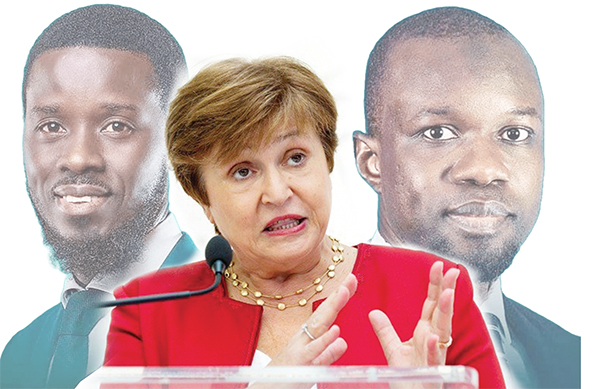
Senegal: IMF Accord Spurs Unveiling of Plan Traitement Dette PTDS
Summary
- On Wednesday, September 2, 2026, Senegal announced a new technical agreement with the International Monetary Fund (IMF).
- Minister Cheikh Diba presented details of the government's Plan de traitement de la dette (PTDS) and an associated financial package.
- Ousmane Sonko, Speaker of the National Assembly, publicly called for clarifications regarding the newly announced IMF agreement and national debt.
- The "accord technique FMI Sénégal" and the "Sénégal Plan Traitement Dette PTDS" are central to the nation's economic strategy and debt management.
Key Developments Unfold in Senegal
The implementation of the Sénégal Plan Traitement Dette PTDS, as detailed by Minister Cheikh Diba, carries substantial implications for Senegal's economic outlook and its standing in the international financial community.
On Wednesday, September 2, 2026, significant financial and political developments unfolded in Senegal, centered around a newly announced technical agreement between the International Monetary Fund (IMF) and the Senegalese government. This accord, which garnered considerable attention overnight, signals a pivotal moment for the nation's economic trajectory. The announcement prompted immediate reactions from key figures, highlighting both official governmental action and calls for greater transparency from the political opposition.
In response to the unfolding news, Ousmane Sonko, Speaker of the National Assembly, publicly demanded clarifications regarding the specifics of the agreement and its potential ramifications for the nation's finances. Concurrently, Minister Cheikh Diba stepped forward to provide details on the government's comprehensive Plan de traitement de la dette (PTDS), also known as the Sénégal Plan Traitement Dette PTDS. His presentation included the unveiling of an associated financial "envelope," indicating a structured approach to managing the country's debt obligations. These events were a central focus of the morning news program, "La Matinale Senego," underscoring their immediate public and political relevance.
Understanding the Debt Treatment Framework
The core of these developments lies in the "accord technique FMI Sénégal," a collaborative framework typically involving expert consultation and policy recommendations from the International Monetary Fund to assist a member country in addressing economic challenges. Such technical agreements often precede or accompany broader financial support programs, focusing on macroeconomic stability, fiscal discipline, and structural reforms designed to foster sustainable growth. This particular agreement signals Senegal's commitment to working with international financial institutions to strengthen its economic foundations.
Central to the government's strategy is the Plan de traitement de la dette du Sénégal, or PTDS, which Minister Cheikh Diba elaborated upon. This initiative represents a strategic and systematic approach to managing the nation's public debt, aiming to ensure its long-term sustainability and reduce financial vulnerabilities. The presentation by Cheikh Diba PTDS Sénégal included details of a specific financial package, or "envelope," earmarked for the implementation of this plan. The comprehensive nature of the PTDS suggests a multi-faceted strategy to address the country's debt profile, potentially involving restructuring, refinancing, or other debt management tools.
Political Scrutiny and Economic Outlook
The public demand for clarification from Ousmane Sonko, Speaker of the National Assembly, underscores the significant political and public interest surrounding national financial management. Such calls for transparency are common when governments engage in major economic agreements, reflecting the need for accountability and public understanding of decisions that will impact the entire populace. Speaker Sonko's intervention highlights the critical role of political oversight in ensuring that the terms of the "accord technique FMI Sénégal" and the specifics of the "Plan de traitement de la dette du Sénégal" serve the national interest effectively.
The implementation of the Sénégal Plan Traitement Dette PTDS, as detailed by Minister Cheikh Diba, carries substantial implications for Senegal's economic outlook and its standing in the international financial community. A well-executed debt treatment plan, supported by an IMF technical agreement, can enhance investor confidence, improve credit ratings, and free up resources for essential public services and development projects. Conversely, the success of these initiatives hinges on robust governance and the effective implementation of proposed reforms. The details of the "envelope" presented alongside the PTDS will be crucial for stakeholders to assess the immediate financial capacity and strategic direction of the government's debt management efforts.
Practical Implications
Lawyers should monitor the detailed provisions of Senegal's Debt Treatment Plan (PTDS) and the IMF technical agreement for potential impacts on sovereign debt, financial regulations, and the broader investment climate, advising clients on new compliance requirements or financial restructuring opportunities.
Source
Source: Original reporting via Senego
How does this affect you?
Get an AI analysis of this article grounded in your jurisdictions, practice areas, and any policy documents you've uploaded to Wansom.
Finish Reading the Full Story and the Expert Analysis.
Wansom is AI and can make mistakes.