
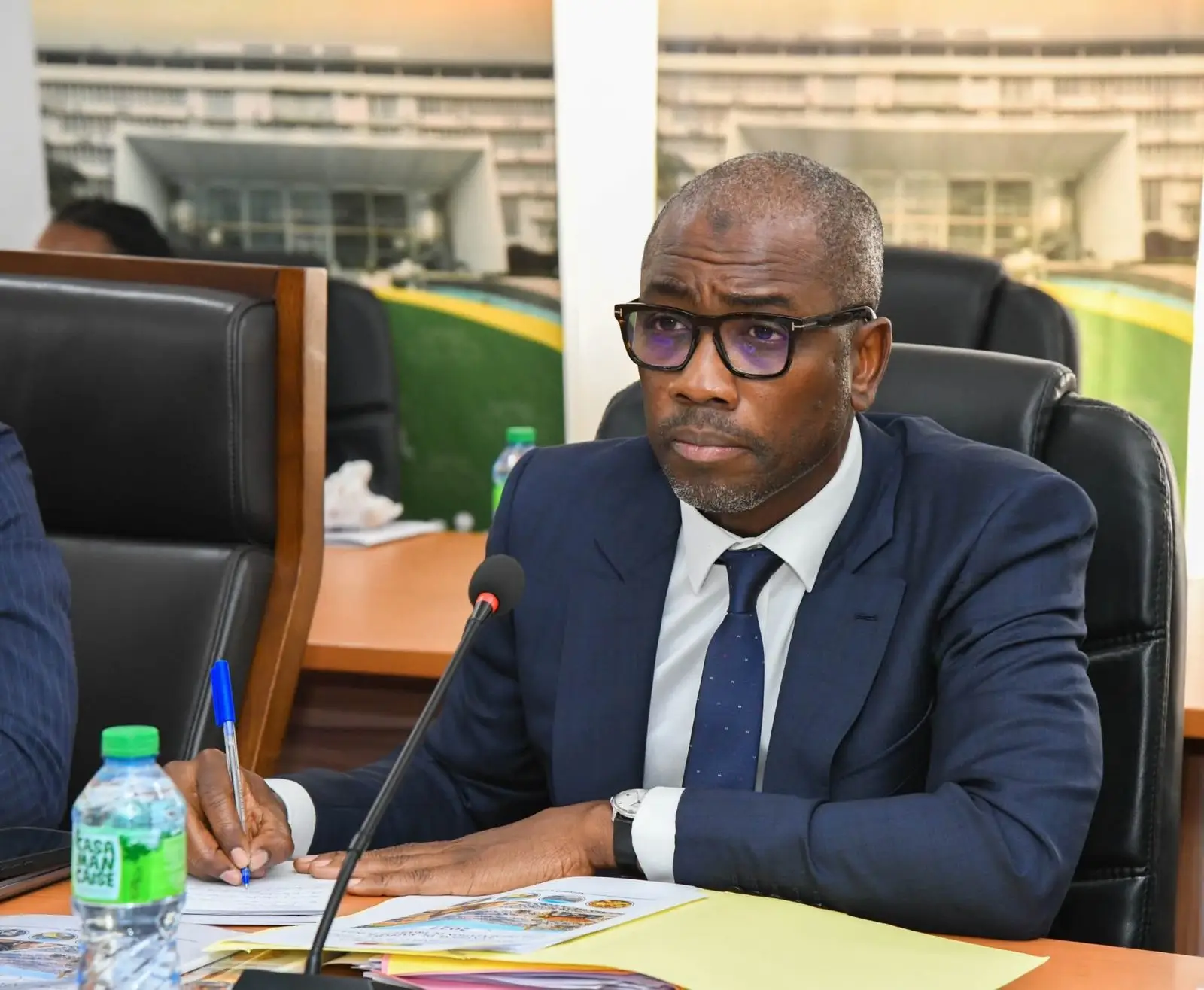
Sénégal Nouveau Code Minier: Cheikhou Oumar Seck Drives Reforms
Summary
- Minister Cheikhou Oumar Seck toured southeastern Senegal to review gold projects and discuss new mining policies.
- Senegal's government plans to adopt a new mining code by the end of 2026 and is renegotiating about thirty existing contracts.
- Four major gold projects—Mako, Douta, Diamba Sud, and Boto—are projected to generate significant state revenues, employment, and local content contributions.
- The government aims for 50% local transformation of iron, phosphates, and gold, supported by platforms like e-CNSCL Mines.
- Efforts are underway to regulate artisanal gold mining, with 27,452 miners biometrically identified and a decree suspending certain activities due to safety concerns.
Government Initiatives in the Extractive Sector
A critical component of this new approach is the development of a comprehensive new mining code, which Prime Minister Ahmadou Al Aminou Lo has indicated will be adopted before the close of 2026.
Minister Cheikhou Oumar Seck, the Minister of Mines and Geology, recently concluded a tour of Kédougou and Tambacounda from November 22 to 27, signaling the Senegalese government's heightened focus on its extractive industries. This visit served to review several gold projects in the southeastern region, set against the backdrop of significant policy reforms. The government is actively shaping a new strategic direction for the sector, aiming to maximize national benefits from its natural resources.
A critical component of this new approach is the development of a comprehensive new mining code, which Prime Minister Ahmadou Al Aminou Lo has indicated will be adopted before the close of 2026. This legislative update is accompanied by a robust effort to re-evaluate existing agreements; a commission, established in July 2024, is currently engaged in renegotiating approximately thirty mining contracts. These initiatives are designed to align the sector more closely with national development objectives, including a target for 50% local transformation of key minerals such as iron, phosphates, and gold.
Major Gold Projects Under Scrutiny
The government's strategic objectives are being applied to several significant gold operations in southeastern Senegal, each presenting substantial economic potential alongside specific challenges. The Petowal Mining Company's Mako project, for instance, is projected to generate around 751 billion FCFA in state revenue, create 700 jobs, and contribute nearly 100 billion FCFA in local content. However, the expansion of this project impacts approximately 2,250 individuals, 372 households, and 504 hectares of agricultural land, making land compensation and population displacement critical issues.
Further south, the Douta project, a collaboration between African Star Resources and Thor Explorations, anticipates 919 billion FCFA in state revenue, 660 billion FCFA in local content, and 1,800 jobs. This project's full realization is contingent on the issuance of its permit and the finalization of its mining agreement, which remains under negotiation. Similarly, the Diamba Sud project, led by BOYA S.A. and Fortuna Mining, forecasts 753 billion FCFA in state revenue, 388 billion FCFA in local content, and 750 jobs during its operational phase, with its first gold pour awaiting a final investment decision. This project also includes a commitment of $300,000 to the Local Development Support Fund over two years, commencing in 2027.
The Boto project, operated by BOTO SA, part of the Managem group, is expected to contribute 1,200 billion FCFA to the state. Its construction phase saw over 2,500 workers employed at its peak, with 90% being Senegalese nationals. For the first half of 2025, the project reported 43.7 billion FCFA in local content. While the combined projected revenues from Mako, Douta, and Diamba Sud amount to 2,423 billion FCFA, these figures are projections dependent on factors like operational commencement, gold price fluctuations, and ongoing negotiations or decisions.
Enhancing Local Content and Addressing Artisanal Mining
To bolster local participation in the mining sector, the Ministry of Mines is leveraging the e-CNSCL Mines platform, which currently lists 901 active enterprises, alongside a dedicated youth integration program. These initiatives aim to ensure that a greater share of the economic benefits from mining activities remains within Senegal.
The Minister's tour also addressed the complex issue of artisanal gold mining, known as orpaillage. Official figures indicate that 27,452 artisanal miners had been biometrically identified and enrolled by November 8. The government's policy stipulates that authorizations for such activities should be exclusively granted to qualified Senegalese citizens. To manage and regulate these operations, a protocol with the Armed Forces is establishing seven pilot corridors.
In Tambacounda, semi-mechanized artisanal mining operations have largely ceased since 2024. A decree is currently in effect, suspending certain activities on the left bank of the Falémé River until June 2027. This measure follows a period between 2025 and 2026 during which 55 collapses resulted in 92 fatalities, highlighting the significant safety concerns associated with unregulated artisanal mining.
Practical Implications
Lawyers and compliance officers in the mining sector should closely monitor the development and adoption of Senegal's new mining code, expected by the end of 2026, as it will significantly impact existing and future mining contracts, local content requirements, and operational frameworks. They should also advise clients on potential renegotiations of current contracts and ensure compliance with evolving local content and social responsibility obligations, particularly concerning land tenure and community engagement in project areas like Mako, Douta, Diamba Sud, and Boto.
Source
How does this affect you?
Get an AI analysis of this article grounded in your jurisdictions, practice areas, and any policy documents you've uploaded to Wansom.
Finish Reading the Full Story and the Expert Analysis.
Get the latest legal & regulatory intelligence in Senegal
Wansom is AI and can make mistakes.