
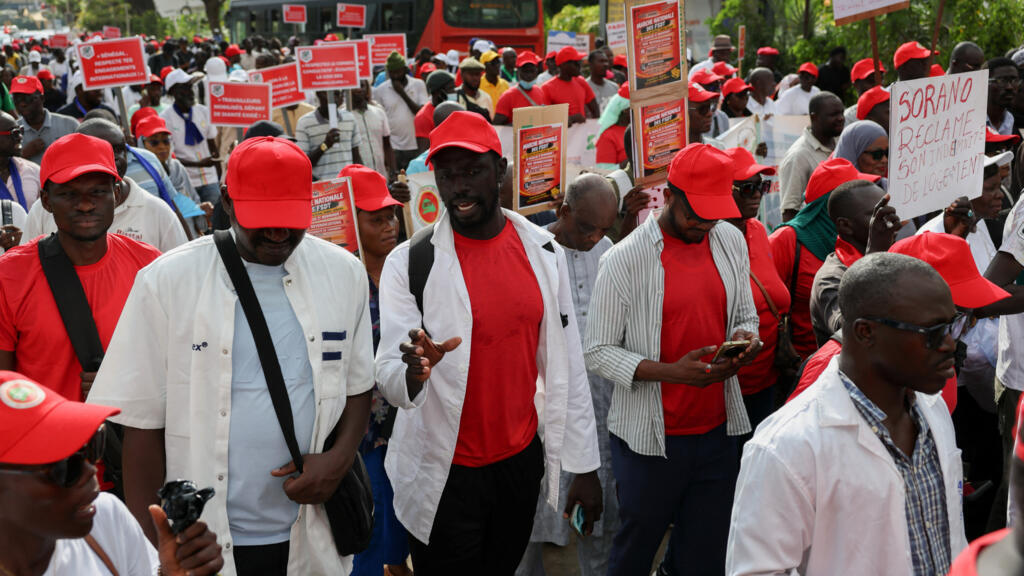
Senegal: New Labor Code Union Strike Sees Widespread Participation
Summary
- A three-day general strike in Senegal, involving public, parapublic, and private sectors, concluded on October 23.
- The strike was initiated by union federations protesting new Labor and Social Security Codes adopted without prior consultation.
- National retirees' associations fear the new codes could allow state interference in the appointment or revocation of the IPRES Director General.
- The Ministry of Public Service, Labor, and Public Service Reform deemed the strike illicit, citing the submission of only a single pre-strike notice.
- Post-strike, unions are engaged in negotiations with government officials, including the Minister of Labor and the President of the High Council for Social Dialogue, to resolve the dispute.
Escalating Industrial Action in Senegal
Lawyers and compliance officers in Senegal are therefore closely monitoring these developments, as the ongoing social dialogue and negotiations surrounding the new Labor Code and Social Security Code could significantly impact employment contracts, social security obligations, and the broader landscape of industrial relations.
The recent three-day general strike across Senegal, which concluded on Friday, October 23, saw widespread participation from the public, parapublic, and private sectors. This significant industrial action, initiated by various union federations, emerged against a backdrop of economic challenges and deep-seated disagreements concerning the nation's new Labor Code and Social Security Code. The Senegal new labor code union strike highlighted the growing tensions between labor organizations and the government over legislative reforms.
Mody Guiro, the Secretary General of the Confédération nationale des travailleurs du Sénégal, affirmed the substantial impact of the strike, noting strong participation in Dakar and other regions. He contended that the government's attempts to deter the action through requisitions and threats of sanctions proved ineffective. While expressing satisfaction with the level of mobilization, Guiro clarified that the strike's objective was not to completely halt the economy but to press for their demands.
The legality of the strike itself became a point of contention, with the Ministry of Public Service, Labor, and Public Service Reform declaring the directive illicit. The Ministry's stance was based on the argument that only a single prior notice had been submitted, rather than the multiple notices it deemed necessary. This legal challenge underscored the complex environment in which the labor dispute unfolded, adding another layer of conflict to the already strained relations.
Contentious Legislative Reforms and Legal Challenges
At the heart of the dispute are the new Sénégal Code du travail and Sénégal Code de la Sécurité sociale, which were adopted by the National Assembly on August 18, 2026, and subsequently promulgated on September 3, 2026, making them legally in force. Union bodies have consistently voiced strong opposition to these legislative changes for several months, primarily citing a profound lack of prior consultation and dialogue social during their drafting and adoption. This perceived exclusion from the legislative process has fueled much of the discontent.
National associations representing retirees have also expressed significant apprehension regarding the new codes. Their primary concern revolves around provisions that they believe could empower the state to directly appoint or revoke the Director General of the IPRES direction nomination révocation, the national social security institution. Retiree groups fear that such a power would critically undermine the authority and independence of the IPRES board of directors, potentially jeopardizing the institution's governance and the interests of its beneficiaries.
The government's assertion regarding the légalité grève Sénégal further complicated the situation. By deeming the strike unlawful due to a procedural issue concerning the submission of a single pre-strike notice, the Ministry introduced a legal dimension that could have implications for future industrial actions. Lawyers and compliance officers in Senegal are therefore closely monitoring these developments, as the ongoing social dialogue and negotiations surrounding the new Labor Code and Social Security Code could significantly impact employment contracts, social security obligations, and the broader landscape of industrial relations.
Path Forward: Renewed Dialogue and Negotiations
Following the three-day industrial action, the focus has shifted towards initiating a new phase of negotiations aimed at resolving the impasse. The President of the High Council for Social Dialogue promptly engaged with union representatives in an effort to identify a viable path forward and de-escalate the crisis. This initial outreach signaled a willingness from higher authorities to re-engage with the labor movement.
Subsequently, union leaders held discussions with the Minister of Labor, indicating a continued commitment to finding common ground. The unions have publicly stated their readiness to maintain an open channel for dialogue with the Minister and to meet with other key government officials, including the Prime Minister, to advance the discussions. This willingness to engage underscores the importance of sustained dialogue social in addressing the complex issues at hand.
Adding to these efforts, individuals designated as "peace ambassadors" by the unions are actively working to foster and maintain communication between the government and workers. This initiative is particularly pertinent as the country prepares for the upcoming Youth Olympic Games, suggesting an urgency to resolve the labor disputes peacefully. The ongoing negotiations represent a critical juncture for industrial relations in Senegal, with potential implications for the stability of the labor market and the implementation of significant legislative reforms.
Practical Implications
Lawyers and compliance officers in Senegal should closely monitor the ongoing social dialogue and negotiations surrounding the new Labor Code and Social Security Code. Union opposition indicates potential for further industrial action or legal challenges, which could impact employment contracts, social security obligations, and overall industrial relations.
Source
How does this affect you?
Get an AI analysis of this article grounded in your jurisdictions, practice areas, and any policy documents you've uploaded to Wansom.
Finish Reading the Full Story and the Expert Analysis.
Get the latest legal & regulatory intelligence in Senegal
Wansom is AI and can make mistakes.