
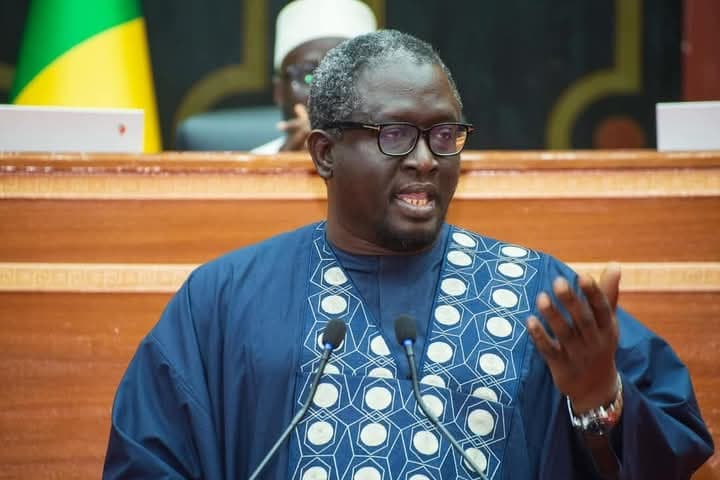
Senegal National Assembly: Motion of Censure Not on Special Session Agenda
Ayib Daffé, President of the Pastef parliamentary group, publicly declared on Tuesday, September 1, 2026, in Senegal's National Assembly, that a motion of censure against the government is not on the agenda for the ongoing extraordinary session. The National Assembly convened this session with a quorum of 106 deputies, where Ousmane Sonko, President of the Assembly, confirmed the sole agenda item as the Prime Minister Al Aminou Lô's General Policy Statement (DPG). Despite prior speculation from opposition factions, including the Front pour la Défense de la Démocratie et de la République, regarding a potential motion of censure, Daffé explicitly stated that such a motion was not on the agenda, clarifying that the session is dedicated exclusively to the DPG. The DPG is expected to detail the executive's short and medium-term orientations, aligning with the four axes of the Sénégal 2050 framework. The Conference of Presidents is tasked with establishing the debate's specific rules, including speaking times for the Prime Minister and parliamentary groups.
This development is highly significant for the stability of the Senegalese government and the functioning of its parliamentary democracy. The explicit rejection of a motion of censure by a key parliamentary leader, particularly from a significant supporting group, signals a period of relative political calm, at least concerning immediate governmental accountability through a no-confidence vote. For businesses and investors, this reduces short-term political risk associated with potential government instability or a change in executive leadership, allowing for greater predictability in policy implementation as outlined in the DPG. It underscores the procedural discipline within the National Assembly, emphasizing that parliamentary sessions adhere to their declared agendas, even amidst external political pressures or opposition aspirations.
The legal framework governing this situation is primarily enshrined in the Constitution of Senegal and the internal regulations of the National Assembly. The DPG is a constitutional mechanism allowing the Prime Minister to present the government's program and priorities to the legislative body, fostering transparency and accountability. A motion of censure, conversely, is a powerful parliamentary tool, often found in articles related to government responsibility in the Constitution, allowing the National Assembly to express its lack of confidence in the government, potentially leading to its resignation. The fact that the "Conférence des présidents" is responsible for setting the debate modalities highlights the procedural autonomy of the legislative body in managing its internal affairs, as defined by its rules of procedure. The quorum requirement (106 deputies present) is a fundamental procedural rule ensuring the legitimacy of parliamentary proceedings.
The primary parties involved are the Senegalese National Assembly, led by its President Ousmane Sonko; the government, represented by Prime Minister Al Aminou Lô, who is set to deliver the DPG; and the Pastef parliamentary group, whose president, Ayib Daffé, made the crucial statement. Other key actors include the broader opposition, specifically mentioned as the Front pour la Défense de la Démocratie et de la République, which had contemplated a motion of censure. The "Conférence des présidents" is also a key internal parliamentary body responsible for procedural organization.
Attorneys and legal professionals advising clients in Senegal should note this political clarity regarding governmental stability. The absence of an immediate threat of a motion of censure suggests a more stable legislative environment for the short to medium term, which can influence policy implementation and regulatory consistency. Practitioners should closely monitor the content of Prime Minister Al Aminou Lô's General Policy Statement, as it will outline the executive's priorities, particularly those aligned with the Sénégal 2050 framework. This DPG will likely inform future legislative initiatives, regulatory changes, and economic policies. Understanding the procedural rules set by the Conference of Presidents for the DPG debate will also be crucial for anticipating the level of parliamentary scrutiny and potential amendments to the government's proposed agenda.
How does this affect you?
Get an AI analysis of this article grounded in your jurisdictions, practice areas, and any policy documents you've uploaded to Wansom.
Finish Reading the Full Story and the Expert Analysis.
Wansom is AI and can make mistakes.