
Sénégal: Rejet Loi Finances Rectificative 2026 Risks 2,505 Billion FCFA
Summary
- Senegal's National Assembly Finance Committee rejected the Loi de Finances Rectificative (LFR) 2026.
- This rejection puts 2,505 billion FCFA at risk and threatens public programs across the nation.
- Professor Ansoumana Diatta fears significant delays for infrastructure, university, health, and port projects in Ziguinchor.
- The legislative impasse also jeopardizes the expansion of family scholarships from 500,000 to one million households.
- Diatta urged parliamentarians to prioritize national interest over political considerations to avoid systematic blocking of public action.
Legislative Impasse and Budgetary Consequences
This legislative action has placed a substantial sum of 2,505 billion FCFA at risk, according to reports from EMedia, signaling a significant budgetary challenge for the government.
The Finance Committee of Senegal's National Assembly recently rejected the Loi de Finances Rectificative (LFR) 2026, a decision that has immediately raised concerns about the nation's financial stability and the continuity of public programs. This legislative action has placed a substantial sum of 2,505 billion FCFA at risk, according to reports from EMedia, signaling a significant budgetary challenge for the government. The rejection underscores a growing impasse between the executive and legislative branches, with potential far-reaching consequences for the country's development agenda.
This budgetary mechanism, the LFR 2026, is designed to allow the state to adjust its financial forecasts, ensure the continuation of planned programs during the final months of the fiscal year, and facilitate the reprogramming of investments. Its primary purpose is to maintain the continuity of public services and projects. However, the current legislative blockage threatens these critical functions, potentially disrupting the flow of public action across various sectors. The Kiiray party, through its coordinator Aminata Touré, has publicly denounced the rejection as an "irresponsible" act, arguing that it directly imperils both the national economy and the private sector.
Ziguinchor's Development at Risk
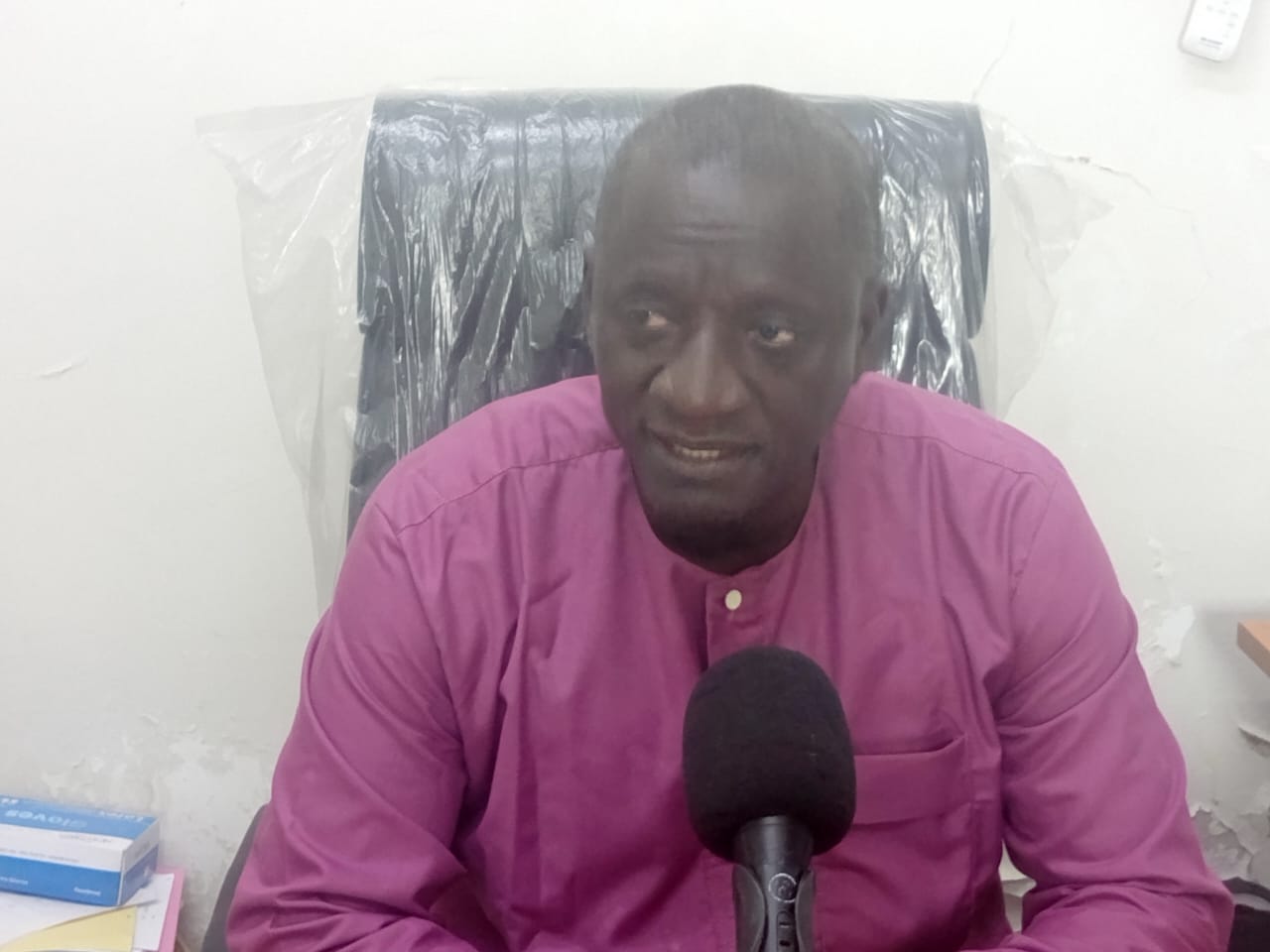
Professor Ansoumana Diatta, who serves as the departmental coordinator for the Kiiray party, has voiced profound apprehension regarding the local repercussions of this budgetary stalemate, particularly for the Ziguinchor region. He fears that numerous anticipated public works and social initiatives could face considerable delays. Among the critical projects identified by Diatta are significant upgrades to the road network, including the Ziguinchor-Cap Skirring and Bignona-Kafountine axes, the Tobor road, and the Fogny loop, all of which are vital for regional connectivity and economic activity.
Beyond road infrastructure, the `impact LFR 2026 Ziguinchor` extends to crucial bridge projects, with concerns raised about a potential slowdown in work on the Émile Badiane bridge and the construction of a new bridge intended to enhance access to Ziguinchor. Educational facilities are also under threat, as Diatta expressed worry over the timeline for new pedagogical infrastructures at Assane Seck University. Furthermore, the health sector faces potential setbacks for planned level 3 and 4 hospital establishments, alongside the rehabilitation and equipment of the Hôpital de la Paix and the regional hospital of Ziguinchor. The proposed dredging of the Ziguinchor port, a key investment for regional trade, is also among the initiatives whose execution could be significantly postponed, contributing to broader `retards infrastructures Sénégal`.
Social Programs and Political Appeals
The ramifications of the legislative rejection are not confined solely to physical infrastructure; vital social programs are also at risk. Professor Diatta highlighted the announced expansion of family scholarships, a program intended to double the number of beneficiary households from 500,000 to one million. The uncertainty surrounding the `financement projets publics Sénégal` following the `blocage législatif budgétaire Sénégal` could jeopardize this significant social safety net, impacting a large segment of the population.
In light of these pressing concerns, Ansoumana Diatta has issued a public appeal to parliamentarians, urging them to re-engage in dialogue and prioritize the nation's collective interest. He emphasized that while the opposition holds a crucial role in overseeing government actions, this oversight should not lead to a systematic obstruction of public initiatives. Diatta's analysis suggests that 130 deputies, in rejecting the LFR, allowed political considerations to overshadow the immediate and pressing needs of the populace, thereby creating a precarious situation for essential development and social welfare projects.
Practical Implications
The rejection of the Loi de Finances Rectificative (LFR) 2026 signals significant budgetary uncertainty and potential delays for public infrastructure and social projects in Senegal, particularly in the Ziguinchor region. Lawyers advising clients involved in public procurement, construction, or social programs should assess potential contractual impacts, monitor legislative developments for resolution of the budgetary impasse, and advise on force majeure clauses or renegotiation strategies due to potential government funding disruptions.
Source
Source: Original reporting via EMedia
How does this affect you?
Get an AI analysis of this article grounded in your jurisdictions, practice areas, and any policy documents you've uploaded to Wansom.
Wansom is AI and can make mistakes.