
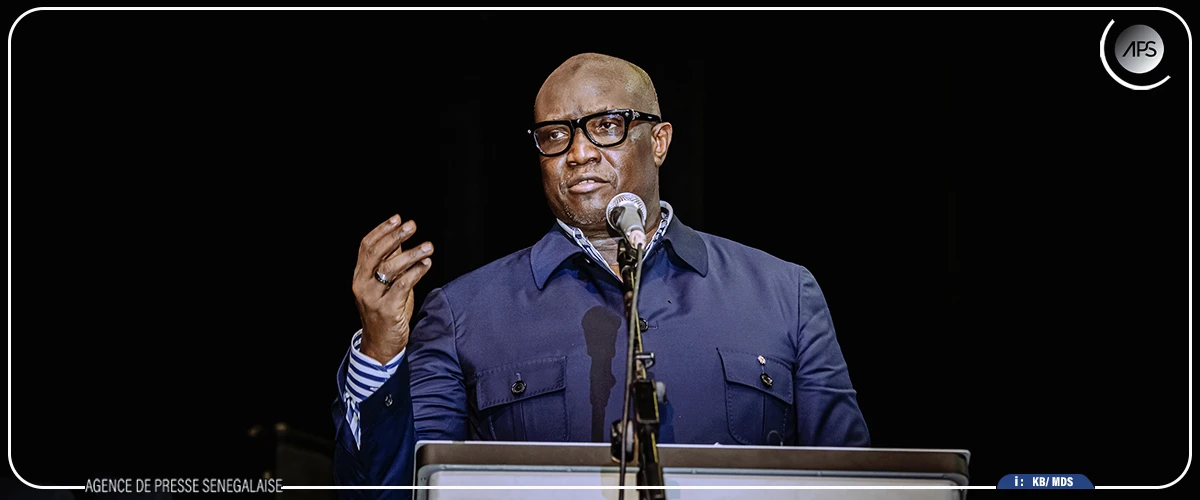
Sénégal: Mouhamadou Makhtar Cissé Defines Media Regulation
Summary
- Mouhamadou Makhtar Cissé, Senegal's Minister of Interior and Public Security, stated on October 15 that media regulation must protect information freedom, pluralism, and public rights.
- The Minister emphasized that regulation should not be used to place press organizations under guardianship.
- He also affirmed that critical editorial lines should not be sanctioned through regulatory means.
- This declaration was made in Dakar, highlighting a commitment to a free and diverse media landscape.
- The statement underscores the government's stance against using regulation for censorship or control over media content.
Ministerial Declaration on Media Regulation
He emphasized that the purpose of media regulation is not to exert control over news organizations or to impose restrictions that could stifle independent reporting.
On Thursday, October 15, Mouhamadou Makhtar Cissé, who serves as Senegal's Minister of Interior and Public Security, issued a significant declaration concerning the framework for media oversight in the nation. Speaking from Dakar, the Minister articulated a clear vision for how regulatory measures should function within the media sector. His remarks underscored the principle that any form of media regulation must fundamentally serve to safeguard the public's right to information, foster a diverse media landscape, and protect the inherent rights of the citizenry.
The Minister's statement explicitly outlined the boundaries within which such regulation should operate. He emphasized that the purpose of media regulation is not to exert control over news organizations or to impose restrictions that could stifle independent reporting. Specifically, Mouhamadou Makhtar Cissé asserted that these regulatory mechanisms should not be employed to place media outlets "under guardianship," a term suggesting undue governmental control or supervision. Furthermore, he firmly stated that regulation should not be utilized as a tool to penalize or sanction editorial viewpoints that may be critical of official policies or actions, thereby protecting the autonomy of the press.
Safeguarding Press Freedom and Pluralism
This pronouncement by the Ministre Intérieur Sénégal carries substantial weight for the droit de la presse Sénégal and the broader media ecosystem. By advocating for a regulatory approach that prioritizes the liberté d’informer Sénégal, Minister Cissé signals a governmental commitment to an open and unhindered flow of information. This perspective is crucial for a democratic society, as it ensures that citizens have access to a variety of perspectives and news sources, which is a cornerstone of informed public discourse.
The emphasis on protecting pluralisme médias Sénégal is equally vital. A diverse media landscape, free from the threat of governmental interference or punitive measures for critical reporting, allows for a robust exchange of ideas and ensures that different voices and viewpoints can be heard. This commitment to pluralism directly counters any potential for a monolithic narrative, reinforcing the role of the press as a watchdog and a platform for public debate rather than a mouthpiece for the state.
Implications for Future Media Governance
The clear articulation by Mouhamadou Makhtar Cissé regarding the appropriate scope of régulation médias in Senegal provides a significant benchmark for future policy discussions and legislative developments. His assertion that regulation must not be used to sanction critical editorial lines or place media entities under state control offers a protective stance for journalists and news organizations operating within the country. This public position could serve as a crucial reference point in any future debates concerning media laws or governmental oversight.
For legal professionals and media entities, the Minister's statement offers an important insight into the official posture towards press freedom. It suggests a framework where regulatory bodies are expected to facilitate, rather than impede, the work of the press, aligning with international standards for freedom of expression. This commitment from a high-ranking official like Mouhamadou Makhtar Cissé is a positive indicator for the continued development of an independent and vibrant media sector in Senegal, reinforcing the idea that regulation should be a shield for journalistic integrity, not a sword for censorship.
Practical Implications
Lawyers advising media entities or engaged in freedom of expression cases in Senegal should note the Minister's stated commitment to regulation that protects, rather than restricts, press freedom and pluralism. This public stance could inform future legislative developments or be cited in arguments concerning media oversight and censorship.
Source
Source: Original reporting via APS
How does this affect you?
Get an AI analysis of this article grounded in your jurisdictions, practice areas, and any policy documents you've uploaded to Wansom.
Finish Reading the Full Story and the Expert Analysis.
Get the latest legal & regulatory intelligence in Senegal
Wansom is AI and can make mistakes.