
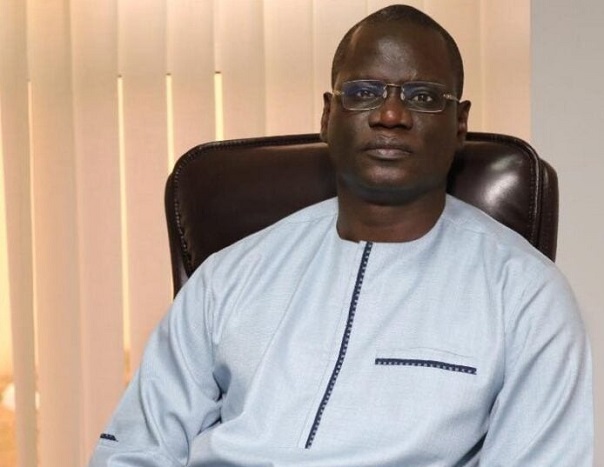
Abdourahmane Diouf: Pastef PLFR 2026 Rejection an 'Institutional Attack'
Summary
- Senegal's Minister of Petroleum and Energy, Abdourahmane Diouf, accused Pastef of an "institutional attack" after they rejected the 2026 revised finance bill.
- The rejected PLFR 2026 amounted to 2,505 billion FCFA, including 1,590 billion FCFA in payment credits.
- Diouf stated that Pastef's decision risks weakening institutions and harming Senegal's image during the upcoming Youth Olympic Games.
- Aminata Touré and Mbaye Dione warned that the budgetary blockage threatens the national economy, the private sector, and crucial subsidies for electricity and hydrocarbons.
Budgetary Standoff in Senegal
The timing of this budgetary impasse is particularly sensitive, coinciding with Senegal hosting the Jeux olympiques de la jeunesse (JOJ).
Senegal's political landscape is currently marked by a significant budgetary dispute, following the rejection of the projet de loi de finances rectificative 2026 (PLFR 2026) by the Pastef parliamentary group. This legislative setback has drawn sharp criticism from high-ranking officials, notably Abdourahmane Diouf, the Minister of Petroleum and Energy. Minister Diouf has publicly accused Pastef of engaging in an "institutional attack," a strong condemnation that underscores the gravity of the situation. The proposed revised finance bill, central to the nation's fiscal planning, encompassed a substantial sum of 2,505 billion FCFA, with 1,590 billion FCFA specifically allocated for payment credits.
The rejection of this critical financial legislation occurred after its initial review and subsequent dismissal by the finance commission. This move by Pastef deputies has ignited a debate over its potential repercussions on the nation's stability and economic health. The minister's strong language, reported by Le Témoin and lactua, highlights a deep division over the direction of national policy and fiscal responsibility. The immediate consequence is a cloud of uncertainty hanging over planned government expenditures and the broader support for economic activities across the country.
Political Tensions Amidst International Spotlight
The timing of this budgetary impasse is particularly sensitive, coinciding with Senegal hosting the Jeux olympiques de la jeunesse (JOJ). Minister Diouf contends that Pastef's actions are deliberately designed to provoke political confrontation during a period when the nation is under the international spotlight. He argues that this strategy risks undermining the country's institutional integrity and could severely damage Senegal's global image, especially as it welcomes athletes, journalists, and delegations from around the world for the JOJ.
Furthermore, Diouf suggested that the Pastef leadership aims to prevent President Bassirou Diomaye Faye from fully leveraging the international visibility offered by the event. He believes their objective is to portray the current administration as incapable of successfully organizing a major global gathering. This political maneuvering, according to the minister, extends beyond mere policy disagreement, touching upon the nation's reputation and the government's perceived competence on the world stage. The JOJ represents a unique opportunity for Senegal and the African continent to showcase their capabilities in international sports, making the current internal strife particularly impactful.
Economic Repercussions and Subsidies at Risk
Beyond the immediate political friction and concerns over national image, the rejection of the PLFR 2026 carries significant economic implications for Senegal. Aminata Touré, a prominent figure, has voiced concerns that the opposition from Pastef deputies, following the bill's failure in the finance commission, poses a direct threat to both the national economy and the private sector. This assessment suggests that the budgetary blockage could have far-reaching consequences, impacting various facets of economic life.
Adding to these warnings, Mbaye Dione, who serves as both a deputy and the mayor of Ngoundiane, has highlighted the potential for severe disruptions to essential public services. Specifically, Dione cautioned about the possible impact of a budgetary freeze on crucial subsidies for electricity and hydrocarbons. These subsidies are vital for maintaining affordability and stability in key sectors, and their potential disruption underscores the concrete economic risks associated with the current legislative deadlock. The combined warnings from these figures give tangible weight to Minister Diouf's accusations, emphasizing that the uncertainty extends well beyond political posturing to the very means of financing planned expenditures and sustaining economic activity.
Practical Implications
The rejection of Senegal's 2026 revised finance bill by Pastef creates significant budgetary uncertainty, which could impact public spending, government contracts, and subsidies for key sectors like energy. Lawyers and compliance officers should advise clients on potential disruptions to business operations, reassess financial forecasts, and monitor legislative developments for any resolutions or further escalations that could affect economic stability and regulatory frameworks.
Source
How does this affect you?
Get an AI analysis of this article grounded in your jurisdictions, practice areas, and any policy documents you've uploaded to Wansom.
Wansom is AI and can make mistakes.