
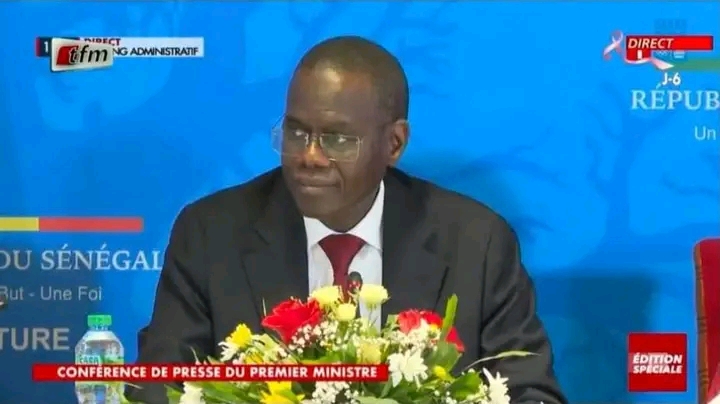
Sénégal: Finance Commission Rejects LFR 2026 Bill; PM Explains
Summary
- Prime Minister Ahmadou Alhaminou Mohamed Lô held a press conference on Sunday, October 25, 2026.
- The conference addressed the rejection of the proposed Loi de finances rectificative (LFR) 2026.
- The National Assembly's Commission des Finances et du Contrôle budgétaire rejected the LFR 2026 on the preceding Friday.
- The government's explanation comes amid reported disagreements concerning the budget bill.
- The rejection could lead to delays or modifications in Senegal's 2026 budgetary framework.
Government Responds to Budget Bill Rejection
This initial rejection by the Finance Commission signals potential delays or modifications to the proposed budgetary framework, which could impact financial planning, tax obligations, and regulatory compliance for businesses and individuals.
The Senegalese government, through Prime Minister Ahmadou Alhaminou Mohamed Lô, convened a press conference on Sunday, October 25, 2026. The primary purpose of this gathering was to provide an official explanation regarding the recent rejection of the proposed Loi de finances rectificative (LFR) 2026, a critical budgetary adjustment bill.
This government briefing followed a significant parliamentary decision made just two days prior. On Friday, the National Assembly's influential Commission des Finances et du Contrôle budgétaire formally rejected the Sénégal LFR 2026, creating an immediate need for the executive branch to address the situation publicly. The Prime Minister's engagement with the press underscored the importance the government places on this legislative development and its commitment to clarifying the path forward for the nation's financial planning.
Legislative Context and Commission's Role
The rejection of the projet de loi de finances rectificative Sénégal by the parliamentary finance commission highlights the rigorous legislative oversight inherent in the country's governance structure. The Commission des Finances et du Contrôle budgétaire Sénégal is tasked with scrutinizing all financial legislation, including the annual budget and any subsequent rectifying finance laws, to ensure fiscal responsibility and alignment with national priorities.
This particular meeting of the government with the press occurred amidst a backdrop of reported disagreements surrounding the proposed Loi de finances rectificative 2026 Sénégal. Such disagreements within the legislative process are not uncommon, but the outright rejection of a government-backed finance bill by a key commission signals a notable point of contention that requires resolution before the bill can proceed.
Implications for Senegal's Financial Framework
The decision by the Commission des Finances et du Contrôle budgétaire to reject the Ahmadou Alhaminou Mohamed Lô LFR proposal for 2026 has immediate and significant implications for the country's financial planning. A Loi de finances rectificative is designed to adjust the national budget mid-year or in response to unforeseen economic circumstances, making its passage crucial for maintaining fiscal stability and funding government operations and projects.
This initial rejection by the Finance Commission signals potential delays or modifications to the proposed budgetary framework, which could impact financial planning, tax obligations, and regulatory compliance for businesses and individuals. The government sénégalais explication LFR 2026 provided by the Prime Minister aims to clarify the administration's stance and next steps, but the legislative process will now likely involve further negotiations and revisions to secure parliamentary approval for the necessary budgetary adjustments.
Practical Implications
Lawyers and compliance officers in Senegal should closely monitor the legislative developments surrounding the Loi de finances rectificative 2026. The initial rejection by the Finance Commission signals potential delays or modifications to the proposed budgetary framework, which could impact financial planning, tax obligations, and regulatory compliance for businesses and individuals.
Source
How does this affect you?
Get an AI analysis of this article grounded in your jurisdictions, practice areas, and any policy documents you've uploaded to Wansom.
Finish Reading the Full Story and the Expert Analysis.
Get the latest legal & regulatory intelligence in Senegal
Wansom is AI and can make mistakes.