
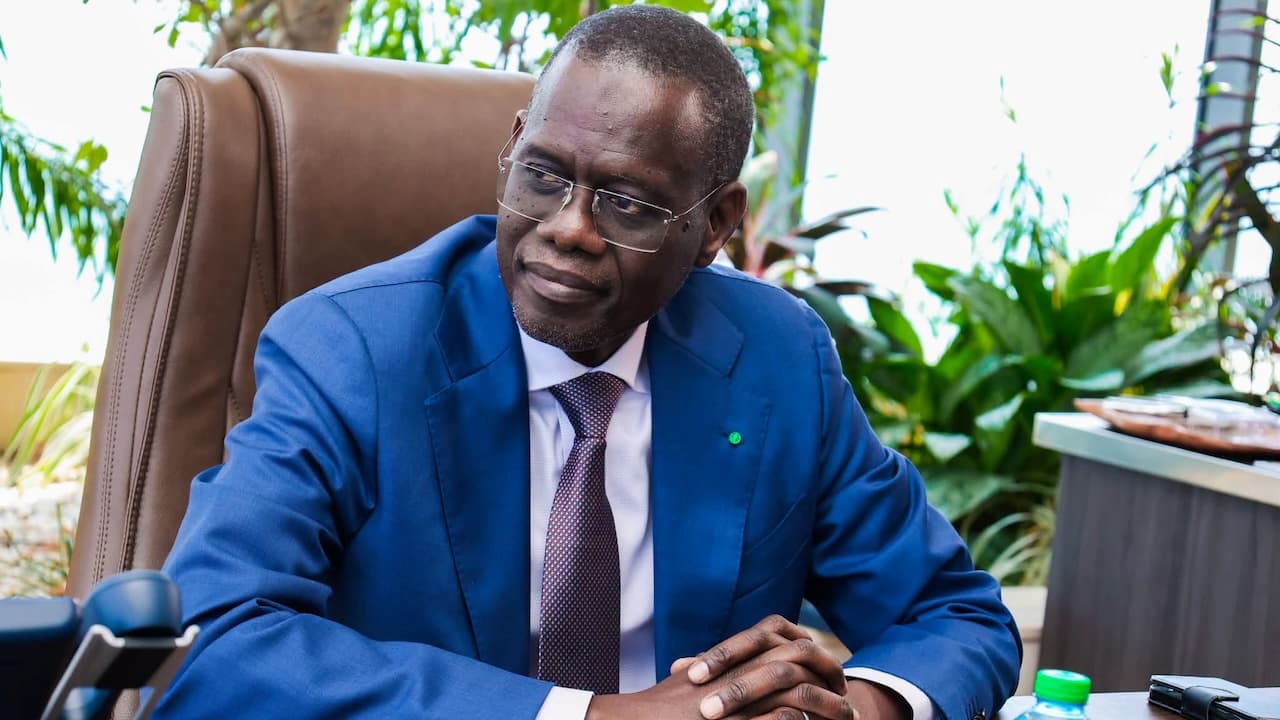
Sénégal LFR 2026 Rejet: Pastef Blocks Budget Amendments
Summary
- Sénégal's Loi de finances rectificative (LFR) 2026 project was rejected in commission, leading to a legislative standoff.
- Prime Minister Ahmadou Al Aminou Lô accuses Pastef deputies of obstruction and demands written amendments to the budget rectificatif 2026.
- Pastef-Les Patriotes, holding a parliamentary majority, conditions its support on five key demands, including preserving social investments and increasing debt transparency.
- The proposed LFR 2026 includes a reduction in state revenue, a 7.6% GDP deficit, and a significant increase in energy subsidies.
- The dispute is part of a broader institutional struggle, with the new government lacking official Pastef presence despite the party's majority in the Pastef Parlement Sénégal. President Bassirou Diomaye Faye, formerly of Pastef, launched his own political party, Kiiraay, in July 2026.
Legislative Deadlock Over Sénégal's LFR 2026
The ongoing debate over the budget rectificatif 2026 directly impacts these national and international financial commitments, influencing future economic stability and development.
Sénégal's proposed Loi de finances rectificative (LFR) 2026 has encountered a significant hurdle, having been rejected by the parliamentary commission. Prime Minister Ahmadou Al Aminou Lô has voiced strong objections to the manner of opposition, distinguishing between what he considers legitimate amendments and what he terms as obstruction to government work. He has specifically accused Pastef-Les Patriotes deputies of hindering the review of the budget rectificatif 2026 and has urged them to formalize their criticisms into written proposals, emphasizing that they should not "punish the people."
According to the Prime Minister, a Loi de finances rectificative is essential for adapting the national budget to unforeseen events that arise after the initial budget's approval. However, the disagreement extends beyond procedural matters. Pastef-Les Patriotes, which commands a substantial majority with 130 out of 165 seats in the National Assembly, has made its support conditional on the satisfaction of five key demands. These include the preservation of social investments, safeguarding purchasing power, prudent management of public debt, enhanced control over special funds, and greater transparency regarding the national debt. The core of the dispute revolves around critical areas such as subsidies, investment policies, taxation, and social spending.
The rejection occurred on a Friday, when the Commission des Finances et du Contrôle budgétaire voted against the LFR project, along with two amendments proposed by the executive branch. The government reportedly transmitted a memorandum on the same day, aiming to address the deputies' concerns, but this effort failed to sway them. The opposition group Takku Wallu Sénégal chose to abstain during the commission's vote. Following this lack of consensus, the examination of the LFR in a plenary session has been postponed to Tuesday, October 27, 2026, at 10:00 AM.
Fiscal Policy at the Heart of the Dispute
The proposed LFR 2026 outlines significant adjustments to Sénégal's fiscal framework, which are central to the ongoing parliamentary debate. The project anticipates a reduction in state revenue, moving from an initial projection of 6,188.8 billion CFA francs down to 5,848.7 billion CFA francs. Concurrently, the revised budget sets the national deficit at 7.6% of the Gross Domestic Product. A particularly contentious point within the budget rectificatif 2026 is the substantial increase in energy subsidies, which are slated to rise from 250 billion CFA francs to 790.3 billion CFA francs.
These proposed fiscal changes carry considerable economic weight for Sénégal. The successful passage of the LFR 2026 is intrinsically linked to a crucial $2.2 billion program with the International Monetary Fund. This program, for which a staff-level agreement was reached in September 2026, is awaiting final approval from the IMF's board of directors, pending Senegal's clarification of debt settlement terms with its creditors. The ongoing debate over the budget rectificatif 2026 directly impacts these national and international financial commitments, influencing future economic stability and development.
Broader Institutional Tensions
The current legislative standoff over the Sénégal LFR 2026 is not an isolated incident but rather a manifestation of a broader institutional confrontation within the country. This wider struggle encompasses disagreements over special credits and a specific legislative proposal championed by Pastef deputies. Prime Minister Al Aminou Lô has publicly contrasted the government's approach of holding open press conferences, where journalists' questions are welcomed, with Pastef's own press briefings, inviting the party to similarly engage with the media. He notably rejected a proposal from Ousmane Sonko, who is now the President of the National Assembly, for a televised debate on the LFR, stating his priority is government emergencies and that Parliament remains the appropriate institutional forum for such discussions.
Adding to the complexity is the unique political landscape: the new government was formed without any official presence from Pastef, despite Pastef-Les Patriotes holding a dominant majority in the National Assembly. This situation is particularly striking given that President Bassirou Diomaye Faye, who was formerly a member of the Pastef party, launched his own political party, Kiiraay (Republican Patriots), in July 2026, as are several ministers. This unusual configuration fuels the ongoing tensions and complicates the legislative process, creating an environment ripe for political deadlock and accusations of obstruction parlementaire Sénégal.
The institutional friction is further highlighted by calls for legal intervention. Aminata Touré has expressed support for referring the matter to the Constitutional Council, advocating for all institutions to adhere strictly to their respective competencies. This legal avenue underscores the depth of the disagreement. Moreover, the political climate is exacerbated by a 72-hour strike notice, which adds another layer of social demands and pressure to the already tense governmental and parliamentary relations.
Practical Implications
Lawyers and compliance officers should closely monitor the ongoing legislative deadlock surrounding Senegal's LFR 2026. Its final approval or rejection will dictate changes in fiscal policy, subsidies, and public spending, directly impacting business operations, public contracts, and compliance obligations related to taxation, energy, and social investments.
Source
Source: Original reporting via ndarinfo
How does this affect you?
Get an AI analysis of this article grounded in your jurisdictions, practice areas, and any policy documents you've uploaded to Wansom.
Finish Reading the Full Story and the Expert Analysis.
Get the latest legal & regulatory intelligence in Senegal
Wansom is AI and can make mistakes.