
Sénégal Khombole Assault: Homosexual Slur Leads to Suspended Sentence
Summary
- In Khombole, Sénégal, I. Dièye assaulted M. Tine after being called a "homosexual."
- I. Dièye, a 22-year-old worker, admitted to punching M. Tine multiple times, specifically in the mouth, and expressed regret.
- M. Tine sustained a ten-day temporary work incapacity due to the assault.
- The Thiès tribunal d’instance found I. Dièye guilty of the assault.
- I. Dièye received a three-month suspended prison sentence for the incident.
The Incident in Khombole
This ruling from the Thiès tribunal serves as a significant reminder within Sénégal's legal landscape that physical retaliation, even in response to severe verbal provocation such as a homosexual slur, carries criminal penalties.
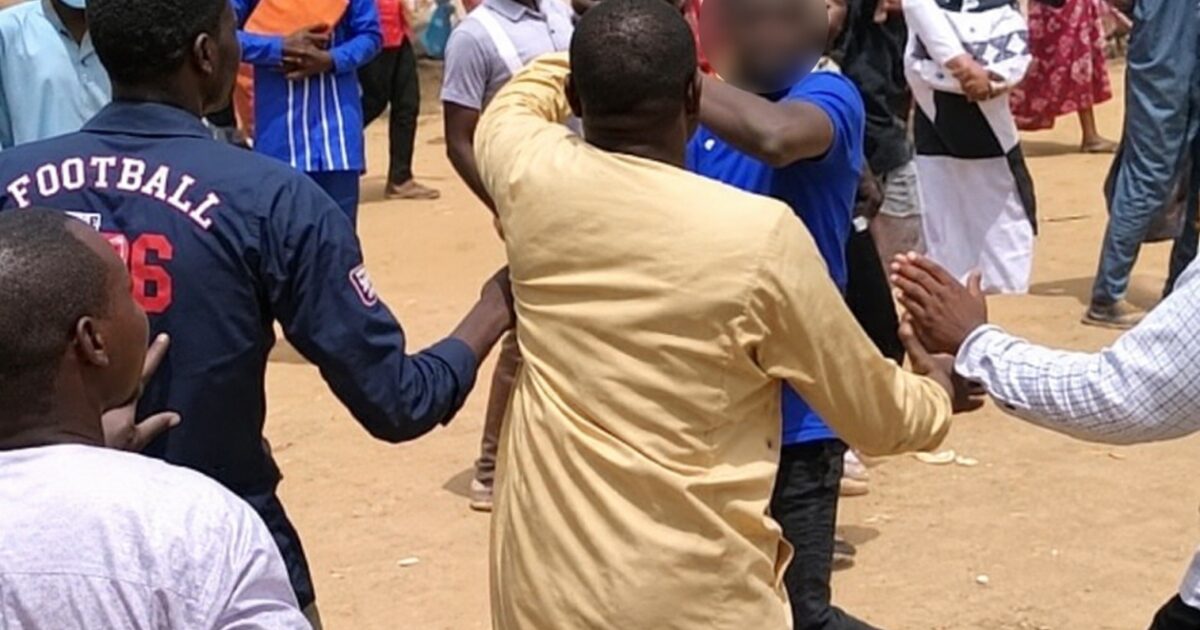
An altercation in Khombole, Sénégal, recently escalated into a physical assault following a verbal exchange, culminating in a judicial sentence that underscores the legal consequences of such actions. The incident involved two individuals, I. Dièye and M. Tine, whose dispute took a violent turn after M. Tine reportedly directed a homosexual slur towards Dièye. This verbal provocation ultimately led to a physical confrontation, which was later brought before the courts.
The events unfolded when M. Tine allegedly accused I. Dièye of being homosexual, a claim that, according to court records, ignited the subsequent physical response. In the heat of the moment, I. Dièye, a 22-year-old worker, reacted by physically assaulting M. Tine. This specific Khombole assault, triggered by a homosexual slur, became the subject of a legal proceeding, highlighting the judicial system's response to violence, even when provoked.
Judicial Proceedings and Outcome
The case was subsequently heard by the Thiès tribunal d’instance, where I. Dièye faced charges related to the assault. During the proceedings, Dièye openly acknowledged his role in the physical altercation, admitting to having struck M. Tine multiple times. He specifically recounted delivering several punches to M. Tine’s mouth. Crucially, Dièye also conveyed his remorse for his actions and offered apologies to the victim, a factor often considered in judicial deliberations.
Medical assessment of M. Tine revealed that he sustained injuries resulting in a temporary incapacity to work (ITT) for a period of ten days. This medical evidence played a role in the court’s determination of the severity of the assault. Following the presentation of evidence and I. Dièye’s admissions, the Thiès tribunal found him guilty of the charges. The court then rendered its verdict, imposing a three-month imprisonment with sursis, which is a suspended sentence. This I. Dièye M. Tine conviction for agression in Sénégal, despite the provocation, demonstrates the legal framework's stance against physical violence.
Implications for Public Conduct
This ruling from the Thiès tribunal serves as a significant reminder within Sénégal's legal landscape that physical retaliation, even in response to severe verbal provocation such as a homosexual slur, carries criminal penalties. The judicial system, through its application of droit pénal Sénégal, consistently upholds the principle that individuals are not permitted to take justice into their own hands, regardless of the perceived offense. While the verbal insult was a clear catalyst, it did not absolve I. Dièye of responsibility for the physical violence he inflicted.
The imposition of a suspended sentence, or sursis, in this agression Sénégal case, while still a conviction, reflects a nuanced approach by the court. It acknowledges the gravity of the assault while potentially considering mitigating factors such as the defendant's admission of guilt, expression of regret, and the specific circumstances of the provocation. Nevertheless, the outcome unequivocally demonstrates that engaging in violence verbale physique Sénégal, even when provoked, will lead to legal repercussions, reinforcing the importance of non-violent conflict resolution in society.
Practical Implications
This case illustrates the judicial approach in Senegal to assault cases, particularly when provoked by verbal insults. Legal practitioners should advise clients that physical retaliation, even under provocation, carries criminal penalties, though suspended sentences may be applied depending on the circumstances and the court's discretion.
Source
Source: Original reporting via Kawtef
How does this affect you?
Get an AI analysis of this article grounded in your jurisdictions, practice areas, and any policy documents you've uploaded to Wansom.
Finish Reading the Full Story and the Expert Analysis.
Get the latest legal & regulatory intelligence in Senegal
Wansom is AI and can make mistakes.