
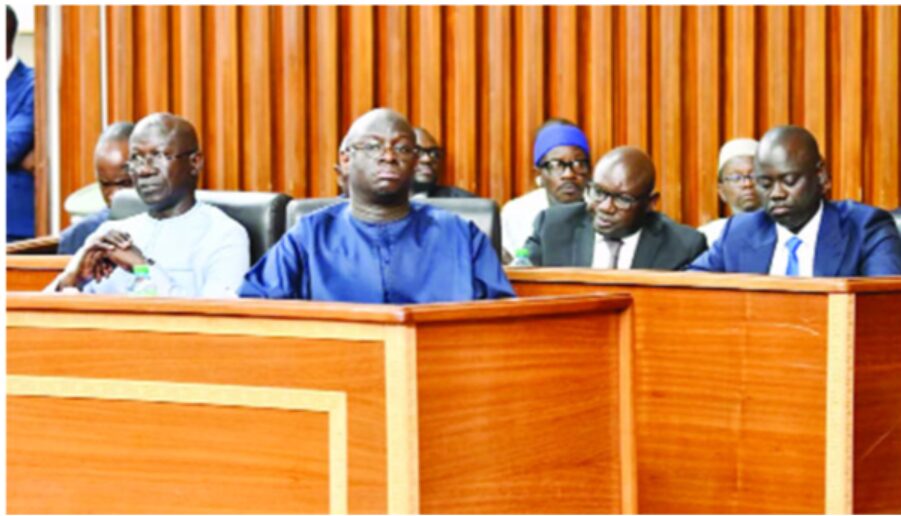
Sénégal Gouvernement: Clarifies Dette Publique, Budget 2027
Summary
- The Senegalese government provided clarifications to the parliamentary Commission des Finances regarding the 2027 budget, public debt, and energy subsidies.
- Deputies had raised concerns about the sincerity of the budget and references to a rejected revised finance bill.
- The government addressed topics including national debt, its relationship with the IMF, and the petroleum sector.
- Specific details were given on the regulation of gambling and the allocation of 416 billion for five new hospitals.
- These clarifications are crucial for understanding Senegal's fiscal policy and regulatory environment.
Government Addresses Parliamentary Concerns
Lawyers advising clients on public finance, energy, or infrastructure projects in Senegal should closely monitor legislative and policy developments following these government clarifications, as they may indicate shifts in fiscal policy, regulatory scrutiny, or future contractual terms related to state-backed projects and subsidies.
The Senegalese government recently presented a series of detailed explanations to the parliamentary Commission des Finances, directly responding to a range of pressing questions from deputies. These inquiries centered on the integrity of the proposed 2027 budget, the nation's public debt, the structure of energy subsidies, and repeated references to a previously rejected revised finance bill. This session underscores the government's effort to provide clarity on critical fiscal and economic matters.
The government's appearance before the legislative body aimed to address the concerns raised by members of parliament regarding the nation's financial health and future economic direction. Deputies had expressed significant reservations about the transparency and realism embedded within the upcoming budget, prompting the executive branch to offer comprehensive clarifications. This engagement highlights the ongoing dialogue between the executive and legislative branches concerning national financial governance.
Fiscal Scrutiny and Economic Priorities
Parliamentary deputies had specifically challenged the government on the veracity of the 2027 budget, indicating a demand for greater accountability in fiscal planning. Concerns also extended to the overall level of dette publique in Sénégal, a topic frequently scrutinized by international financial institutions like the FMI. The discussions further delved into the substantial allocations for subventions énergétiques Sénégal, a key component of the national budget that impacts both consumers and state finances.
Another point of contention raised by the parlement was the government's continued reliance on elements from a rejected Projet de Loi de Finances Rectificative (PLFR), suggesting a need for a fresh approach to financial legislation. These issues collectively paint a picture of intense legislative oversight over the gouvernement's economic strategies and spending priorities. The government's response was therefore crucial in outlining its position on these significant fiscal challenges.
Key Areas of Government Clarification
During the session, the Sénégal gouvernement offered specific insights into several critical sectors. It provided detailed information concerning the national debt, including its relationship with the FMI and strategies for management. The discussions also covered the burgeoning pétrole Sénégal sector, indicating potential future regulatory frameworks for oil and gas exploration and production.
Furthermore, the government addressed questions related to the régulation of jeux de hasard Sénégal, a sector with growing economic implications. A significant clarification involved the allocation of 416 billion for the construction of five new hospitals, a major infrastructure investment aimed at enhancing public health services. These specific points of clarification demonstrate the breadth of topics under parliamentary review and the government's commitment to transparency across diverse economic activities.
Broader Implications for Senegal's Future
The government's comprehensive clarifications before the Commission des Finances carry significant weight for Senegal's economic trajectory and policy landscape. The detailed responses on public debt, the 2027 budget, and energy subsidies signal potential shifts in fiscal policy and greater scrutiny over state expenditures. This engagement is vital for maintaining investor confidence and ensuring the stability of the national economy.
Lawyers advising clients on public finance, energy, or infrastructure projects in Senegal should closely monitor legislative and policy developments following these government clarifications, as they may indicate shifts in fiscal policy, regulatory scrutiny, or future contractual terms related to state-backed projects and subsidies. The transparency demonstrated in this parliamentary exchange could set a precedent for future governmental accountability and influence the regulatory environment for key industries, including the emerging oil sector and the gaming industry.
Practical Implications
Lawyers advising clients on public finance, energy, or infrastructure projects in Senegal should closely monitor legislative and policy developments following these government clarifications, as they may indicate shifts in fiscal policy, regulatory scrutiny, or future contractual terms related to state-backed projects and subsidies.
Source
How does this affect you?
Get an AI analysis of this article grounded in your jurisdictions, practice areas, and any policy documents you've uploaded to Wansom.
Finish Reading the Full Story and the Expert Analysis.
Get the latest legal & regulatory intelligence in Senegal
Wansom is AI and can make mistakes.