
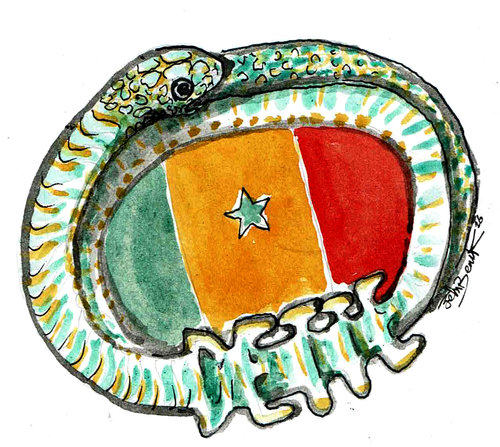
Senegal: IMF Debt Restructuring Deal with France Under G20 Framework
Summary
- An audit initiated by President Bassirou Diomaye Faye in March 2024 revealed Senegal's national debt to be 132% of GDP, including nearly $7 billion in previously undisclosed hidden debt.
- Senegal has agreed to a debt treatment under the G20's enhanced Common Framework, which is expected to unlock $2.2 billion in IMF loans over three years, contingent on reducing energy subsidies and state size.
- The debt restructuring will target external debt, including approximately $5 billion in eurobonds, but will exclude CFA franc-denominated debt to protect regional banking stability.
- France, holding 30% of Senegal's bilateral debt, has aligned with the IMF's restructuring position and is expected to co-chair the creditor committee with China, which holds 43% of bilateral debt.
- Questions have arisen regarding why the significant hidden debt was not detected earlier by the IMF and the French Treasury, with the French Treasury having previously demanded payment for accumulated arrears from Senegal in early 2026.
Senegal's Unforeseen Fiscal Challenge
After two years of extensive discussions, Senegalese authorities ultimately agreed in early September to address their debt under the G20's enhanced Common Framework.
Senegal's financial landscape underwent a significant re-evaluation following the inauguration of President Bassirou Diomaye Faye in March 2024. His administration promptly initiated an audit of public finances, which uncovered a national debt amounting to 132% of the Gross Domestic Product, a figure substantially higher than previously disclosed. This revelation included a substantial "hidden debt," estimated by Edward Gemayel, the IMF mission chief in Senegal, to be nearly $7 billion accumulated between 2019 and 2024, a scale he described as unprecedented on the African continent.
Prior to this discovery and the subsequent agreement with the International Monetary Fund, Senegal grappled with a severe budgetary crisis, hindering its access to concessional financing and international capital markets. The nation resorted to borrowing on the regional CFA franc bond market, incurring elevated costs. The burden of this debt is considerable, with interest payments consuming approximately one-fifth of public revenues this year, and seven out of every ten borrowed dollars being allocated to service existing loans. This fiscal strain has necessitated cuts in social spending, as even projected growth from oil and gas revenues is insufficient to alleviate the heavy debt load. Initially, the Faye government proposed a "reprofiling" strategy, which involved extending repayment deadlines through new borrowing while continuing to pay private eurobond holders.
Navigating the IMF and G20 Framework
After two years of extensive discussions, Senegalese authorities ultimately agreed in early September to address their debt under the G20's enhanced Common Framework. This pivotal decision paves the way for a $2.2 billion loan from the International Monetary Fund, disbursed over three years, pending approval by the IMF's board of directors. The IMF has stipulated specific conditions for the release of these funds, notably requiring a reduction in energy subsidies and a downsizing of the state apparatus.
The scope of the impending debt restructuring negotiations is focused primarily on Senegal's external debt, particularly claims denominated in euros and dollars. This includes a significant portion of approximately $5 billion in eurobonds, which are a key component of the Senegal eurobond restructuring efforts. Notably, debt denominated in CFA francs is excluded from these discussions to safeguard the stability of the regional banking system. This comprehensive approach under the Senegal G20 Common Framework aims to provide a sustainable resolution to the nation's fiscal challenges, with the IMF Senegal loan conditions playing a crucial role in shaping future economic policy.
Creditor Dynamics and Oversight Questions
In the context of the France Senegal debt restructuring IMF agreement, France, as Senegal's second-largest bilateral creditor after China, has aligned itself with the IMF's stance favoring a comprehensive restructuring. According to an analysis by Survie, China holds approximately 43% of Senegal's bilateral debt, while France accounts for 30%. Both nations are anticipated to co-chair the official creditor committee established under the G20 Common Framework, underscoring their significant roles in the process.
However, the discovery of the Senegal hidden debt audit has prompted questions regarding the oversight mechanisms that were in place. Concerns have been raised, particularly by former IMF officials and economists cited by Afrique XXI, about why repeated financial inconsistencies were not detected earlier by both the International Monetary Fund and the French Treasury. While the IMF has dismissed suggestions of a politically motivated decision, Survie's analysis has probed into France's diplomatic priorities and their potential influence on the verification of Senegalese accounts. Adding to these complexities, the French Treasury had, in early 2026, demanded payment from Senegal for accumulated arrears on several loans, highlighting the ongoing financial intricacies between the two nations.
Practical Implications
Lawyers and compliance officers with clients invested in or lending to Senegal should closely monitor the final terms of this debt restructuring under the G20 Common Framework, particularly regarding eurobonds and bilateral debt, as it may impact repayment schedules, asset valuations, and future financing conditions. This also sets a precedent for other African nations facing similar debt challenges.
Source
Source: Original reporting via Le Monde
How does this affect you?
Get an AI analysis of this article grounded in your jurisdictions, practice areas, and any policy documents you've uploaded to Wansom.
Finish Reading the Full Story and the Expert Analysis.
Get the latest legal & regulatory intelligence in Senegal
Wansom is AI and can make mistakes.