
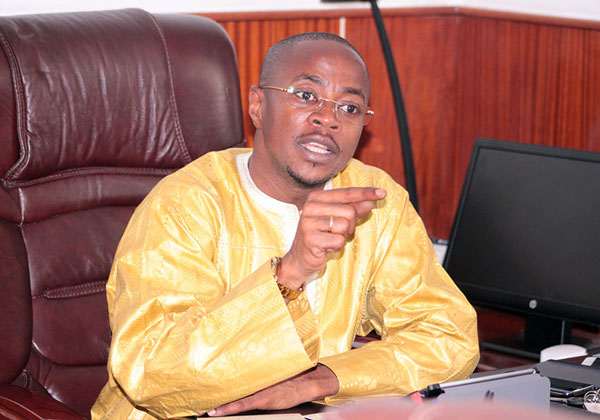
Sénégal Assemblée Nationale: Rejects Mbow, Sall Motions on Health Bill
Summary
- Senegal's National Assembly rejected motions from deputies Abdou Mbow and Thierno Alassane Sall to suspend or postpone debates.
- The rejected motions concerned a proposed law on health in correctional facilities, which the Assembly ultimately voted to continue examining.
- Abdou Mbow cited potential uncompensated financial burdens of the bill, while Thierno Alassane Sall raised concerns about political motivations and prior parliamentary tensions.
- The Commission de la Santé and other deputies defended the bill's constitutional basis and its importance for inmate welfare.
- The proposed legislation aims to establish new health standards within Senegal's correctional facilities, marking a significant legislative step.
Parliamentary Motions Rejected
The proposed legislation, described as 'a new law in a specific environment,' aims to establish comprehensive health standards within the nation's correctional facilities.
The Senegalese National Assembly recently voted to reject procedural motions, known as "questions préalables," put forth by deputies Abdou Mbow and Thierno Alassane Sall. These motions sought to suspend or postpone the ongoing legislative debates concerning a proposed law on health in correctional facilities (loi santé milieu carcéral Sénégal). Despite the objections, the Assembly decided to proceed with its examination of the bill, signaling a commitment to advance this particular piece of legislation.
Abdou Mbow, representing the Takku-Wallu group, argued for the adjournment of the session, expressing concern over the potential financial repercussions of the proposed text. He contended that the bill lacked provisions for compensatory revenue to offset the expenditures it would likely incur, stating that legislation should not be enacted without thorough financial foresight. His preliminary question, designed to halt further discussion, was ultimately defeated by a majority vote among the deputies. Following the vote, as the resumption of proceedings was announced, Mbow attempted to speak again from the rostrum but was immediately prevented by the President of the National Assembly, Ousmane Sonko, leading to a brief moment of tension within the plenary.
Separately, Thierno Alassane Sall, a non-registered deputy, also called for the session's postponement. He referenced previous parliamentary tensions that arose during discussions on the national biometric identity card earlier in the week. Sall further characterized the convocation of this third extraordinary session as a move driven by "political considerations," suggesting underlying motives beyond the immediate legislative agenda. Both deputies' attempts to delay the process were unsuccessful, clearing the path for the Assembly to continue its work on the health bill.
Defense of the Legislative Process
In response to the calls for delay, the Commission de la Santé, de la Population, des Affaires sociales et de la Solidarité nationale actively advocated for the continuation of the legislative work. Khady Sarr, the president of the commission, asserted that deputies could not be held accountable for what she termed a "supposed crisis between the two institutions." She further underscored that the proposed law was firmly grounded in the nation's Constitution, aligned with decisions previously made by the Constitutional Council, and consistent with existing regulatory frameworks.
Several other deputies also voiced their support for the progression of the bill. Deputy Béatrice Germaine Diouf specifically championed the text, emphasizing its crucial importance for the health and welfare of detainees within the correctional system. Mamadou Lamine Diaïté, who is a co-author of the proposed legislation, highlighted its unique nature, describing it as "a new law in a specific environment." These arguments collectively reinforced the Assembly's resolve to move forward with the debates parlementaires Sénégal, despite the procedural challenges raised.
Implications for Correctional Healthcare
The proposed loi santé milieu carcéral Sénégal represents a significant legislative effort aimed at establishing new standards for healthcare provision within the nation's prisons and detention centers. Its progression through the Assemblée nationale indicates a focus on addressing the specific health needs of incarcerated individuals, potentially introducing new legal obligations for prison administration and impacting human rights advocacy within the criminal justice system.
The Assembly's decision to reject motions from Abdou Mbow and Thierno Alassane Sall and continue with the examination underscores the perceived importance of this legislation. By advancing this bill, the Senegalese parliament is moving towards codifying and potentially enhancing the framework for inmate healthcare, a development that could have far-reaching effects on the treatment and well-being of those within the correctional system. The commitment to this "new law in a specific environment" highlights a legislative intent to modernize and standardize health provisions for a vulnerable population.
Practical Implications
Lawyers and compliance officers in Senegal should monitor the progress of this proposed law on health in correctional facilities. Its eventual passage will introduce new legal obligations and standards for inmate healthcare, potentially impacting prison administration, human rights advocacy, and criminal justice practices.
Source
Source: Original reporting via xalimasn.
How does this affect you?
Get an AI analysis of this article grounded in your jurisdictions, practice areas, and any policy documents you've uploaded to Wansom.
Finish Reading the Full Story and the Expert Analysis.
Get the latest legal & regulatory intelligence in Senegal
Wansom is AI and can make mistakes.