
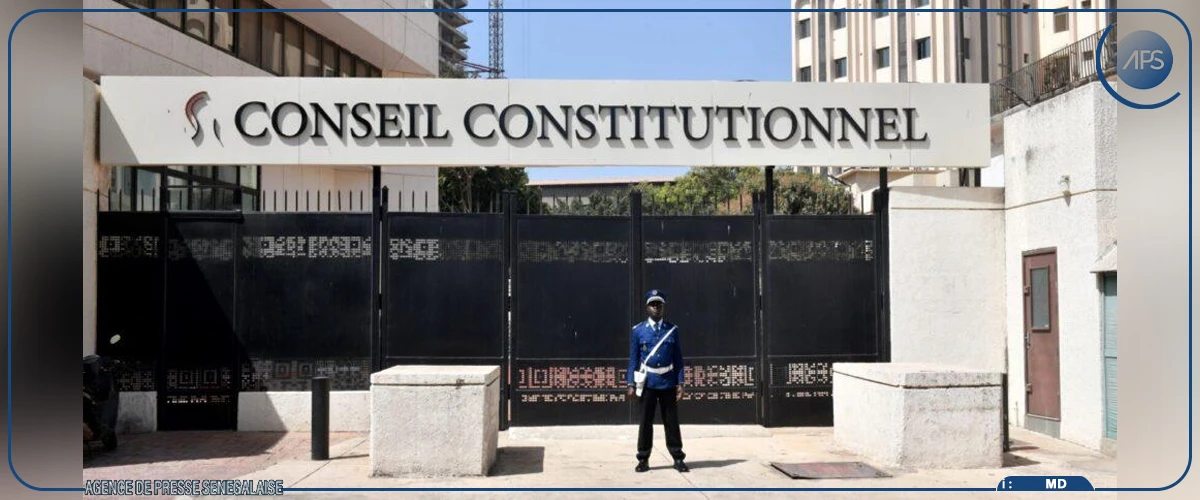
Sénégal Conseil Constitutionnel: Loi Organique Crédits Spéciaux Declared Inconstitutional
Summary
- Sénégal's Constitutional Council declared an organic law on special credits unconstitutional.
- The law, adopted by the National Assembly on October 1st, aimed to strengthen the regulation of finance laws.
- The President of the Republic initiated an urgent review of the legislation.
- The Council's decision, made public on Thursday, prevents the implementation of the proposed framework for special credits.
- This ruling impacts future budgetary planning and the management of public funds in Sénégal.
Judicial Ruling on Public Finance Legislation
The pronouncement from the highest constitutional authority in Sénégal means that the proposed legal structure for these financial mechanisms will not be implemented in its current form.
The Constitutional Council of Sénégal recently issued a significant ruling, declaring an organic law designed to regulate special credits as "contrary to the Constitution." This decision, made public on a Thursday, specifically targets legislation that sought to enhance the framework governing finance laws, particularly concerning the allocation and oversight of special credits. The pronouncement from the highest constitutional authority in Sénégal means that the proposed legal structure for these financial mechanisms will not be implemented in its current form.
This pivotal arrêt Conseil constitutionnel Sénégal stems from a legislative initiative aimed at bringing greater clarity and control to public financial management. The invalidated text, a loi organique lois de finances Sénégal, had been adopted by the National Assembly on October 1st. Its primary objective was to reinforce the existing provisions related to special credits, which are typically used for unforeseen or urgent public expenditures. The Council's declaration of these crédits spéciaux inconstitutionnels Sénégal marks a critical moment for the nation's budgetary processes.
Legislative Journey and Presidential Intervention
The now-invalidated organic law had successfully navigated the legislative process within the National Assembly, securing its adoption on the first day of October. This legislative effort represented a move towards a more robust and transparent system for managing specific categories of public funds. However, before its promulgation, the President of the Republic exercised his constitutional prerogative to refer the text to the Constitutional Council for review.
The presidential referral was initiated under a procédure d'urgence président République Sénégal, underscoring the perceived importance and potential constitutional implications of the proposed legislation. Such an urgent review mechanism allows for a swift examination of laws before they officially enter into force, ensuring their conformity with the nation's foundational legal document. This proactive step by the President led directly to the recent décision by the Conseil constitutionnel Sénégal.
Constitutional Scrutiny and Its Impact
The Conseil constitutionnel Sénégal undertook a thorough examination of the organic law, ultimately concluding that certain provisions or the entirety of the text conflicted with the Constitution. While the specific grounds for the declaration of unconstitutionality were not detailed in the initial report, the outcome is clear: the framework intended to govern special credits cannot proceed as enacted by the legislature. This ruling highlights the critical role of the Constitutional Council in upholding the supremacy of the Constitution and ensuring that all legislative acts adhere to its principles.
The declaration that the loi organique is "contrary to the Constitution" has immediate and far-reaching consequences for public finance in Sénégal. It means that the efforts to strengthen the regulation of special credits through this particular legislative instrument have been halted. Consequently, any future attempts to reform the management of these funds will need to consider the Council's ruling and ensure full constitutional compliance, potentially requiring a revised legislative approach.
Ramifications for Public Financial Management
This décision by the Conseil constitutionnel Sénégal regarding the loi organique crédits spéciaux has significant implications for how public funds, particularly special credits, are managed and accounted for in the country. With the intended framework for enhanced oversight now deemed unconstitutional, the existing mechanisms for special credits remain in place, or new legislative efforts must be undertaken to address the identified constitutional deficiencies. This situation could influence budgetary planning and financial management practices across various government sectors.
The ruling underscores the importance of meticulous constitutional review for all legislative proposals, especially those pertaining to fundamental aspects of state governance like public finance. For legal professionals and financial advisors in Sénégal, this development necessitates a re-evaluation of any advice or compliance strategies that might have been based on the anticipated implementation of the now-invalidated organic law. The legal landscape for crédits spéciaux inconstitutionnels Sénégal remains subject to the existing constitutional framework, pending any new, compliant legislative initiatives.
Practical Implications
Lawyers and compliance officers advising on public finance or legislative matters in Senegal must note that the organic law intended to regulate special credits has been declared unconstitutional. This means the proposed framework for special credits will not be implemented, and any advice or compliance efforts based on its provisions should be revised, potentially impacting budgetary planning and financial management practices.
Source
How does this affect you?
Get an AI analysis of this article grounded in your jurisdictions, practice areas, and any policy documents you've uploaded to Wansom.
Finish Reading the Full Story and the Expert Analysis.
Get the latest legal & regulatory intelligence in Senegal
Wansom is AI and can make mistakes.