
Menendez: Second Circuit Hears Speech or Debate Clause Appeal
Summary
- Former Senator Bob Menendez is appealing his federal bribery conviction and 11-year prison sentence to the Second Circuit.
- His primary argument is that federal prosecutors violated the Constitution's Speech or Debate Clause by prosecuting him for official legislative acts.
- Menendez's lawyer, Noel Francisco, cited the Sheldon Silver corruption appeal as precedent for distinguishing influence from coercion.
- Prosecutors argue the trial fully complied with the Speech or Debate Clause and the conviction was based on overwhelming evidence.
- A three-judge panel, including Judge Barrington Parker, questioned the relevance of Marbury v. Madison in this context and sought to define the line between official 'pressure' and 'support'.
Menendez Second Circuit Speech or Debate Clause Appeal Underway
The Second Circuit's ruling will provide critical clarification on the precise scope and application of the Speech or Debate Clause, particularly in distinguishing between legitimate legislative influence and corrupt agreements involving official acts.
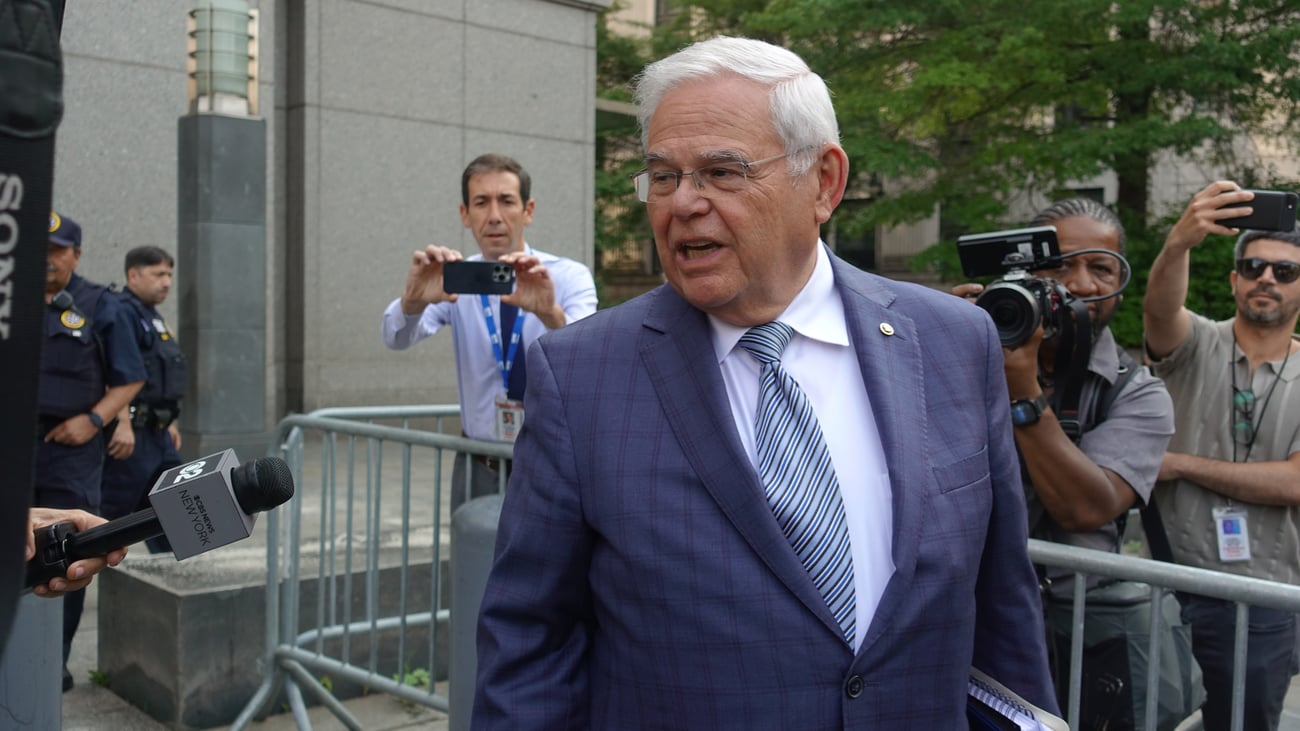
Former New Jersey Senator Bob Menendez recently appeared before a federal appeals court in New York City, seeking to overturn his federal bribery conviction and vacate the 11-year prison sentence he is currently serving. The 72-year-old ex-senator was found guilty in July 2024 on charges that he accepted cash and gold as bribes. In exchange, he allegedly agreed to leverage his legislative authority to intervene in three separate state and federal criminal investigations, aiming to protect several businessmen who were also implicated in the bribery scheme.
Menendez's appeal to the Second Circuit centers on claims that federal prosecutors violated the Constitution's Speech or Debate Clause. This crucial constitutional provision is designed to shield lawmakers from prosecution for their official legislative acts. The former senator has consistently presented these arguments to the trial court, both before his sentencing and prior to his surrender to federal prison, though with limited success.
Legal Arguments Over Legislative Immunity
During oral arguments before a three-judge appeals panel, Menendez's legal team contended that prosecutors improperly put legislative activity itself on trial for two of the alleged schemes. They argue that prosecutors must demonstrate a corrupt quid pro quo agreement for official action, rather than scrutinizing the legislative process itself. Noel Francisco, from Jones Day, representing Menendez, highlighted the Second Circuit's precedent in overturning corruption charges against former New York Assembly Speaker Sheldon Silver.
Francisco, who previously served as President Donald Trump's solicitor general during his first term, emphasized that a senator's influence due to their office does not automatically equate to exerting pressure. He argued that to constitute an abuse of power, an official must invoke the authority of their office to threaten, coerce, or otherwise compel another public official to take an official act. Separately, Menendez also argued that prosecutors improperly provided jurors with fully unredacted versions of evidence during deliberations, despite court orders for redaction during the trial.
Judicial Scrutiny and Precedent
The appeals panel, comprising U.S. Circuit Judge Barrington Parker (a George W. Bush appointee), U.S. Circuit Judge Dennis Jacobs (a George H.W. Bush appointee), and U.S. Circuit Judge Beth Robinson (a Joe Biden appointee), engaged deeply with the arguments. Judge Parker specifically sought clarification on where the line between legitimate 'pressure' and 'support' from an elected official should be drawn. Meanwhile, Assistant U.S. Attorney Paul Monteleoni, who also represented the government at Menendez's trial, urged the Second Circuit to reject any challenge to the conviction based on the Speech or Debate Clause.
Monteleoni asserted that the trial fully complied with the Speech or Debate Clause and that the convictions were based on overwhelming evidence, leaving no grounds for reversal. He cited the 1803 landmark U.S. Supreme Court case, Marbury v. Madison, which established judicial review. However, Judge Parker interjected, questioning whether a more contemporary precedent might be more applicable, given the significant evolution of government over the past two centuries, suggesting Marbury v. Madison might not be the most relevant case for this specific context.
Why This Appeal Matters
The outcome of the Menendez Second Circuit Speech or Debate Clause appeal holds significant implications for future public corruption precedent and the legal landscape surrounding legislative immunity bribery cases. The Second Circuit's ruling will provide critical clarification on the precise scope and application of the Speech or Debate Clause, particularly in distinguishing between legitimate legislative influence and corrupt agreements involving official acts.
Lawyers advising public officials or involved in public corruption cases should closely monitor this appeal. The court's decision will likely redefine how 'official legislative acts' are differentiated from illicit quid pro quo arrangements in bribery prosecutions, potentially impacting how such cases are investigated, prosecuted, and defended in the future. The Bob Menendez bribery conviction appeal, therefore, represents a pivotal moment for understanding the boundaries of congressional privilege.
Practical Implications
Lawyers advising public officials or involved in public corruption cases should monitor this appeal closely. The Second Circuit's ruling will provide critical clarification on the scope and application of the Speech or Debate Clause, potentially impacting how 'official legislative acts' are distinguished from corrupt agreements in future bribery prosecutions.
Source
How does this affect you?
Get an AI analysis of this article grounded in your jurisdictions, practice areas, and any policy documents you've uploaded to Wansom.
Finish Reading the Full Story and the Expert Analysis.
Get the latest legal & regulatory intelligence in United States
Wansom is AI and can make mistakes.