
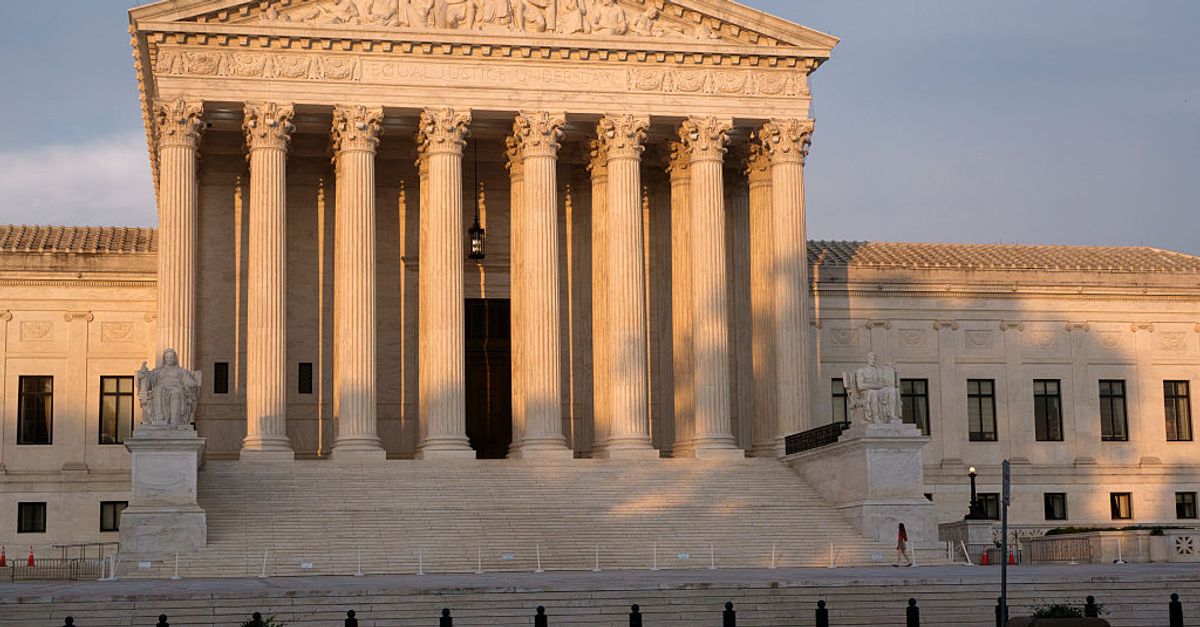
SCOTUS: Allows Trump Admin To Use Voter Verification Database
Summary
- The Supreme Court has permitted the Trump administration to use a modified centralized database for voter citizenship verification.
- This decision, issued 39 days before the November 3, 2026, election, paused a D.C. federal judge's ruling that had blocked the database due to federal privacy law concerns.
- The majority opinion stated the lower court's order inhibited federal efforts to assist state and local agencies in election administration.
- Justice Ketanji Brown Jackson, in dissent, argued the ruling was questionable and overlooked harms to lawful voters.
- The initiative originated from a late March Trump executive order directing DHS and SSA to create systems for verifying voters' citizenship and immigration status.
Supreme Court Clears Path for Voter Verification System
Lawyers advising state election officials or political campaigns must understand that the Supreme Court has allowed the use of a federal voter citizenship verification database, impacting voter registration and data privacy compliance.
The Supreme Court has issued a ruling that permits the Trump administration to proceed with its plan to utilize a modified centralized database for voter citizenship verification. This significant decision, delivered on a Friday, arrived just 39 days before the scheduled November 3, 2026, election, effectively overturning a lower court's injunction.
The high court's action specifically paused a previous ruling by a federal judge in Washington, D.C., which had blocked the government's implementation of the system. The D.C. court had cited concerns that the database violated federal privacy laws, among other issues. The Supreme Court's intervention now allows the federal government to move forward with its initiative to assist state and local agencies in verifying voter eligibility.
The unsigned majority opinion from the Supreme Court indicated that the district court's order would hinder the federal government's efforts to support state and local authorities in the proper administration of the midterm elections. This decision marks a pivotal moment for the use of a federal voter verification database in upcoming electoral processes.
Origins of the Federal Verification Initiative
The dispute surrounding the voter citizenship verification system traces back to late March, when President Donald Trump issued an executive order. This directive mandated the Department of Homeland Security (DHS) and the Social Security Administration (SSA) to establish systems designed to enable state and local governments to verify the citizenship and immigration status of registered voters.
Following the executive order, both DHS and SSA undertook modifications to their existing systems to comply with the presidential directive. The aim was to create a robust election administration database that could be accessed by state and local election officials, thereby enhancing the integrity of voter rolls through comprehensive voter data checks. This federal initiative sought to standardize and streamline the process of confirming voter eligibility across jurisdictions.
Legal Challenges and Judicial Perspectives
The federal judge in Washington, D.C., had initially halted the implementation of the DHS SSA voter database, primarily on the grounds that it infringed upon federal privacy laws voter data. This legal challenge highlighted concerns about the collection, storage, and use of sensitive personal information in the context of election administration.
In a dissenting opinion, Justice Ketanji Brown Jackson, joined by Justices Sonia Sotomayor and Elena Kagan, characterized the Supreme Court's Friday decision as a "questionable interim ruling[] about two statutory provisions" that the high court had "never before interpreted." Justice Jackson further contended that the majority opinion disproportionately focused on the potential harms the government might face without a stay, while neglecting the documented and anticipated harms that the modified database "has caused, and will likely continue to cause, to lawful voters." This division underscores the complex legal and ethical considerations surrounding the use of such a comprehensive voter verification system.
Implications for Election Administration
The Supreme Court stay voter database ruling carries immediate implications for election administration, particularly given its proximity to the November 2026 midterm elections. By clearing the way for the federal government to deploy the modified system, state and local election agencies are now permitted to utilize this tool for voter citizenship verification.
This development means that lawyers advising state election officials or political campaigns must understand that the Supreme Court has allowed the use of a federal voter citizenship verification database, impacting voter registration and data privacy compliance. Compliance officers should review potential exposures related to federal privacy laws, as the underlying legal questions, despite the stay, remain significant for the long-term operation of such systems.
Practical Implications
Lawyers advising state election officials or political campaigns must understand that the Supreme Court has allowed the use of a federal voter citizenship verification database, impacting voter registration and data privacy compliance. Compliance officers should review potential exposures related to federal privacy laws.
Source
How does this affect you?
Get an AI analysis of this article grounded in your jurisdictions, practice areas, and any policy documents you've uploaded to Wansom.
Finish Reading the Full Story and the Expert Analysis.
Get the latest legal & regulatory intelligence in United States
Wansom is AI and can make mistakes.