
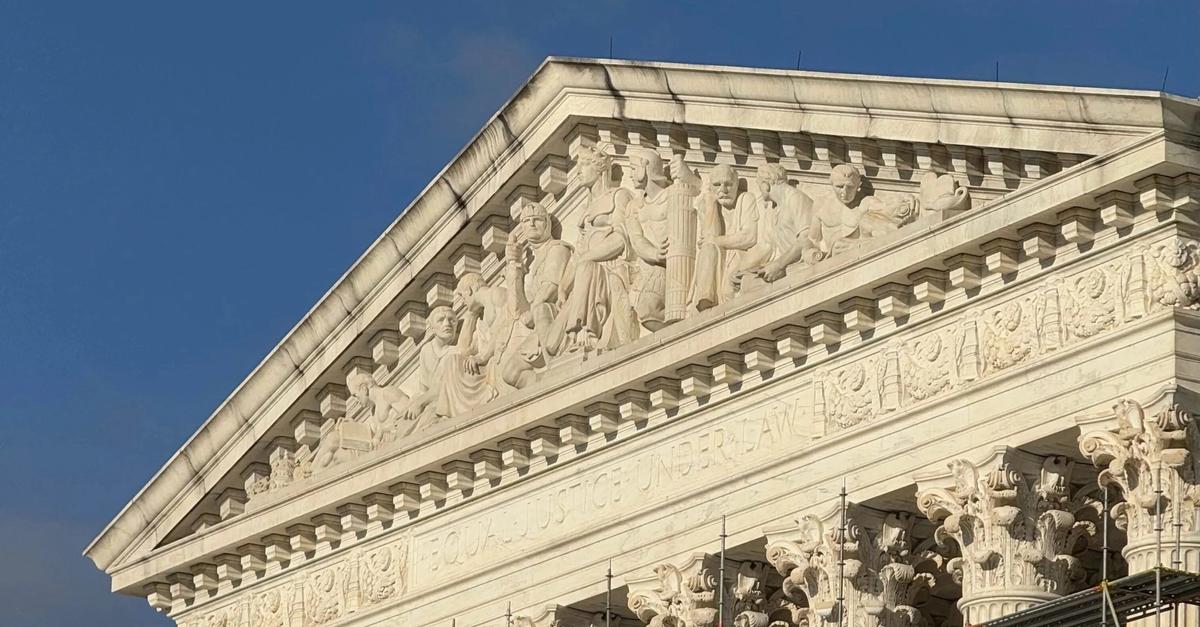
SCOTUS: Trump Mail-In Voting Executive Order Cleared for Implementation
Summary
- The Supreme Court has allowed the Trump administration's executive order on mail-in voting to proceed with immediate implementation.
- Chief Justice John Roberts issued an administrative stay permitting continued construction on the new White House ballroom.
- Justice Clarence Thomas thanked Senator Ted Cruz for defending him against ethics complaints regarding undisclosed gifts and his wife's political involvement.
- A Texas appeals court reduced a $50 million judgment against Alex Jones to about $6 million, though a $1.25 billion Connecticut judgment remains unaffected.
- Attorney William Jay, who has argued 19 Supreme Court cases, is joining Paul Weiss to lead its appellate litigation practice.
Supreme Court Greenlights Mail-In Voting Order
The Supreme Court's decision allows for the immediate implementation of the executive order, potentially altering election procedures and voter access.
The Supreme Court has granted the Trump administration's request, clearing the path for the immediate implementation of President Donald Trump's executive order concerning mail-in voting. This significant development, announced on Monday, allows the federal government to proceed with its directives regarding mail-in ballot implementation, potentially reshaping election procedures across the nation.
Legal professionals advising on election law and campaign strategy should closely analyze the specific provisions of this Trump administration voting order. The Supreme Court's decision allows for the immediate implementation of the executive order, potentially altering election procedures and voter access. This ruling marks a pivotal moment in federal voting policy, particularly as the nation approaches upcoming elections, and underscores the judiciary's role in electoral processes.
Other Judicial Developments and Appointments
In related judicial news, Chief Justice John Roberts issued a temporary administrative stay on Friday, which permits the continuation of construction on the new White House ballroom. This one-sentence order effectively keeps in place an injunction against above-ground construction, as highlighted by legal commentators.
Separately, Justice Clarence Thomas was a featured guest on Senator Ted Cruz's podcast on Monday. During their conversation, Justice Thomas publicly thanked Senator Cruz for his defense against ethics complaints in recent years. These complaints stemmed from allegations regarding undisclosed gifts, luxury travel, and property transactions involving billionaire Harlan Crow, as well as scrutiny over his wife's involvement in conservative political activities. Justice Thomas expressed his appreciation, noting that Cruz, along with others like Senator Mike Lee, stood up for him and his wife during periods of public criticism.
In the realm of legal appointments, attorney William Jay is transitioning from Goodwin to Paul Weiss, where he will assume leadership of the firm's Supreme Court and appellate litigation practice. Jay's move fills a vacancy left by Kannon Shanmugam earlier this year. With a distinguished career that includes arguing 19 cases before the U.S. Supreme Court, 14 years at Goodwin, and prior service as an assistant to the Solicitor General and a clerk for former Justice Antonin Scalia, his expertise is expected to significantly bolster Paul Weiss's appellate capabilities.
Alex Jones Judgment Reduced on Appeal
In a separate appellate ruling, the Texas Third Court of Appeals significantly reduced a $50 million judgment against conspiracy theorist Alex Jones. On Friday, the court determined that the amount Jones must pay to families of the 2012 Sandy Hook Elementary School massacre, whom he defamed with false claims that the event was a hoax, should be approximately $6 million. This reduction was made in accordance with state laws that impose limits on lawsuit damages.
It is important to note that this Texas ruling does not impact a separate $1.25 billion judgment against Jones in Connecticut. In that case, Jones was also found liable for defamation and causing emotional distress to relatives of the 20 first-graders and six educators killed in the Newtown shooting. Last year, Jones sought Supreme Court review of the Connecticut judgment, but the justices denied his petition. Jones has indicated his intention to challenge the newly reduced $6 million Texas judgment, beginning with an appeal to the state's highest court.
Reflections on Judicial Independence and Legitimacy
Amidst ongoing public discourse surrounding the judiciary, a recent column by Brian J. Paul in the National Review offered a defense of the Supreme Court's enduring importance. Paul reflected on the negative sentiment currently directed at the Court, arguing that it continues to merit public confidence and defense. He posited that an independent judiciary was not designed to be popular in real-time but rather to serve as a crucial check on power, operating irrespective of public opinion.
Paul asserted that the Supreme Court's legitimacy is derived from the integrity of its decision-making process, not from the popularity of its outcomes. He emphasized that the Court does not require political leaders to agree with every ruling it issues, but rather needs them to uphold and defend the fundamental process that renders its decisions binding. This perspective echoes historical views on judicial temperament, such as that of Justice Lewis Powell, who died on this day in 1998 and was often described as a moderate, occupying a 'pragmatic center' during his tenure on the bench.
Practical Implications
Lawyers advising on election law, campaign strategy, or constitutional challenges should analyze the specific provisions of the Trump administration's mail-in voting executive order, as the Supreme Court's decision allows its immediate implementation, potentially altering election procedures and voter access.
Source
How does this affect you?
Get an AI analysis of this article grounded in your jurisdictions, practice areas, and any policy documents you've uploaded to Wansom.
Wansom is AI and can make mistakes.