
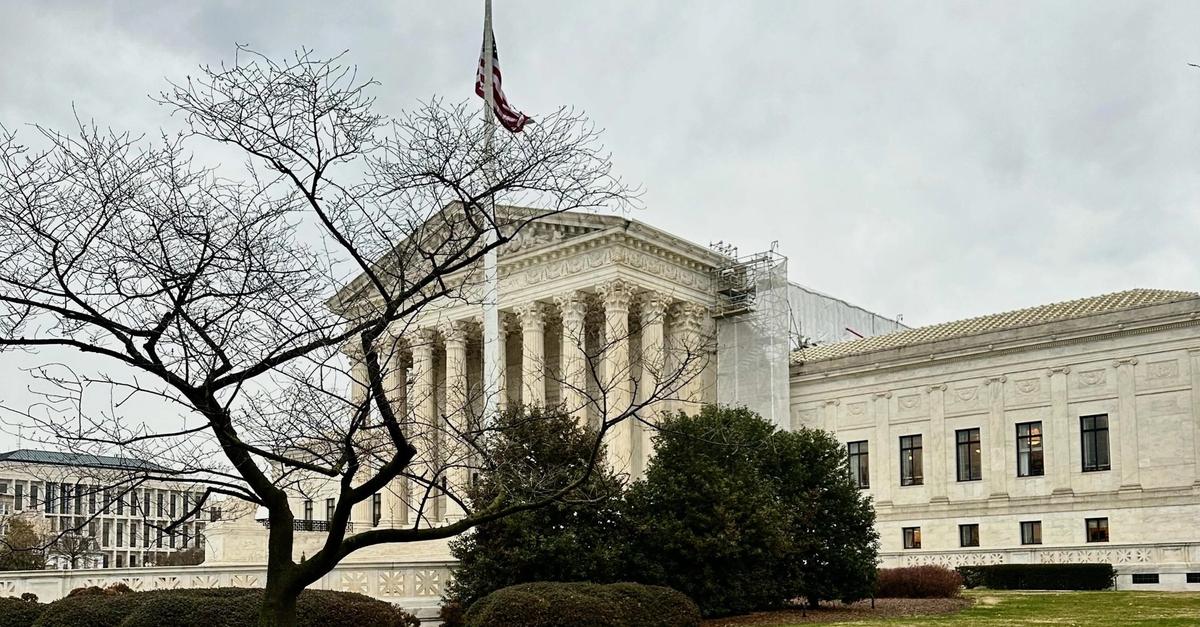
US Supreme Court: Kagan Court Wild Card Justices Drive Pro-Defendant Trend
Summary
- Over the past two terms, 21 out of 30 "pure" criminal law decisions by the Supreme Court have been pro-defendant, representing a 70% rate.
- This trend includes 11 pro-defendant rulings in the 2025-26 term and 10 in the prior term, despite the Court's conservative majority.
- The Court's voting patterns include two consistently pro-government justices (Thomas, Alito) and three consistently pro-defense justices (Sotomayor, Kagan, Jackson).
- Four "wild card" justices—Chief Justice Roberts, Justices Gorsuch, Kavanaugh, and Barrett—are less predictable and crucial for forming five-vote majorities.
- The upcoming case of Beaird v. United States, to be argued next Tuesday, will be an early indicator of this dynamic in the 2026-27 term.
A Shifting Landscape in Criminal Cases
The crucial factor in securing a five-vote majority, however, lies with the four justices often described as `wild card justices criminal cases`: Chief Justice John Roberts and Associate Justices Neil Gorsuch, Brett Kavanaugh, and Amy Coney Barrett.
The United States Supreme Court, despite its generally conservative composition, has demonstrated a notable pro-defendant trend in its criminal law decisions over the past two terms. Out of 30 rulings categorized as "pure" criminal law cases, a significant 21 have favored the defense position. This represents a striking 70% success rate for defendants, challenging conventional expectations given the ideological leanings of the current bench.
This trend is consistent across recent terms. In the 2025-26 term, 11 out of 16 criminal law decisions were pro-defendant. The preceding term saw a similar pattern, with 10 out of 14 such cases also siding with the defense. These statistics suggest a discernible shift in the Court's approach to criminal justice matters, prompting legal observers to analyze the underlying dynamics contributing to these `SCOTUS pro-defense rulings`.
The Influence of 'Wild Card' Justices
Understanding this `SCOTUS criminal law pro-defendant trend` requires examining the voting blocs within the nine-justice court. On one end of the spectrum are Justices Clarence Thomas and Samuel Alito, who consistently lean towards a pro-government stance in criminal matters. Conversely, Justices Sonia Sotomayor, Elena Kagan, and Ketanji Brown Jackson reliably advocate for pro-defense positions, forming a liberal bloc that often aligns with the defendant's interests.
The crucial factor in securing a five-vote majority, however, lies with the four justices often described as `wild card justices criminal cases`: Chief Justice John Roberts and Associate Justices Neil Gorsuch, Brett Kavanaugh, and Amy Coney Barrett. These justices are considered less predictable than their colleagues at either end of the ideological spectrum. Their votes are pivotal in determining outcomes, as a position cannot prevail without at least five concurring justices. This `Kagan court wild card justices criminal cases` dynamic, first articulated in a "wild card" analysis last May, highlights their critical role in shaping the Court's `US Supreme Court criminal justice trends`.
Anticipating Future Outcomes
The consistent pro-defendant outcomes, often attributed to the unpredictable votes of these `Justices Roberts Gorsuch Kavanaugh Barrett criminal`, underscore a significant development for criminal defense attorneys. The ability of the liberal bloc, often led by Justice Kagan's jurisprudential influence, to attract at least two of these swing votes has been instrumental in achieving the observed 70% pro-defendant rate. This pattern suggests that even on a conservative court, opportunities for favorable `SCOTUS pro-defense rulings` exist when the right combination of votes can be secured.
This dynamic will be closely watched as the Court begins its 2026-27 term with the argument in `Beaird v. United States Supreme Court`, scheduled for next Tuesday. The outcome of this and subsequent cases will further illuminate the stability and trajectory of this pro-defendant trend. For appellate strategy, understanding the individual tendencies of the `wild card justices criminal cases` and the overall `Kagan court` influence is paramount for identifying potential favorable precedents and anticipating outcomes in high-stakes criminal appeals.
Practical Implications
Criminal defense attorneys should analyze the influence of 'wild card' justices and the 'Kagan court' trend to inform appellate strategy, identify favorable precedents, and anticipate potential pro-defendant outcomes in Supreme Court criminal cases.
Source
How does this affect you?
Get an AI analysis of this article grounded in your jurisdictions, practice areas, and any policy documents you've uploaded to Wansom.
Finish Reading the Full Story and the Expert Analysis.
Get the latest legal & regulatory intelligence in United States
Wansom is AI and can make mistakes.