
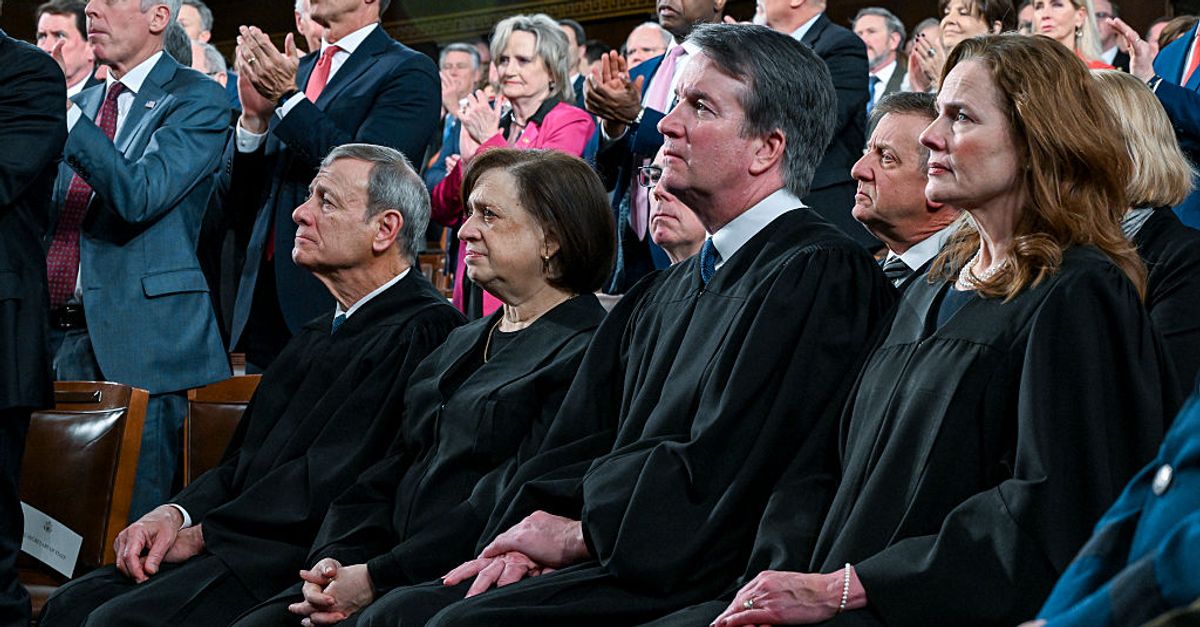
Trump: SCOTUS Justices Ideological Drift Sparks Buyer's Remorse
Summary
- President Trump publicly criticized Justices Amy Coney Barrett and Neil Gorsuch for decisions he viewed as contrary to his agenda, despite appointing them.
- Trump's dissatisfaction stemmed from Barrett's vote against tariffs and anticipated opposition to his executive order on birthright citizenship.
- This phenomenon, dubbed "presidential buyer's remorse" by Jon Hanson, has historical parallels, such as President Eisenhower's alleged regret over appointing Chief Justice Earl Warren.
- Eisenhower initially appointed Warren in 1953 partly due to his pleasing philosophy and a prior political agreement.
- The late Judge Laurence Silberman discussed potential reasons for this ideological drift among Supreme Court justices.
Shifting Allegiances on the High Court
This historical pattern underscores the inherent unpredictability of judicial appointments and the evolving nature of a justice's judicial philosophy once they ascend to the nation's highest court.
President Donald Trump publicly expressed profound disappointment with two of his Supreme Court appointees, Justices Amy Coney Barrett and Neil Gorsuch, marking a notable instance of perceived SCOTUS justices ideological drift. In September 2020, upon nominating Barrett, Trump lauded her as possessing "unparalleled achievement, towering intellect, sterling credentials, and unyielding loyalty to the Constitution." However, this initial praise gave way to sharp criticism.
By April of an unspecified year following her confirmation, Trump's sentiment had dramatically shifted. He took to Truth Social to declare that "certain 'Republican' Justices have just gone weak, stupid, and bad." His frustration stemmed from Barrett's vote against his administration's tariffs and the anticipation of a ruling that would likely strike down his executive order on birthright citizenship. He specifically named Barrett and Gorsuch, asserting that they "were appointed by me, and yet have hurt our Country so badly!" This public rebuke highlights the tension that can arise when a president's expectations for a justice's judicial philosophy diverge from their actual rulings.
A History of Presidential Regret
The phenomenon of a president regretting a Supreme Court appointment, termed "presidential buyer's remorse Supreme Court" by Harvard Law School professor Jon Hanson, is not unique to recent administrations. A prominent historical example involves President Dwight Eisenhower and his 1953 selection of Earl Warren as chief justice. Eisenhower's decision was influenced by several factors, including Warren's judicial philosophy, which he found pleasing at the time, and a prior commitment made a year earlier to secure Warren's political support.
Despite these initial alignments, Eisenhower's perspective on the Earl Warren Eisenhower appointment reportedly soured within a decade. He is widely believed to have later characterized Warren's appointment as "the biggest damn fool mistake I ever made," though the precise authenticity of this quote remains a subject of historical debate. This historical pattern underscores the inherent unpredictability of judicial appointments and the evolving nature of a justice's judicial philosophy once they ascend to the nation's highest court.
The Unpredictability of Judicial Philosophy
The perceived SCOTUS justices ideological drift, as evidenced by both recent and historical accounts, highlights a fundamental aspect of judicial independence US Supreme Court. Once appointed, justices serve for life and are not beholden to the political whims or expectations of the president who nominated them. This independence allows their judicial philosophy to evolve, sometimes in ways unforeseen by their patrons.
The late Judge Laurence Silberman, who served on the U.S. Court of Appeals for the District of Columbia Circuit, offered insights into a potential cause for this phenomenon in a 1992 speech to the Federalist Society. While the full context of his argument regarding The New York Times' legal reporter is not provided, his discussion points to the complex factors that can influence a justice's trajectory on the bench. The instances involving Justices Amy Coney Barrett and Neil Gorsuch, much like the experience with Chief Justice Earl Warren, serve as powerful reminders that judicial appointments are not guarantees of perpetual ideological alignment, posing significant considerations for long-term legal strategies.
Practical Implications
This analysis underscores the unpredictable nature of judicial appointments, reminding lawyers to consider the potential for ideological shifts among Supreme Court justices when advising on long-term legal strategies or assessing the stability of constitutional precedents.
Source
How does this affect you?
Get an AI analysis of this article grounded in your jurisdictions, practice areas, and any policy documents you've uploaded to Wansom.
Finish Reading the Full Story and the Expert Analysis.
Get the latest legal & regulatory intelligence in United States
Wansom is AI and can make mistakes.