
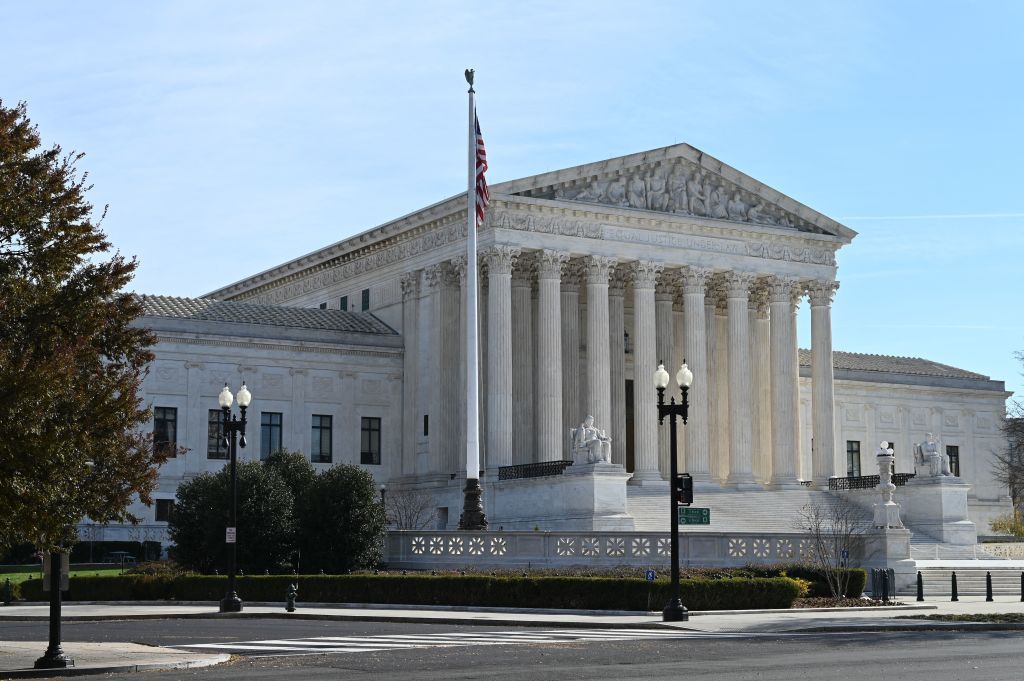
SCOTUSblog: SCOTUS Forecasting Contest Cases Compare Human, AI Predictions
Summary
- SCOTUSblog's inaugural Supreme Court forecasting contest is underway, collaborating with Good Judgment Inc. to predict case outcomes.
- The contest aims to compare human collective judgment against artificial intelligence in forecasting Supreme Court decisions.
- Three key cases from the October session, Suncor Energy Inc. v. County Commissioners of Boulder County, Johnson v. United States Congress, and Beaird v. United States, have already been argued.
- Suncor Energy Inc. v. Boulder County addresses federal preemption, Johnson v. United States Congress concerns disability benefits jurisdiction, and Beaird v. United States examines sentencing guideline deference.
- St. Mary Catholic Parish v. Roy is scheduled for oral argument on November 3, and predictions for this case are currently open.
The Inaugural SCOTUSblog Forecasting Challenge
The eventual rulings could establish significant precedents, directly influencing client litigation strategies and shaping regulatory compliance across various sectors.
As the Supreme Court prepares for its second round of oral arguments in the 2026-27 term, attention is turning to the progress of SCOTUSblog's initial Supreme Court forecasting contest. This unique initiative, a partnership with Good Judgment Inc., offers both seasoned Supreme Court observers and general enthusiasts an opportunity to formally anticipate the outcomes of the term's most significant cases. A core objective is to evaluate the accuracy of human collective judgment against the predictive capabilities of artificial intelligence, or even what is termed 'Super Intelligence', providing a fascinating comparison of analytical prowess.
This innovative SCOTUSblog contest predictions effort aims to engage the public and legal community in a deeper understanding of the Court's work. By July, SCOTUSblog plans to announce the identities of the three individuals who demonstrate the highest forecasting accuracy, presenting them with commemorative merchandise. Their successful predictions will also be benchmarked against those generated by machine algorithms, adding an intriguing layer to the competition and offering insights into different predictive methodologies.
Pivotal Cases from the October Session
The initial phase of the SCOTUS forecasting contest cases centered on several key disputes argued during the October session. On October 5, the Court heard arguments in Suncor Energy Inc. v. County Commissioners of Boulder County, which asks whether Boulder's state-law tort claims are preempted by federal law. The same day, Johnson v. United States Congress was argued, presenting the question of whether a district court possesses jurisdiction to hear any of the disability benefit claims brought by Floyd Johnson. These cases represent critical areas of federal-state relations and administrative law, respectively.
Another significant case from the October session was Beaird v. United States, argued on October 13. This case challenges whether Stinson v. United States remains the correct precedent for the deference courts must accord to the Commentary of the Federal Sentencing Guidelines. The outcomes of these early arguments are keenly awaited by participants in the forecasting challenge, as they will determine the accuracy of initial predictions and potentially set important legal precedents.
Upcoming Arguments and Broader Implications
Looking ahead, participants in the Supreme Court forecasting contest can now submit predictions for cases scheduled in the current argument session. Among these is St. Mary Catholic Parish v. Roy, slated for oral argument on November 3. While the specific legal question for this case was not detailed in the contest's initial overview, its inclusion highlights the ongoing nature of the competition and the breadth of issues the Court addresses.
The legal questions presented in these SCOTUS forecasting contest cases—ranging from federal preemption and judicial jurisdiction over disability benefits to the interpretation of sentencing guidelines—carry substantial weight for the legal landscape. The eventual rulings could establish significant precedents, directly influencing client litigation strategies and shaping regulatory compliance across various sectors. Legal professionals, including lawyers and compliance officers, should closely monitor the progress and ultimate decisions in these matters, as they hold the potential to redefine established legal frameworks.
Practical Implications
Lawyers and compliance officers should monitor the progress and eventual rulings in these Supreme Court cases, particularly those concerning federal preemption, disability benefits jurisdiction, and sentencing guideline deference, as the outcomes could establish significant precedents impacting client litigation strategies and regulatory compliance.
Source
How does this affect you?
Get an AI analysis of this article grounded in your jurisdictions, practice areas, and any policy documents you've uploaded to Wansom.
Wansom is AI and can make mistakes.