
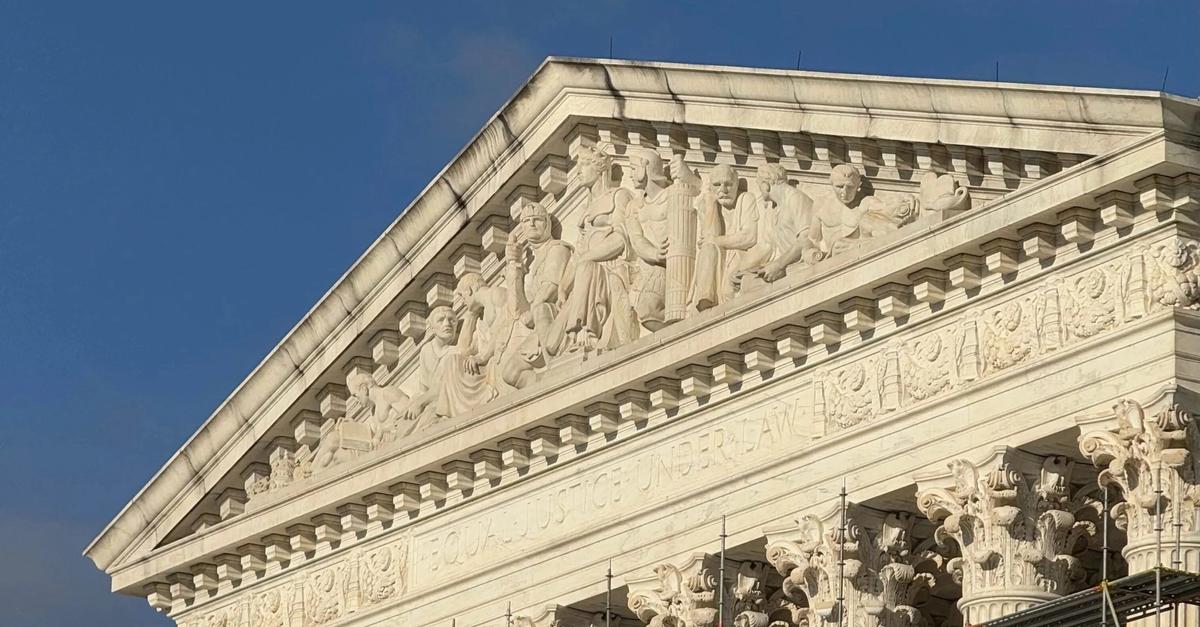
SCOTUS: Denies Trump Bid To Halt USPS Mail-In Voting Rules
Summary
- The Supreme Court denied the Trump administration's request to pause a district court ruling that blocked parts of a new USPS mail-in voting rule.
- Justice Brett Kavanaugh wrote a concurring opinion, while Justices Samuel Alito and Clarence Thomas dissented.
- A federal judge, appointed by Trump, had previously issued a preliminary injunction against the USPS rule, citing concerns it could hinder voting and exceeded Postal Service authority.
- Legal experts note a surge in election-related cases before the Supreme Court, exceeding historical norms and raising concerns about distrust and confusion.
- Factors accelerating this trend include a weakened Voting Rights Act, political pressure on states to redraw maps, and efforts to introduce new voting rules.
Supreme Court Rejects Mail-In Voting Pause
The Supreme Court recently denied a request from the Trump administration to halt a lower court's decision that blocked certain aspects of a new U.S. Postal Service (USPS) rule concerning mail-in voting.
The Supreme Court recently denied a request from the Trump administration to halt a lower court's decision that blocked certain aspects of a new U.S. Postal Service (USPS) rule concerning mail-in voting. This denial, issued on a Monday, means that the district court's ruling, which prevented the implementation of these specific parts of the USPS regulation, remains in effect. The administration had sought to pause this ruling, effectively attempting to allow the new mail-in voting requirements to proceed.
Justice Brett Kavanaugh issued a concurring opinion regarding the high court's decision, while Justice Samuel Alito penned a dissenting opinion, which was joined by Justice Clarence Thomas. This development follows a separate federal judicial action taken just days prior. On Sunday, U.S. District Judge Carl Nichols, an appointee of the Trump administration, issued a preliminary injunction against the new USPS restrictions. This injunction was granted in response to a request from the Democratic Party and organizations including the NAACP.
These groups argued that the USPS rule, which aimed to tighten mail-in voting requirements, constituted an unlawful overreach by the federal government into the administration of elections. Judge Nichols concurred with this assessment, stating in his written decision that the new regulation could impede some individuals' ability to vote by mail and that the Postal Service had exceeded its statutory authority in issuing the rule. Reuters reported on this injunction, which preceded the Supreme Court's Monday decision.
Escalating Election Litigation
The Supreme Court has been grappling with a significant number of high-stakes election-related cases on its interim docket in recent months, a trend that legal experts anticipate will continue with more decisions and disputes on the horizon. According to The Washington Post, legal observers have noted that the volume of these cases already surpasses historical norms, particularly for a midterm election cycle. This flurry of litigation has raised concerns among experts, who fear it could exacerbate distrust in the electoral process and contribute to widespread confusion among voters.
While election-related cases have seen a gradual increase over several decades, three primary factors have dramatically accelerated this trend in the current year. First, a pivotal Supreme Court decision that weakened the 1965 Voting Rights Act prompted several Southern states to quickly redraw their electoral maps, often leading to contested outcomes. Second, former President Trump's persistent pressure on Republican-led states to revise their own maps has fueled further disputes, alongside corresponding efforts by Democrats to respond in kind. Lastly, Trump's aggressive campaign to introduce new voting rules has significantly contributed to the surge in legal challenges, as reported by The Washington Post and the Associated Press.
Ongoing Electoral Disputes
The Trump administration has recently renewed its efforts to utilize the Department of Homeland Security's Systematic Alien Verification for Entitlements (SAVE) database to identify noncitizens on state voter rolls, filing an emergency application with the Supreme Court in September 2026 after lower courts blocked its expanded use. This legal matter remains ongoing, with the Supreme Court yet to rule on the administration's latest request to lift the injunctions. These ongoing legal battles underscore the intense and multifaceted nature of electoral disputes currently facing the nation's highest court, reflecting a broader landscape of contention over voting procedures and election administration.
Source
How does this affect you?
Get an AI analysis of this article grounded in your jurisdictions, practice areas, and any policy documents you've uploaded to Wansom.
Finish Reading the Full Story and the Expert Analysis.
Get the latest legal & regulatory intelligence in United States
Wansom is AI and can make mistakes.