
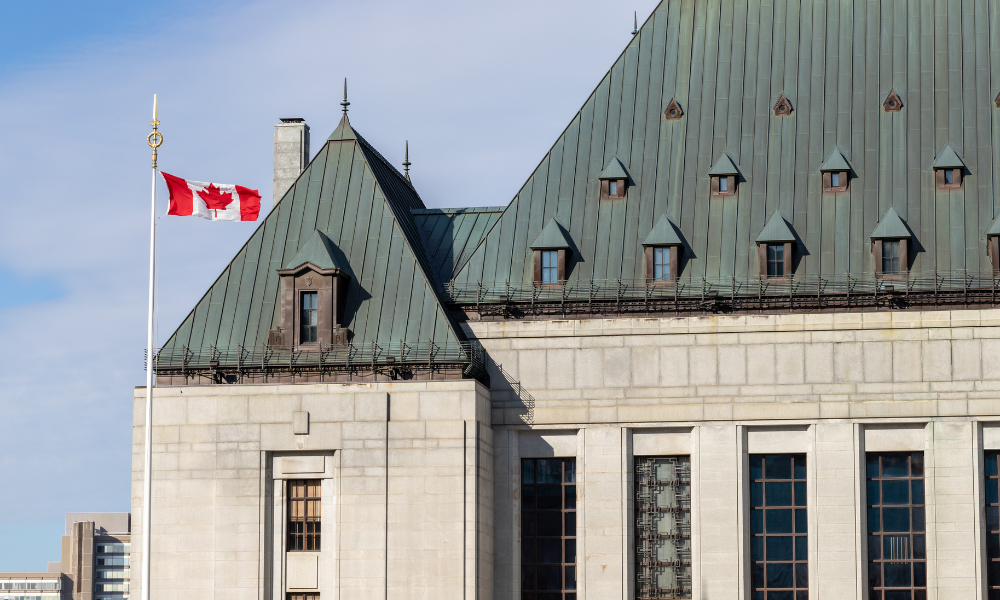
Supreme Court of Canada: SCC Fall Session Appeals Preview Features 31 Cases
Summary
- The Supreme Court of Canada's fall session will hear 31 appeals, marking Justice Glenn Joyal's inaugural session.
- A key case will determine if Canadian courts can assert jurisdiction over international price-fixing schemes originating entirely outside the country.
- Another appeal concerns the appropriate use of habeas corpus to challenge operational decisions within correctional facilities, following inmate lockdowns.
- The Court will also examine the constitutionality of an Ontario law that exempted the Ontario Place redevelopment from environmental assessments and judicial oversight.
- These largely civil cases will be heard at the SCC's temporary Ottawa location during the historic courthouse's renovation.
Overview of the Fall Session
The upcoming session will delve into fundamental questions regarding the reach of Canadian law, the balance between legislative power and judicial review, and the rights of individuals within the correctional system.
The Supreme Court of Canada is set to hear arguments in 31 cases during its upcoming fall session, a significant increase from the number of appeals heard this past spring. This busy docket, which predominantly features civil cases, marks the inaugural session for SCC Justice Glenn Joyal, who joined the high court in July. The proceedings will take place at the Supreme Court's temporary Ottawa location, as its historic courthouse undergoes a decade-long renovation.
Extraterritorial Jurisdiction in Competition Law
On October 8, the SCC will consider a complex class action lawsuit originating from British Columbia, which alleges that Canadian consumers were harmed by an international price-fixing scheme. This scheme, involving suspension assemblies used in computer hard drives, purportedly inflated prices. A central issue in this appeal is that the manufacturers, based in Japan, are accused of creating and implementing these price-fixing agreements entirely outside of Canada.
In 2022, the British Columbia Supreme Court certified this national class proceeding, consolidating similar lawsuits from Ontario and Quebec. This decision was subsequently upheld by the British Columbia Court of Appeal in 2024, prompting the manufacturers to appeal to the Supreme Court of Canada. The core legal question before the SCC is whether Canadian courts possess the authority to adjudicate competition cases that stem from events occurring beyond the nation's borders. Eight intervenors have been granted permission to participate in this significant case.
Habeas Corpus and Correctional Facility Operations
The Court will also address the case of *Durrell Diggs* on October 13, which has attracted 15 intervenors, making it the appeal with the second-highest number of participating parties this session. This case arises from separate habeas corpus applications filed by two inmates at the Central Nova Scotia Correctional Facility. The inmates challenged rotational lockdowns imposed in 2023, which resulted in them spending more time confined to their cells than usual.
The lockdowns occurred because the facility lacked sufficient staff to safely release all inmates simultaneously to access common areas, a deviation from its standard practice. In 2024, the Supreme Court of Nova Scotia ruled that these lockdowns were unlawful and constituted a deprivation of liberty. However, the following year, the Nova Scotia Court of Appeal determined that the lower court had overstepped its jurisdiction by using a habeas corpus proceeding—a mechanism for challenging the lawfulness of confinement—to review the correctional facility's operational decisions. The appellate court set aside the initial ruling, suggesting that challenges to facility operations should be pursued through alternative legal avenues, such as a Charter lawsuit. The inmates have since appealed this decision to the SCC, with intervenors including the attorneys general of Canada, Ontario, British Columbia, and Saskatchewan, alongside the Canadian Civil Liberties Association and organizations representing inmates' interests.
Legislative Authority and Judicial Scrutiny
Another pivotal appeal before the SCC concerns the Rebuilding Ontario Place Act. In 2023, following a lawsuit filed by a grassroots organization alleging the Ontario government failed to conduct a required environmental assessment for its Ontario Place redevelopment, the government enacted this legislation. The Act specifically exempted the project from various obligations, including environmental assessments and noise regulations, and crucially, barred any lawsuits against the Crown or its agents arising from the project.
Subsequently, another group, the Ontario Place Protectors, launched a legal challenge against this legislation. They contended that the law was unconstitutional and represented a "breach of public trust" by exempting the Ontario Place project from established laws and judicial oversight. Both the Ontario Superior Court of Justice and the Ontario Court of Appeal dismissed the group's lawsuit, leading to the current appeal before the Supreme Court of Canada.
Source
How does this affect you?
Get an AI analysis of this article grounded in your jurisdictions, practice areas, and any policy documents you've uploaded to Wansom.
Finish Reading the Full Story and the Expert Analysis.
Get the latest legal & regulatory intelligence in Canada
Wansom is AI and can make mistakes.