
SC: Refuses Bail Cancellation for Vishal Over 'Money Power' Video
Summary
- The India Supreme Court refused to cancel the bail of Vishal, a murder accused, despite a social media video where he allegedly claimed "money and power can get you anything."
- The Court observed that the video appeared to be a celebration of his liberty, with Justice Nath humorously noting that any "money" involved was likely for legal fees.
- The petitioner had challenged Vishal's bail, granted by the Punjab and Haryana High Court, citing his alleged role in the fatal axe blow, a history of five bail applications, and claims of witness intimidation.
- The ruling reinforces a high threshold for bail cancellation in India, indicating that post-release social media conduct, if not directly interfering with justice, may not be sufficient grounds for revocation.
- The decision highlights the judicial distinction between an accused celebrating their freedom and actively undermining the legal process.
Supreme Court Upholds Bail Despite Controversial Video
The Court's emphasis on distinguishing between merely celebrating one's freedom and actively interfering with the administration of justice is a crucial takeaway for legal practitioners and the judiciary alike.
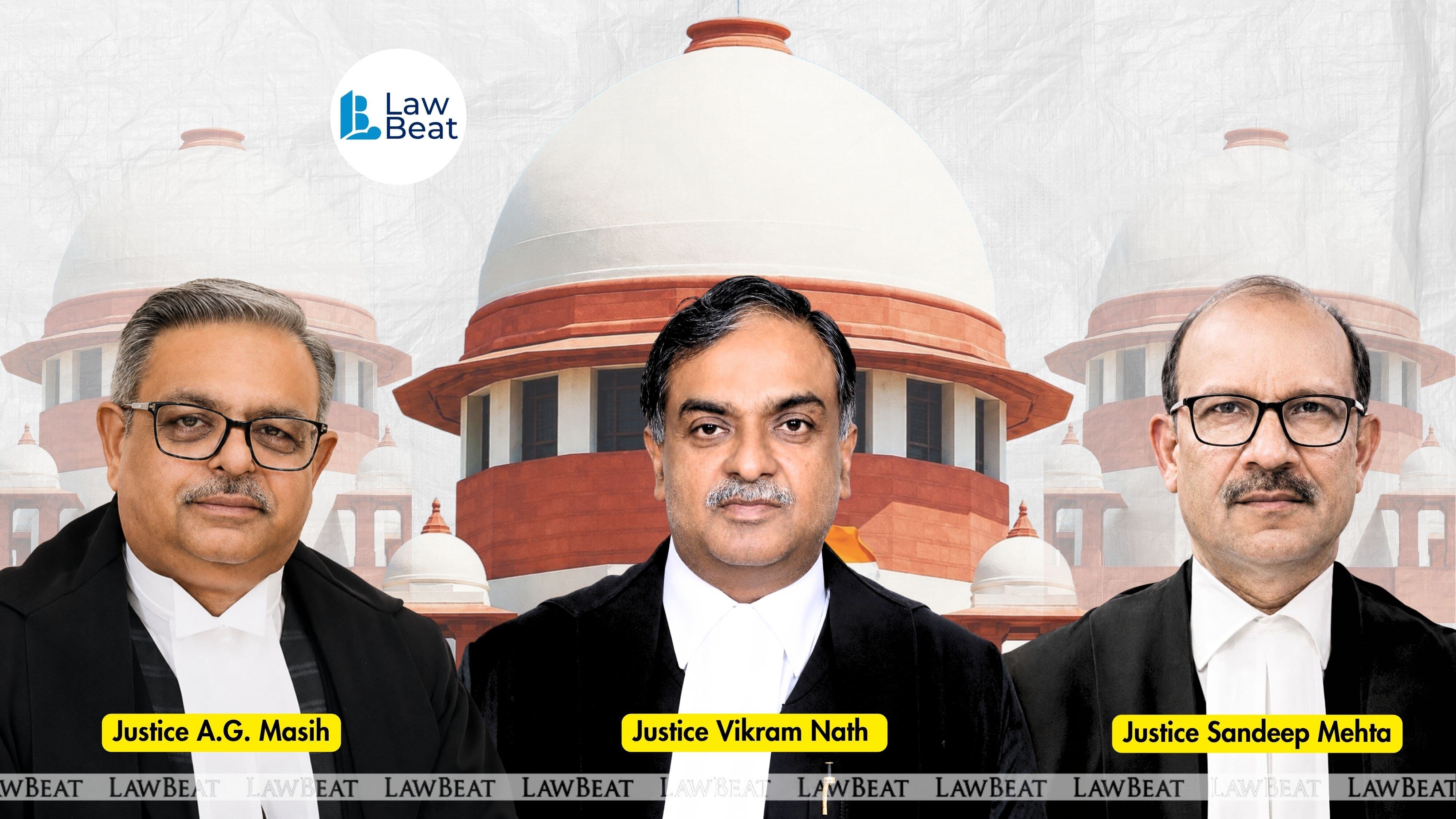
The India Supreme Court recently declined a plea to cancel the bail granted to Vishal, an individual accused in a murder case, even after he posted a contentious social media video following his release. The video, which allegedly suggested that “money and power can get you anything in this country,” became a central point of contention in the challenge. However, a Bench comprising Justices Vikram Nath, Augustine George Masih, and Sandeep Mehta observed that the post appeared to be more of a celebration of the accused's newfound liberty. Justice Nath humorously remarked on the irony, stating that if the accused truly possessed such influence, he would not have been incarcerated in the first place, attributing any "money" involved to legal fees.
This decision stems from a challenge to an order issued by the Punjab and Haryana High Court on April 23, 2026, which had granted regular bail to Vishal. The petitioner sought to revoke this bail, arguing that Vishal's conduct post-release, particularly his social media activity, demonstrated a clear misuse of the freedom afforded to him. The Supreme Court's refusal to cancel the bail, despite the provocative nature of the video, underscores a specific judicial interpretation of what constitutes grounds for revoking pre-trial release.
Petitioner's Arguments for Bail Revocation
The petitioner presented a comprehensive case for the cancellation of Vishal's bail, highlighting several critical points. Foremost among these was Vishal's direct involvement in the murder of Gajanand, where he was specifically named in the First Information Report (FIR) and accused of delivering the fatal axe blow to the deceased's head. The incident reportedly involved an unlawful assembly that attacked the complainant's party, resulting in Gajanand's death and injuries to multiple others. The petitioner also noted that the Punjab and Haryana High Court itself, when granting bail to co-accused Sahil in January 2024, had previously recorded that Vishal was alleged to have inflicted the fatal injury.
Further, the challenge emphasized the procedural history, pointing out that the April 2026 bail application was Vishal's fifth attempt at securing regular bail from the High Court. It was contended that there had been no substantial change in circumstances to justify a departure from earlier rejections of his bail pleas. The petitioner cited the Supreme Court's precedent in *Ram Govind Upadhyay v. Sudarshan Singh*, which distinguishes between the considerations for granting and cancelling bail, and stresses the necessity of explaining any deviation from prior denials. Allegations of witness intimidation were also raised, including claims that the cross-examination of Dharmender, the deceased's son, remained incomplete due to delays caused by the accused. An earlier FIR had also been lodged against Vishal's father under Section 351 of the Bharatiya Nyaya Sanhita (BNS), 2023 (which replaced Section 506 of the Indian Penal Code on July 1, 2024) for alleged threats. The petitioner asserted that the entire incident was captured on video, which purportedly demonstrated Vishal's role, and argued that the High Court had overlooked these crucial details, along with relying on distinguishable legal precedents such as *Ashim @ Asim Kumar Haranath Bhattacharya v. National Investigation Agency* and *Javed Gulam Nabi Shaikh v. State of Maharashtra*.
Judicial Interpretation of Post-Release Conduct
The India Supreme Court's stance in this matter provides significant clarity on the threshold for bail cancellation, particularly concerning the social media conduct of an accused after their release. The Bench interpreted Vishal's social media post not as an act of interference with justice or a threat, but rather as an expression of relief and celebration of his regained liberty. This interpretation was central to the Court's decision to maintain the bail, suggesting a distinction between perceived boastfulness or poor judgment and actual actions that undermine the judicial process.
The Court's observations, including Justice Nath's lighthearted remark about legal fees being the true "money and power," indicate a reluctance to revoke bail based solely on a celebratory or even provocative social media presence, unless it directly demonstrates an intent to obstruct justice, tamper with evidence, or intimidate witnesses. This approach reinforces the principle that bail, once granted, should not be easily rescinded without clear and compelling evidence of its misuse in a manner that directly impacts the trial or safety of others. The Court implicitly distinguished between the petitioner's claims of general fear and apprehension caused by the video and the direct evidence required for bail revocation.
Implications for India's Bail Jurisprudence
This ruling by the India Supreme Court reinforces the high threshold required for the cancellation of bail, particularly when the grounds for revocation are based on an accused's post-release social media activity. The decision signals that while such conduct might be viewed as inappropriate or boastful, it may not, on its own, be sufficient to warrant the revocation of bail if the initial grant was legally sound. The Court's emphasis on distinguishing between merely celebrating one's freedom and actively interfering with the administration of justice is a crucial takeaway for legal practitioners and the judiciary alike.
The case highlights that for bail to be cancelled, there must typically be concrete evidence of actions such as witness tampering, destruction of evidence, or a direct threat to the safety of others, rather than just a perceived "misuse of liberty" through social media. This precedent provides important guidance on the boundaries of acceptable post-bail conduct and the robust legal protections afforded to individuals once bail has been secured. It underscores the judiciary's careful consideration of individual liberty against the imperative of ensuring a fair trial, setting a high bar for subsequent bail revocation applications.
Practical Implications
This ruling clarifies the high threshold for bail cancellation in India, indicating that post-release social media conduct, even if perceived as boastful or implying influence, may not be sufficient grounds if the initial bail grant was legally sound. Lawyers should note the Court's emphasis on distinguishing between celebrating liberty and actual interference with justice when advising clients on bail conditions and potential revocation.
Source
How does this affect you?
Get an AI analysis of this article grounded in your jurisdictions, practice areas, and any policy documents you've uploaded to Wansom.
Finish Reading the Full Story and the Expert Analysis.
Get the latest legal & regulatory intelligence in India
Wansom is AI and can make mistakes.