
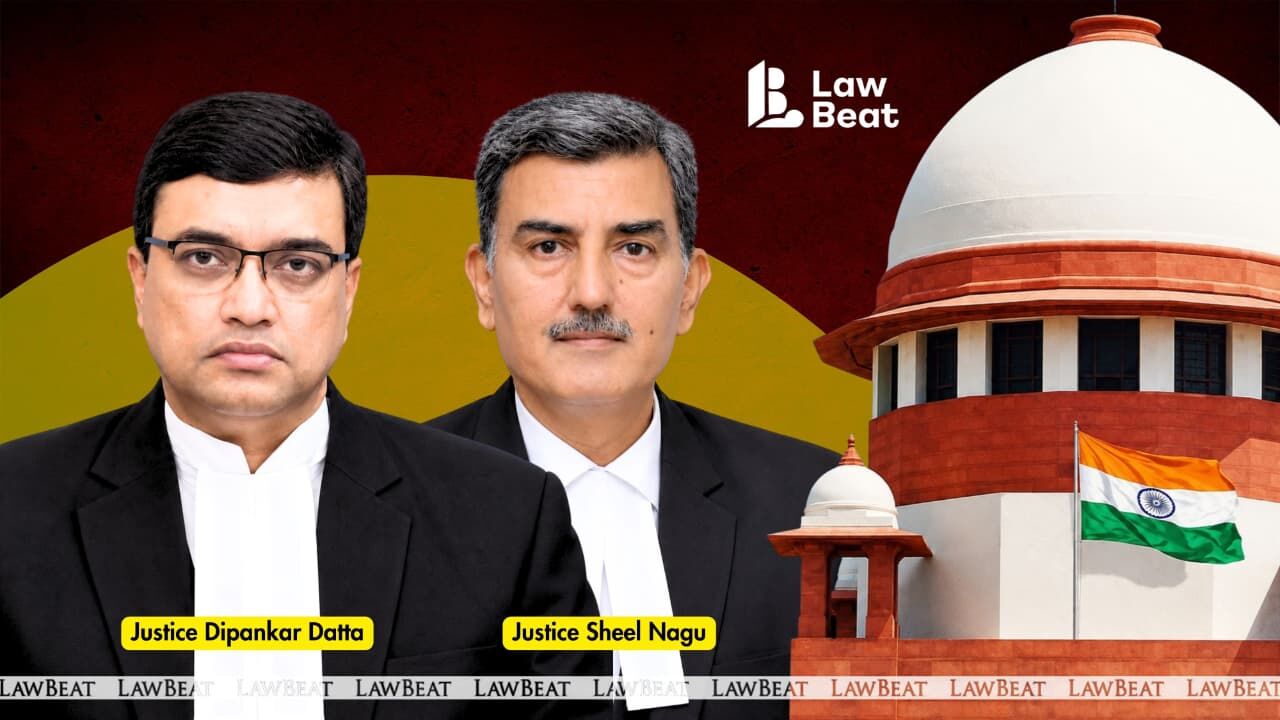
SC Grants Bail: PHED Prolonged Detention Unjustified
Summary
- The Supreme Court granted bail to Shubhanshu Dixit and Sanjay Badaya in the alleged Public Health Engineering Department (PHED) scam.
- The Court cited the prolonged pre-trial detention and the unlikelihood of a swift trial as key reasons for its decision.
- The investigation against the appellants was complete, chargesheets filed, and evidence secured, reducing the risk of tampering.
- Other co-accused, including former minister Mahesh Chandra Joshi, had already secured bail in related cases.
- The bail conditions require diligent participation in the trial, with the Court clarifying it expressed no opinion on the case's merits.
What Happened
A central tenet of the Supreme Court's decision was the principle that pre-trial detention should not transform into a punitive measure.
The Supreme Court recently intervened in the ongoing Public Health Engineering Department (PHED) scam, granting bail to two key individuals, Shubhanshu Dixit and Sanjay Badaya. This decision underscores the judiciary's stance against indefinite pre-trial incarceration, particularly when a trial's commencement and conclusion remain distant. Dixit, who serves as the Secretary of the Rajasthan Water Supply and Sewerage Management Board (RWSSMB), and Badaya, identified as a private individual and alleged broker for then-Rajasthan Minister Mahesh Chandra Joshi, had their bail pleas approved by a bench comprising Justices Dipankar Datta and Sheel Nagu.
The case stems from an FIR registered on October 30, 2024, at the Anti-Corruption Bureau Police Station in Jaipur. The allegations involve various sections of the Prevention of Corruption Act, including 7(c), 9, 10, 13(1)(a) read with 13(2), and 12. The State had vehemently opposed the bail applications, arguing that economic offenses, often characterized by deep-rooted conspiracies, demand serious consideration. While acknowledging the gravity of such allegations, the Supreme Court ultimately prioritized the constitutional right to personal liberty, citing the protracted nature of the judicial process in this instance.
Court's Rationale
A central tenet of the Supreme Court's decision was the principle that pre-trial detention should not transform into a punitive measure. The bench emphasized the imperative to protect the fundamental right to personal liberty, enshrined under Article 21 of the Constitution, especially when a trial's timely conclusion appears improbable. The Court observed that the investigation against both Dixit and Badaya had been completed, and chargesheets were already on file. Crucially, the prosecution's evidence primarily consisted of documentary records and electronic trails, which had been secured and were in the safe custody of the investigating agency, thereby significantly reducing any apprehension of evidence tampering.
Despite the State's concerns regarding the seriousness of economic offenses, the Court weighed other critical factors. It noted the voluminous nature of the material to be presented before the trial court and that the proceedings were still in their preliminary stages, with charges yet to be framed and the trial itself not having commenced. Further complicating matters, investigations against some co-accused remained pending, two individuals were absconding, and sanction under Section 19 of the Prevention of Corruption Act had only been granted on September 6, 2026, for the prosecution of six other public servant co-accused. These factors collectively led the bench to conclude that the trial would inevitably be a lengthy and protracted exercise.
Legal Context and Precedent
The Supreme Court's ruling also took into account the broader context of the alleged PHED scam, including the status of other individuals implicated in the larger conspiracy. It was noted that certain co-accused had already been granted bail or protective orders. For instance, Arun Srivastava had secured bail from the high court on June 1, 2026. Significantly, the then-PHED Minister, Mahesh Chandra Joshi, had been granted bail by the Supreme Court itself on December 3, 2025, in a corresponding Prevention of Money Laundering Act (PMLA) case that originated from the same initial FIR.
This consideration of parity among co-accused, coupled with the anticipated delays, reinforced the Court's view that continued pre-trial custody for Dixit and Badaya would serve no meaningful purpose. Section 19 of the Prevention of Corruption Act, which mandates prior valid sanction from a competent authority before courts can take cognizance of corruption offenses committed by public servants, further highlighted the procedural complexities contributing to the trial's expected duration. The Court implicitly underscored that while the seriousness of the charges is undeniable, the procedural realities and the right to liberty must also be balanced.
Conditions and Future Proceedings
In granting bail, the Supreme Court imposed specific conditions on Shubhanshu Dixit and Sanjay Badaya. They are required to diligently participate in the trial proceedings and appear before the trial court on all fixed dates, unless a specific exemption is granted. This ensures their cooperation with the judicial process while out on bail. The bench explicitly clarified that its decision to grant bail should not be interpreted as an expression of opinion on the merits of the allegations themselves.
Furthermore, the Court refrained from commenting on the specific roles attributed to the appellants or the evidentiary value of the records gathered by the investigating agency. These crucial aspects, the bench stated, are to be independently and thoroughly considered by the trial court during the substantive proceedings. The Supreme Court's order effectively set aside previous high court orders dated June 1, 2026, and August 13, 2026, which had presumably denied bail to the appellants. This ruling reaffirms the principle that prolonged pre-trial detention, without a clear path to a timely trial, risks becoming punitive and thus infringes upon fundamental rights.
Source
How does this affect you?
Get an AI analysis of this article grounded in your jurisdictions, practice areas, and any policy documents you've uploaded to Wansom.
Finish Reading the Full Story and the Expert Analysis.
Get the latest legal & regulatory intelligence in India
Wansom is AI and can make mistakes.