
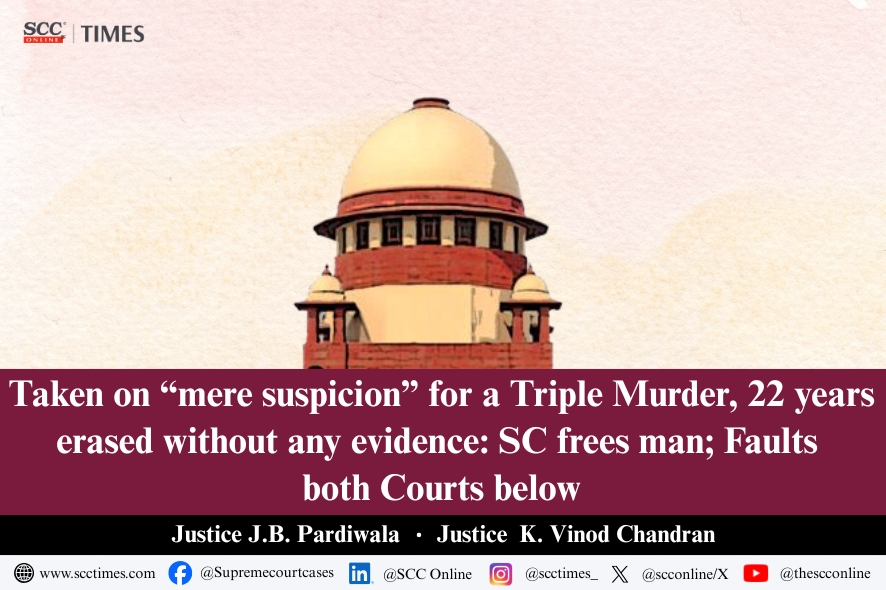
Supreme Court of India Acquits Life Convict After 22 Years Citing Unreliable Eyewitness Evidence
Summary
- The Supreme Court acquitted a man who spent 22 years in prison for a triple murder due to unreliable eyewitness testimony.
- The court emphasized the need for lower courts to adopt a proactive approach in condoning delays in criminal appeals filed by convicts.
- This decision has significant implications for future cases where convictions rely heavily on eyewitness testimony.
What Happened
The Supreme Court's judgment emphasizes the importance of Constitutional Courts taking a proactive approach to condoning delays in criminal appeals filed by convicts.
A man spent 22 years in prison after being convicted of a triple murder, despite the prosecution's case relying heavily on a single eyewitness account. The Supreme Court has now set aside his conviction, citing the unreliability of this eyewitness testimony as the primary reason for its decision. This acquittal marks a significant development in India's criminal justice system, highlighting the need for courts to carefully scrutinize evidence and avoid convictions based on shaky testimony.
Legal Context
The Supreme Court's judgment emphasizes the importance of Constitutional Courts taking a proactive approach to condoning delays in criminal appeals filed by convicts. This decision comes as a wake-up call for lower courts, which have been criticized for their handling of such cases. The court's ruling underscores the need for a more nuanced understanding of eyewitness testimony and its limitations, particularly when it is the sole basis for conviction.
Why It Matters
The acquittal has significant implications for future cases where convictions rely heavily on eyewitness testimony. Lawyers will need to carefully consider whether similar delays in appeals could lead to acquittals. The judgment also highlights the importance of Constitutional Courts taking a proactive approach to addressing delays in criminal appeals, ensuring that justice is served without undue delay.
Practical Implications
Lawyers should watch for the implications of this judgment on future cases where convictions rely heavily on eyewitness testimony, and consider whether similar delays in appeals could lead to acquittals.
Source
Source: Original reporting via SCC Times
How does this affect you?
Get an AI analysis of this article grounded in your jurisdictions, practice areas, and any policy documents you've uploaded to Wansom.
Wansom is AI and can make mistakes.