
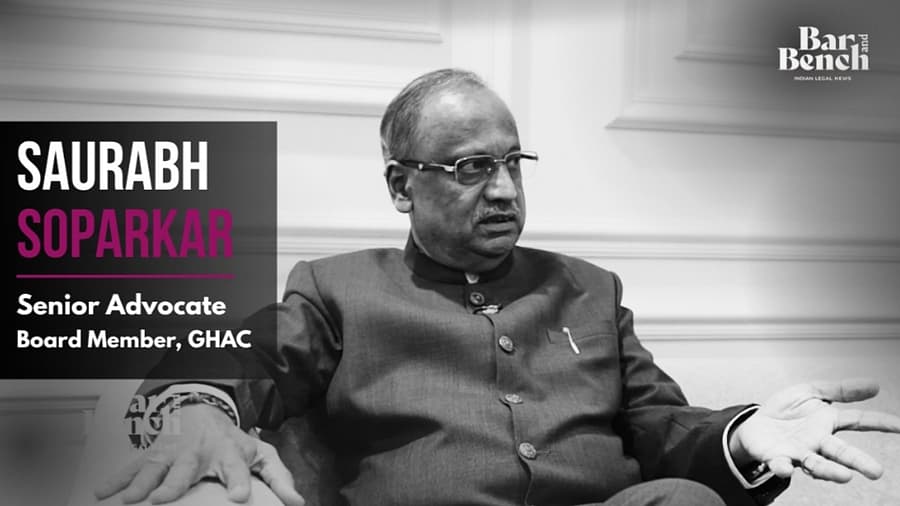
Saurabh Soparkar: Section 29A Fails to Curb Arbitral Delays
Summary
- Senior Advocate Saurabh Soparkar has declared Section 29A of the Arbitration and Conciliation Act, 1996, a complete failure in addressing arbitral delays.
- Soparkar, a prominent legal figure, shared these views during the GHAC Arbitration Week.
- He noted that most domestic parties in India overwhelmingly favor ad hoc arbitration due to a lack of awareness about institutional arbitration.
- Businesses are largely unfamiliar with the concept of an independent, neutral body managing the entire arbitration process.
- His critique highlights significant challenges in arbitration timelines and the effectiveness of current legislative provisions in India.
Soparkar's Critique of Arbitration Timelines
The strong assertion by Senior Advocate Saurabh Soparkar that Section 29A of the Arbitration Act in India has completely failed carries significant weight, given his extensive experience and influential position.
Senior Advocate Saurabh Soparkar has voiced a strong opinion regarding the efficacy of Section 29A of the Arbitration and Conciliation Act, 1996, asserting its complete failure in addressing arbitral delays. This significant critique from a prominent legal figure highlights ongoing challenges within India's dispute resolution framework, particularly concerning arbitration timelines India challenges.
Known for his extensive practice before the Gujarat High Court, the Income Tax Appellate Tribunal (ITAT), and the National Company Law Tribunal (NCLT) in Ahmedabad, Soparkar is a respected figure in the legal community. He is widely regarded as a doyen of the Gujarat tax bar, having previously served as Standing Counsel for the Income Tax Department in the late 1980s. His academic contributions include 22 years as a Visiting Professor at IIM Ahmedabad, where he imparted knowledge on Corporate Tax Planning and Legal Aspects of Business.
While the original article stated he sits on the board of the Gujarat High Court Arbitration Centre (GHAC), current information indicates that the GHAC Board of Governors is composed of sitting judges of the High Court of Gujarat, and Saurabh Soparkar is not listed as a member, though his deep involvement in arbitration matters is well-established. These "Saurabh Soparkar arbitration views" were shared during an interview with Neha Joshi of Bar & Bench, conducted amidst the vibrant GHAC Arbitration Week at GIFT City, Gandhinagar. The discussion touched upon critical areas such as institutional arbitration, judicial pendency, and tax indemnities, setting the stage for his pointed remarks on the perceived Section 29A Arbitration Act India failure.
The Landscape of Indian Arbitration
Soparkar's observations extend beyond a mere critique of Section 29A, delving into the broader landscape of arbitration in India, particularly within Gujarat. He noted a significant preference among domestic parties for ad hoc arbitration, a trend that poses challenges for the adoption of more structured dispute resolution mechanisms. This preference contributes to the overall arbitration timelines India challenges.
During the interview, Soparkar emphasized the prevailing lack of awareness regarding institutional arbitration. He pointed out that many businesses are familiar only with the ad hoc model, where each party appoints an arbitrator, and these two then select a third. This traditional approach is deeply ingrained, making it difficult to introduce alternatives.
The concept of an independent, neutral body overseeing the entire arbitration process remains largely unknown to the business community, according to Soparkar. This highlights a fundamental gap in understanding the alternatives available for efficient dispute resolution, impacting the growth of institutional arbitration Gujarat India. He stressed the imperative to educate parties about this alternative, suggesting that a lack of knowledge contributes to the overwhelming preference for less formalized ad hoc processes, which may not always align with the objectives of timely resolution that Section 29A aims to promote.
Why Soparkar's Stance Matters
The strong assertion by Senior Advocate Saurabh Soparkar that Section 29A of the Arbitration Act in India has completely failed carries significant weight, given his extensive experience and influential position. His insights are particularly relevant for lawyers and compliance officers navigating the complexities of Indian arbitration, especially concerning "Saurabh Soparkar Section 29A arbitral delays."
His perspective underscores potential inefficiencies within the existing framework designed to manage arbitration timelines India challenges. This could influence strategic decisions concerning the drafting of arbitration clauses, managing client expectations regarding the duration of dispute resolution, and potentially advocating for or anticipating legislative reforms aimed at enhancing arbitration efficiency. The "Section 29A Arbitration Act India failure" he describes suggests that the intended benefits of the legislation in ensuring timely awards may not be fully realized on the ground.
Soparkar's critique serves as a crucial indicator of the practical challenges faced by practitioners despite legislative efforts to streamline the process. His views implicitly call for a re-evaluation of how arbitration is perceived and implemented, especially in regions like Gujarat, where he observes a clear preference for ad hoc mechanisms over institutional ones, partly due to a lack of awareness. This highlights a need for concerted efforts to promote and explain the advantages of institutional arbitration.
Practical Implications
Lawyers and compliance officers involved in Indian arbitration should note this prominent critique of Section 29A, which governs arbitral timelines. This perspective highlights potential inefficiencies and may influence strategic decisions regarding arbitration clauses, managing client expectations on dispute resolution duration, and advocating for or anticipating legislative reforms concerning arbitration efficiency.
Source
How does this affect you?
Get an AI analysis of this article grounded in your jurisdictions, practice areas, and any policy documents you've uploaded to Wansom.
Finish Reading the Full Story and the Expert Analysis.
Wansom is AI and can make mistakes.