
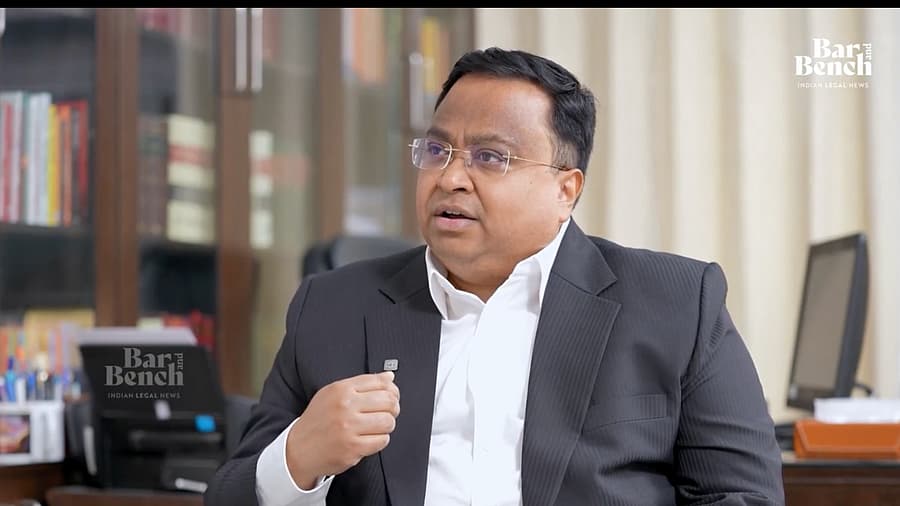
Sasmit Patra: Questions Homebuyers' IBC Financial Creditor Status
Summary
- Rajya Sabha MP Sasmit Patra questioned the inclusion of homebuyers in IBC Committees of Creditors.
- Patra argued that homebuyers' interests often conflict with institutional financial creditors' commercial wisdom.
- He stated that recognizing homebuyers as financial creditors has reduced RERA's relevance.
- Patra also highlighted issues like unrealistic timelines, tribunal vacancies, large haircuts, and collusion within the insolvency system.
- Despite challenges, Patra believes the IBC has largely succeeded in sustaining going concerns, outperforming older debt recovery mechanisms.
Patra Questions Homebuyers' Role in IBC
His primary contention is that the interests and decision-making processes of homebuyers can frequently diverge from, and even conflict with, the commercial wisdom typically exercised by institutional financial creditors.
Rajya Sabha Member of Parliament and lawyer, Dr. Sasmit Patra, recently voiced significant concerns regarding the role of homebuyers within the Insolvency and Bankruptcy Code (IBC) framework. Speaking on the approaching ten-year milestone of the IBC, Patra specifically questioned the rationale behind including homebuyers in Committees of Creditors (CoCs). His primary contention is that the interests and decision-making processes of homebuyers can frequently diverge from, and even conflict with, the commercial wisdom typically exercised by institutional financial creditors.
Patra's critique centers on the fundamental structure of the IBC and the implications of granting homebuyers financial creditor status. He posits that this designation, while seemingly beneficial to individual property purchasers, introduces complexities into the insolvency resolution process. The presence of diverse homebuyer interests within the CoC, he argues, can impede cohesive decision-making, potentially undermining the efficiency and commercial objectives that the IBC was designed to uphold.
Impact on RERA and Resolution Plans
Further elaborating on the consequences of this inclusion, Patra highlighted that recognizing homebuyers as financial creditors under the IBC has, in his view, diminished the practical relevance of the Real Estate (Regulation and Development) Act (RERA). This suggests a potential overlap or even a superseding effect of the IBC on a law specifically designed to protect real estate consumers. The MP observed that within the CoC, different groups of homebuyers often adopt opposing positions when evaluating proposed resolution plans, further complicating the insolvency resolution process.
This internal discord among homebuyers can create significant hurdles for the successful and timely implementation of resolution strategies. The fragmented nature of their interests, as described by Patra, stands in contrast to the more unified approach often expected from traditional financial institutions. This dynamic raises questions about the efficacy of the current framework in balancing diverse stakeholder interests while striving for efficient corporate insolvency resolution.
Systemic Challenges and IBC's Achievements
Beyond the specific issue of homebuyers, Dr. Patra also addressed several broader systemic challenges facing the Insolvency and Bankruptcy Code. He pointed to the problem of unrealistic insolvency resolution timelines, which often extend beyond statutory limits, contributing to delays and uncertainty. Additionally, he highlighted critical issues within the tribunals responsible for adjudicating these cases, specifically mentioning vacancies and inadequate infrastructure at the National Company Law Tribunal (NCLT) as significant impediments to timely justice.
Patra further acknowledged the persistent criticism surrounding large haircuts, where creditors recover only a fraction of their outstanding dues, and underscored the imperative to address instances of collusion within the insolvency ecosystem. Despite these acknowledged challenges and criticisms, Patra maintained a largely positive outlook on the IBC's overall performance. He asserted that the Code has largely achieved its core objective of sustaining going concerns, a goal he believes it has met more effectively than previous mechanisms such as the Securitisation and Reconstruction of Financial Assets and Enforcement of Security Interest (SARFAESI) Act and various debt recovery tribunals. The NCLT, he concluded, has performed commendably despite the obstacles it faces.
Practical Implications
Lawyers advising clients on insolvency matters, particularly those involving real estate projects, should note the ongoing debate regarding homebuyers' status as financial creditors under the IBC. This perspective from a Rajya Sabha MP could signal future legislative amendments or judicial re-evaluations, impacting strategy for developers, lenders, and homebuyers in CoC proceedings and resolution plans.
Source
How does this affect you?
Get an AI analysis of this article grounded in your jurisdictions, practice areas, and any policy documents you've uploaded to Wansom.
Finish Reading the Full Story and the Expert Analysis.
Get the latest legal & regulatory intelligence in India
Wansom is AI and can make mistakes.