
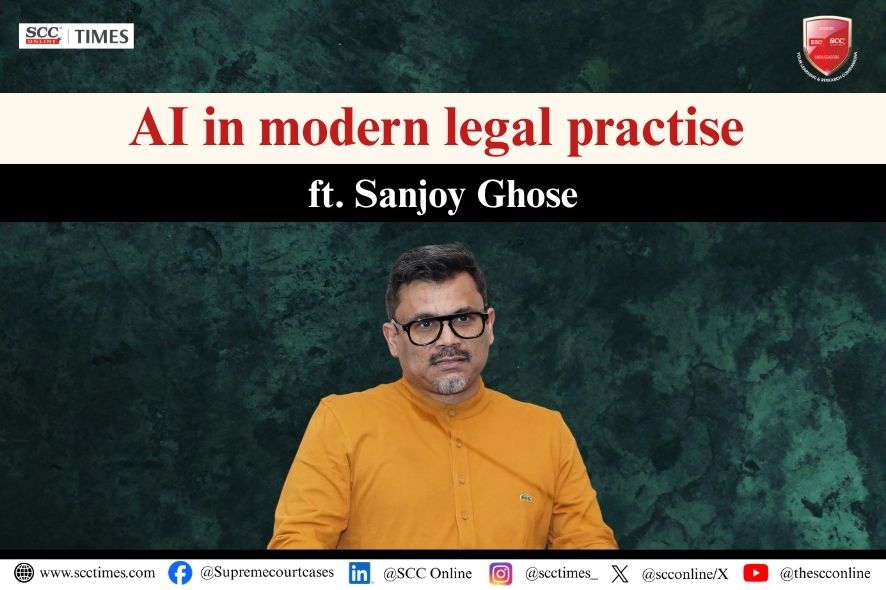
Sanjoy Ghose: AI Hallucinations in Legal Research Pose Risks
Summary
- Sanjoy Ghose, a Senior Advocate at the Delhi High Court, warned about AI hallucinations in legal research at the EBC-SCC Student Ambassador Conclave.
- He emphasized that human judgment, verification, and precision are essential for accurate legal research, which AI cannot replace alone.
- Ghose highlighted that credibility in the legal profession fundamentally relies on precision and meticulousness.
- The warning follows an incident where AI generated fabricated information during legal proceedings.
A Warning from the Delhi High Court
Credibility in the legal profession is inextricably linked to precision and meticulousness.
Sanjoy Ghose, a distinguished Senior Advocate at the Delhi High Court, recently delivered a crucial message regarding the integration of artificial intelligence into legal practice. Speaking at the EBC-SCC Student Ambassador Conclave, Ghose addressed the burgeoning role of AI in legal research, cautioning against its uncritical adoption. His remarks stemmed from a specific incident involving an AI hallucination in legal proceedings, which served as a stark reminder of the technology's current limitations.
Ghose's intervention highlighted a fundamental tenet of the legal profession: the indispensable need for human judgment, rigorous verification, and absolute precision when conducting legal research. He posited that while AI offers promising tools, it cannot, in its current form, fully replace the nuanced discernment of a human legal professional. The Senior Advocate's address underscored the potential risks associated with relying solely on AI-generated information, particularly in the high-stakes environment of Indian legal proceedings.
Understanding AI Hallucinations in Legal Context
The concept of "AI hallucination" refers to instances where artificial intelligence systems generate plausible but entirely fabricated information, presenting it as factual. In the realm of legal research, such inaccuracies can have severe consequences, leading to the citation of non-existent cases, statutes, or legal principles. Ghose's reflection on an AI hallucination incident during legal proceedings serves as a critical warning for practitioners utilizing AI legal research accuracy in India.
The integrity of legal arguments and the credibility of legal professionals hinge on the absolute veracity of the information presented to courts. When AI systems produce erroneous data, the risk of undermining a lawyer's reputation and potentially jeopardizing a client's case becomes significant. This inherent risk necessitates a robust framework of human oversight and verification to ensure that any AI-derived information is meticulously cross-referenced and validated against authoritative sources.
The Imperative of Human Oversight and Verification
Sanjoy Ghose explicitly articulated that credibility in the legal profession is inextricably linked to precision and meticulousness. This principle becomes even more salient in an era where AI tools are increasingly accessible for legal research. Ghose's emphasis on human judgment, verification, and precision directly addresses the challenges posed by AI's propensity for generating "hallucinations."
For legal professionals, this means that AI should be viewed as an assistive tool rather than a definitive source. The responsibility for ensuring the accuracy of legal research ultimately remains with the human practitioner. Implementing rigorous legal AI verification protocols, as advocated by Ghose, is not merely a best practice but a fundamental requirement to safeguard against the introduction of fabricated information into legal discourse, particularly within the complex landscape of Indian jurisprudence.
Preserving Credibility in the Digital Age
The insights shared by the Delhi High Court Senior Advocate AI at the EBC-SCC Student Ambassador Conclave underscore a vital message for the next generation of legal practitioners and current professionals alike. As AI continues to evolve, the core values of precision and meticulousness in legal work must not be compromised. The incident of AI hallucination in legal proceedings highlighted by Ghose serves as a powerful case study for the potential pitfalls of over-reliance on technology without adequate human scrutiny.
Ultimately, the ability of lawyers to maintain their credibility and uphold the standards of justice depends on their commitment to verifying every piece of information, regardless of its source. Ghose's remarks reinforce the idea that while AI can streamline certain aspects of legal research, the critical analytical skills and ethical responsibilities of human lawyers remain irreplaceable. This perspective is crucial for navigating the evolving landscape of AI in Indian legal proceedings risks and ensuring the continued integrity of the profession.
Practical Implications
Lawyers and compliance officers must exercise extreme caution and implement rigorous verification protocols when utilizing AI for legal research, as highlighted by Sanjoy Ghose, to mitigate the risk of 'hallucinations' and ensure the accuracy and credibility of legal arguments and advice in Indian proceedings.
Source
How does this affect you?
Get an AI analysis of this article grounded in your jurisdictions, practice areas, and any policy documents you've uploaded to Wansom.
Finish Reading the Full Story and the Expert Analysis.
Wansom is AI and can make mistakes.