
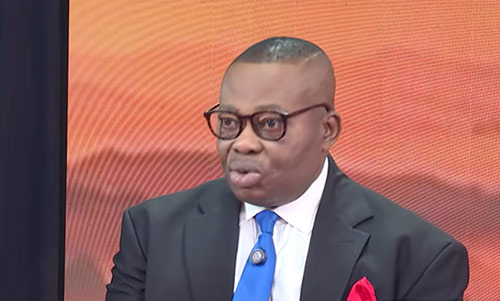
SAN Ubani Challenges House Panel's INEC Directive on Electoral Act
In Nigeria, Senior Advocate of Nigeria, Dr. Monday Ubani, has publicly questioned the legal authority of a reported directive from the House of Representatives Committee on Electoral Amendment to the Independent National Commission (INEC) to disqualify candidates whose names had already been published.
Dr. Ubani's concern centers on whether such a directive, reportedly issued via a committee letter, possesses the legal power to amend the Electoral Act or expand upon existing Supreme Court orders. This query implies a potential overreach of legislative committee powers, suggesting that a mere committee directive cannot supersede established law or judicial pronouncements. The core of his argument is that the proper channels for amending legislation or interpreting judicial decisions must be followed, and a committee letter does not constitute such a channel.
This development highlights critical questions regarding the separation of powers, the limits of legislative committee authority, and the independence of electoral bodies in Nigeria. For practitioners, it underscores the importance of understanding the hierarchy of legal instruments and the proper channels for amending legislation or interpreting judicial pronouncements. It also raises concerns about potential political interference in the electoral process and its implications for the rule of law and democratic integrity, particularly when directives appear to contradict the Electoral Act or Supreme Court judgments.
The legal context involves the Nigerian Constitution, which delineates legislative powers and the role of the judiciary, alongside the Electoral Act, which governs elections and INEC's operational mandate. The principle of *stare decisis* dictates that Supreme Court orders are binding, and any attempt to alter or expand them must follow due legal process, typically through further judicial review or legislative amendment, not a committee directive. INEC's mandate is derived from the Constitution and the Electoral Act, and its actions must align with these foundational legal frameworks. Key parties involved include Dr. Monday Ubani, the House of Representatives Committee on Electoral Amendment, and the Independent National Electoral Commission (INEC).
Attorneys should closely monitor the response from INEC and the House of Representatives regarding this challenge. This situation serves as a reminder for legal professionals to scrutinize the legal basis of directives from non-judicial or non-statutory bodies, especially when they appear to contradict established law or judicial pronouncements. Businesses and individuals involved in the electoral process should be aware that directives not rooted in proper legal authority may be challenged and could lead to legal disputes. The outcome of this specific challenge is not reported in the excerpt, but the principle of upholding the rule of law against potential overreach remains crucial.
How does this affect you?
Get an AI analysis of this article grounded in your jurisdictions, practice areas, and any policy documents you've uploaded to Wansom.
Finish Reading the Full Story and the Expert Analysis.
Get the latest legal & regulatory intelligence in Nigeria
Wansom is AI and can make mistakes.