
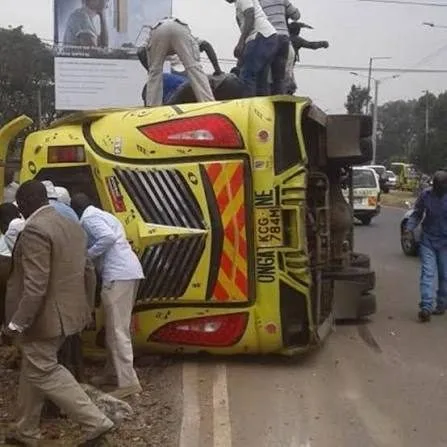
KE: Sammy Murigi Maina Charged in Fatal 'Manyoka' Driving Case
Summary
- Matatu driver Sammy Murigi Maina faces charges for causing the deaths of three people and injuring two others in a June 3, 2026, accident on Enterprise Road, Nairobi.
- Maina is accused of dangerous "Manyoka" style driving, contrary to Section 42(3) of the Kenya Traffic Act, while operating an Isuzu minibus for Risen Sacco.
- Additional charges include two counts of driving without due care and attention and one count of driving an unroadworthy vehicle.
- Appearing before Milimani Magistrate Paul Mutai, Maina pleaded not guilty to all accusations.
- The case highlights increased prosecution focus on both driver conduct and vehicle condition in public service transport.
What Happened
The inclusion of charges for driving an unroadworthy vehicle alongside those for dangerous driving further emphasizes the comprehensive nature of the state's response.
Sammy Murigi Maina, a matatu driver, has been formally charged in connection with a fatal road accident that claimed the lives of three individuals and left two others injured. The incident, which occurred on June 3, 2026, along Enterprise Road in Nairobi, involved an Isuzu minibus operated by Risen Sacco. Maina appeared before Milimani Magistrate Paul Mutai on a Thursday, September 17, where he entered a plea of not guilty to all accusations.
The Director of Public Prosecutions (DPP) alleges that Maina was operating motor vehicle registration number KDU 887C at approximately 8:00 PM, opposite KCB Bank, when his driving was characterized as reckless and dangerous. This conduct, specifically described as the "Manyoka" style, is believed to have directly led to the tragic deaths of Charles Brandy Wahome, Tamia Kalekya Nyambura, and Edwin Kago. Furthermore, the prosecution contends that Maina's actions also resulted in bodily harm to Eugene Ongundi and Domnic Mulwa.
Legal Context
The charges against Sammy Murigi Maina are comprehensive, reflecting a multi-faceted approach by the prosecution to address dangerous driving practices. He faces three counts related to causing death by dangerous driving, an offense specifically cited as being contrary to Section 42(3) of the Kenya Traffic Act. This particular section targets the dangerous "Manyoka" style of driving, which the DPP explicitly stated was the basis for the primary dangerous-driving charge.
Beyond the fatalities, Maina is also confronted with two counts of driving a motor vehicle on a public road without due care and attention, indicating a broader concern with his operational conduct. Significantly, the prosecution has also brought a separate charge for driving an unroadworthy motor vehicle on a public road. This highlights that the legal case extends beyond just the driver's immediate actions to encompass the condition of the public service vehicle itself, suggesting a dual focus on both operator behavior and vehicle maintenance standards in this Matatu dangerous driving prosecution in Nairobi.
Why It Matters
This case, involving Sammy Murigi Maina and the Risen Sacco accident legal case, underscores a heightened focus by Kenyan authorities on curbing perilous driving behaviors, particularly within the public transport sector. The explicit mention of the "Manyoka" style of driving and its direct link to charges under Kenya Traffic Act Section 42(3) signals a clear intent to prosecute specific high-risk maneuvers that endanger public safety. The proceedings before Milimani Magistrate Paul Mutai are part of a growing scrutiny aimed at addressing dangerous practices associated with public service vehicles, including stunts and reckless operations on public roads.
The inclusion of charges for driving an unroadworthy vehicle alongside those for dangerous driving further emphasizes the comprehensive nature of the state's response. This dual approach indicates that the Director of Public Prosecutions is not only targeting individual driver conduct but also holding operators accountable for ensuring their vehicles meet safety standards. Such a prosecution sends a strong message to PSV operators and drivers that both their actions behind the wheel and the condition of their vehicles will be subject to rigorous legal examination, potentially leading to severe penalties for infractions that compromise passenger and pedestrian safety.
Practical Implications
This case highlights the active prosecution of dangerous driving practices, specifically the 'Manyoka' style, under Kenya's Traffic Act Section 42(3), coupled with charges for unroadworthy vehicles. Lawyers advising public service vehicle (PSV) operators or defending drivers should note the DPP's focus on both driver conduct and vehicle condition, indicating increased scrutiny and potential for severe penalties for such infractions.
Source
How does this affect you?
Get an AI analysis of this article grounded in your jurisdictions, practice areas, and any policy documents you've uploaded to Wansom.
Finish Reading the Full Story and the Expert Analysis.
Get the latest legal & regulatory intelligence in Kenya
Wansom is AI and can make mistakes.