
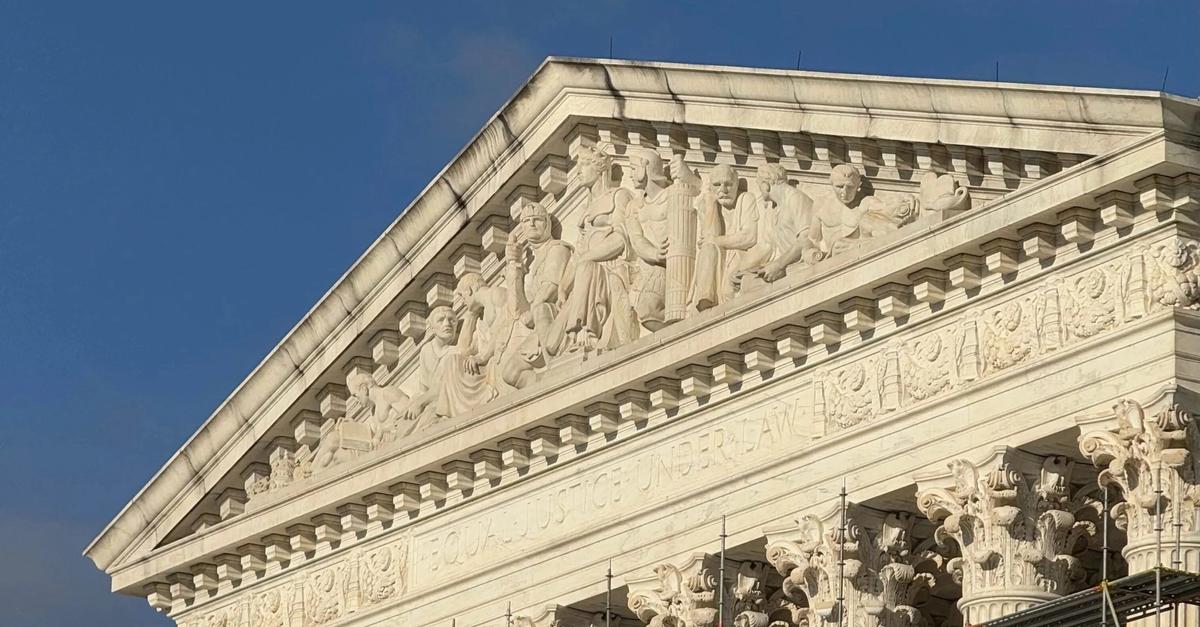
Supreme Court: Salazar v. Paramount Global VPPA Oral Argument on Digital Platforms
Summary
- The Supreme Court heard oral arguments in Salazar v. Paramount Global, addressing the application of the 1988 Video Privacy Protection Act to internet services.
- This case, the final argument of the October sitting, will determine how an older privacy law applies in the modern digital era.
- The Court also granted an FCC request to block a lower court ruling concerning political advertising rates, with Justices Sotomayor and Jackson dissenting.
- A decision is pending on the Trump administration's request to implement a policy restricting healthcare and accommodations for transgender inmates.
- Justice Clarence Thomas recently became the second-longest-serving justice, 35 years after his confirmation.
What Happened: Key Oral Argument
A ruling that broadens the scope of the 1988 Video Privacy Protection Act to encompass internet-based services could significantly alter how digital content providers manage user data and ensure privacy compliance.
The Supreme Court recently concluded its October sitting with a significant oral argument in the case of Salazar v. Paramount Global. This pivotal hearing centered on the applicability of the 1988 Video Privacy Protection Act to contemporary digital platforms, a question that has become increasingly relevant in the internet era. The justices are tasked with determining how a law enacted decades ago, designed for physical video rentals, should be interpreted in the context of modern streaming services and online content consumption.
The Video Privacy Protection Act was originally established following a public revelation by the Washington City Paper concerning the video rental history of Supreme Court nominee Robert Bork. This historical context underscores the legislative intent to protect sensitive personal viewing information. Now, the Court must grapple with whether the foundational principles of this privacy statute extend to the vast and complex data ecosystems of today's digital media providers, potentially redefining privacy obligations for companies operating in the online space.
Broader Court Activity and Pending Matters
Beyond the Salazar v. Paramount Global VPPA argument, the Supreme Court was active on other fronts. On the same Wednesday, the Court addressed a request from the Federal Communications Commission, opting to block a federal appeals court's ruling. This appeals court decision would have compelled the FCC to expedite its review of a challenge to its "public notice" policy, which grants favorable advertising rates to political parties and joint fundraising committees. Justices Sonia Sotomayor and Ketanji Brown Jackson, however, indicated their dissent from this decision, though without providing specific reasons for their stance.
Looking ahead, the Court is also poised to consider a critical policy regarding healthcare for transgender inmates. The Trump administration, on September 28, formally requested the Supreme Court to permit the Federal Bureau of Prisons to implement a new policy. This proposed policy would restrict transgender inmates from accessing gender-transition surgeries, hormone therapy, and certain "social accommodations." The legal arguments in this dispute are now fully briefed, meaning a decision from the Supreme Court could be issued at any moment. These diverse cases highlight the Court's wide-ranging influence on contemporary legal and social issues.
In related news, Justice Clarence Thomas, who was confirmed to the Supreme Court 35 years prior to the article's publication, recently marked a significant milestone in May by becoming the second-longest-serving justice in the Court's history. The justices are scheduled to convene in a private conference tomorrow to deliberate on various cases and vote on petitions for review, with orders from Friday's conference anticipated for release on Monday at 9:30 a.m. EDT.
Why It Matters: Digital Privacy in the Modern Age
The outcome of Salazar v. Paramount Global holds substantial implications for entities operating in the digital media and technology sectors. A ruling that broadens the scope of the 1988 Video Privacy Protection Act to encompass internet-based services could significantly alter how digital content providers manage user data and ensure privacy compliance. This case is particularly crucial for lawyers advising media, technology, or data privacy clients, as it will clarify the extent to which an older statute, conceived in a pre-internet era, applies to the sophisticated data collection and sharing practices prevalent today.
The Court's decision will ultimately define the boundaries of personal viewing information protection in the internet era, potentially setting new precedents for data handling, consent requirements, and privacy safeguards across a multitude of online platforms. The interpretation of the 1988 Video Privacy Protection Act SCOTUS provides will undoubtedly shape future legislative and regulatory efforts concerning digital privacy, making this a closely watched development for anyone involved in the digital economy.
Practical Implications
Lawyers advising media, technology, or data privacy clients must closely monitor the Supreme Court's decision in Salazar v. Paramount Global, as it will clarify the applicability of the 1988 Video Privacy Protection Act to modern internet services and could significantly impact data handling and privacy compliance for digital content providers.
Source
How does this affect you?
Get an AI analysis of this article grounded in your jurisdictions, practice areas, and any policy documents you've uploaded to Wansom.
Finish Reading the Full Story and the Expert Analysis.
Get the latest legal & regulatory intelligence in United States
Wansom is AI and can make mistakes.