
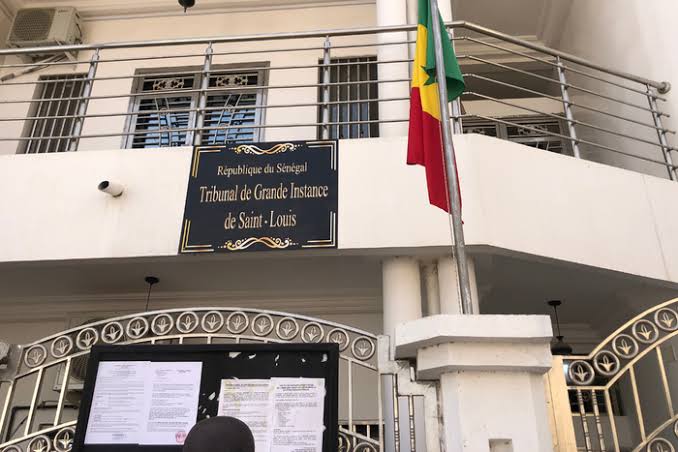
Saint-Louis: 47 Accused Homosexuality Trial Begins in Senegal
Summary
- Forty-seven individuals, presumed homosexuals, have been referred to the criminal court in Saint-Louis, Senegal.
- The public prosecutor of Saint-Louis initiated the requisitions, leading to the investigating judge's order for trial.
- The accused face multiple serious charges, including "acts against nature" and HIV transmission.
- This case represents a significant step in the enforcement of anti-homosexuality laws in Senegal, which were strengthened in March 2026.
Case Overview
The combination of these accusations underscores the severe legal ramifications facing the group, highlighting the intersection of public health concerns and morality laws within the Senegalese judicial framework.
A significant judicial development has occurred in the Northern region of Senegal, where 47 individuals, identified as presumed homosexuals, are now facing trial. This collective group was apprehended in an operation that has since progressed through the Senegalese legal system, culminating in a referral to the local criminal court in Saint-Louis.
The public prosecutor of Saint-Louis initiated the formal requisitions that set this process in motion. Following these submissions, an investigating judge reviewed the evidence and judicial requests, subsequently issuing an order to send all forty-seven accused individuals to the `Saint-Louis criminal court proceedings`. This marks a critical juncture in the `Saint-Louis 47 accused homosexuality trial`, moving the case from investigation to formal adjudication.
Charges Faced
The accused individuals are slated to answer to multiple serious charges before the criminal court. Among these, the primary accusation revolves around "acts against nature," a legal classification frequently employed in `Senegal anti-homosexuality law enforcement` to prosecute individuals based on their sexual orientation or perceived sexual acts. This law, Article 319 of the Penal Code, was amended in March 2026 to increase penalties for same-sex acts to five to ten years' imprisonment and criminalize the promotion of homosexuality.
Beyond the "acts against nature" allegations, the case also involves charges related to `HIV transmission criminal charges Senegal`. Senegal has an omnibus HIV-specific statute (Law 2010-03 of April 9, 2010) that criminalizes intentional HIV transmission or exposure, with penalties ranging from five to ten years' imprisonment. The combination of these accusations underscores the severe legal ramifications facing the group, highlighting the intersection of public health concerns and morality laws within the Senegalese judicial framework. The gravity of these charges means the defendants could face substantial penalties if convicted.
Legal and Societal Implications
This case represents a notable escalation in the enforcement of `Senegal acts against nature charges`, particularly given the large number of individuals involved in a single judicial action. The decision by the investigating judge to refer all 47 individuals to trial signals a determined approach by authorities to prosecute such alleged offenses, potentially setting a precedent for future cases.
The `Saint-Louis 47 accused homosexuality trial` is poised to draw considerable attention, both domestically and internationally, as it highlights the ongoing challenges faced by LGBTQ+ individuals in Senegal. The inclusion of `HIV transmission criminal charges Senegal` further complicates the legal landscape, raising questions about the application of public health statutes in conjunction with morality laws and their impact on vulnerable populations. The outcome of these `Saint-Louis criminal court proceedings` will be closely watched for its implications on human rights and legal interpretations in the country.
Practical Implications
This case highlights the ongoing enforcement of 'acts against nature' laws in Senegal and the potential for severe criminal charges, including HIV transmission. Lawyers practicing criminal defense or human rights in Senegal should monitor the trial's outcome for precedents regarding the interpretation and application of these statutes, particularly concerning collective arrests and the intersection with public health concerns.
Source
Source: Original reporting via {source}
How does this affect you?
Get an AI analysis of this article grounded in your jurisdictions, practice areas, and any policy documents you've uploaded to Wansom.
Finish Reading the Full Story and the Expert Analysis.
Wansom is AI and can make mistakes.