
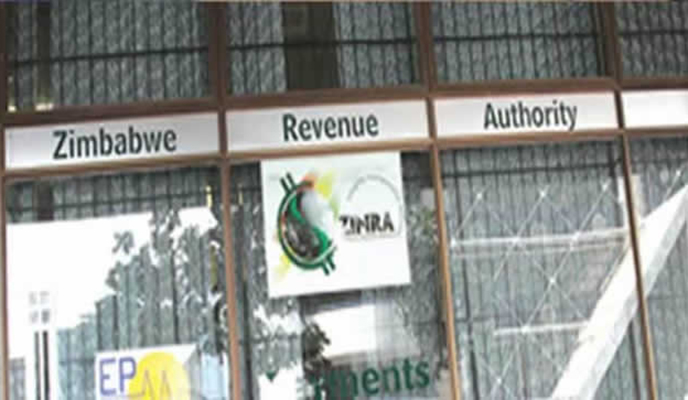
SA Company: Zimra Vehicle Seizure Challenge Wins on Electronic Manifest Concession
Summary
- A South African company successfully challenged Zimra's attempts to seize its vehicles.
- Justice Lucy Mungwari ruled that Zimra's case was undermined by a key concession.
- Zimra conceded that a clearing agent, not the transporter, might have submitted the disputed electronic manifest and waybill.
- This Zimra electronic manifest concession weakened the factual basis for the Zimbabwe Revenue Authority vehicle seizure attempts.
- The ruling sets a precedent regarding liability for documentation errors when clearing agents are involved, impacting clearing agent documentation liability.
What Happened
Justice Lucy Mungwari determined that this Zimra electronic manifest concession fundamentally undermined the factual foundation upon which the revenue authority had built its case against the South African entity.
A South African company recently achieved a significant legal victory, successfully challenging attempts by the Zimbabwe Revenue Authority (Zimra) to seize its vehicles. The case, presided over by Justice Lucy Mungwari, centered on disputes surrounding critical shipping documentation, specifically an electronic manifest and an accompanying waybill. Zimra had initiated the seizure proceedings based on alleged irregularities related to these documents.
The core of the dispute involved the origin and accuracy of these electronic submissions. The SA company argued against Zimra's claims, leading to a judicial review of the revenue authority's actions and the factual basis underpinning its seizure attempts. This successful challenge underscores the importance of scrutinizing the precise details of documentation in cross-border trade disputes.
Legal Context
A pivotal moment in the proceedings came when the Zimbabwe Revenue Authority made a crucial concession. Zimra acknowledged that the contested electronic manifest and waybill, which formed the basis of its case, might have been submitted by a clearing agent rather than directly by the transporting company itself. This admission proved to be a significant turning point in the legal battle.
Justice Lucy Mungwari determined that this Zimra electronic manifest concession fundamentally undermined the factual foundation upon which the revenue authority had built its case against the South African entity. By admitting that the documentation could have originated from a third-party clearing agent, Zimra introduced a critical ambiguity regarding the direct liability of the transporter for any alleged errors in the submissions. This concession effectively weakened Zimra's ability to definitively link the documentation discrepancies to the company whose vehicles it sought to seize, thereby impacting the legality of the Zimbabwe Revenue Authority vehicle seizure attempts.
Why It Matters
This ruling carries substantial implications for businesses engaged in cross-border logistics and trade, particularly those operating through Zimbabwe. The Justice Lucy Mungwari Zimra ruling establishes a precedent that challenges the automatic assumption of liability on the part of transporters for documentation errors when a clearing agent is involved in the submission process. It emphasizes that the factual basis for vehicle seizures must be robust and clearly attribute responsibility.
For legal and compliance professionals, this outcome highlights that the Zimbabwe Revenue Authority's grounds for vehicle seizure, especially when tied to electronic manifests and waybills, are not unassailable. If documentation errors can be demonstrably linked to a clearing agent rather than the transporter, it provides a strong basis for disputing Zimra's actions. This decision could lead to a re-evaluation of how liability is assigned in cases of documentation discrepancies, potentially shifting the burden of proof or undermining the legal standing of seizure attempts where the chain of document submission is unclear or misattributed, offering a vital defense against clearing agent documentation liability.
Practical Implications
Lawyers and compliance officers should note that ZIMRA's factual basis for vehicle seizures, particularly concerning electronic manifests and waybills, can be successfully challenged if the documentation errors are attributable to a clearing agent rather than the transporter. This ruling provides a precedent for disputing ZIMRA's claims where the chain of document submission is unclear or misattributed, potentially shifting liability or undermining the seizure's legality.
Source
Source: Original reporting via Newsday.
How does this affect you?
Get an AI analysis of this article grounded in your jurisdictions, practice areas, and any policy documents you've uploaded to Wansom.
Finish Reading the Full Story and the Expert Analysis.
Get the latest legal & regulatory intelligence in Zimbabwe
Wansom is AI and can make mistakes.