
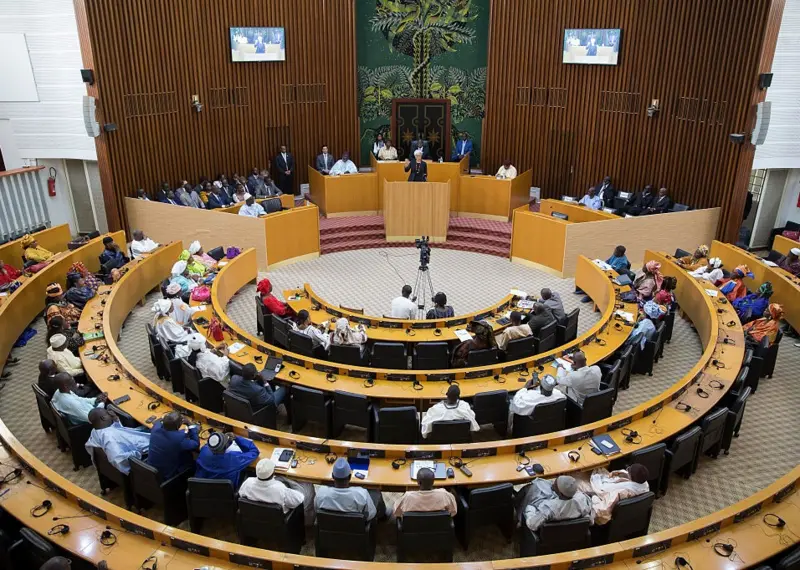
Assemblée Nationale Sénégal: Exonérations Fiscales Pêche, Licences Under Review
Summary
- Senegal's National Assembly convened an extraordinary session on August 6, 2026, to address tax exemptions and fishing licenses.
- The session will focus on the management of tax exemptions and revenue waivers, emphasizing budgetary transparency.
- Deputies will also scrutinize the conditions for issuing and renewing fishing licenses, a topic made sensitive by recent tensions.
- In May, Conaped demanded the withdrawal of coastal demersal fishing licenses due to concerns over species like thiof and octopus.
- Former Minister Fatou Diouf defended four license allocations based on scientific data and announced a revision of the fishing code.
What Happened
This extraordinary session of the Assemblée nationale Sénégal exonérations fiscales pêche holds profound implications for both the nation's economic health and the sustainability of its marine resources.
On August 6, 2026, the President of the National Assembly in Senegal initiated an extraordinary session, signaling a focused legislative effort on two critical areas: tax exemptions and fishing licenses. This convocation, as reported by Rewmi, sets the stage for a comprehensive review of practices within the nation's maritime sector and its public finances. The overarching objective of the session is to enhance control and oversight in these vital domains.
Deputies are slated to delve into a two-pronged agenda. Initially, their focus will be on the management of tax exemptions and the associated revenue waivers, a matter explicitly framed as crucial for budgetary transparency. This segment of the discussions aims to scrutinize how these financial instruments are currently administered and their impact on the national treasury.
Concurrently, the legislative body will examine the criteria and processes governing the issuance and renewal of fishing licenses. This particular aspect of the session is deemed highly sensitive, following a period marked by considerable public tension surrounding fishing rights and resource management. The session is designed to conclude once all scheduled agenda points have been thoroughly addressed and exhausted.
Legal and Regulatory Context
The scrutiny over fishing licenses by the Assemblée nationale Sénégal exonérations fiscales pêche session arises from significant recent controversies. Just months prior, in May, a prominent advocacy group, Conaped, publicly called for the immediate withdrawal of all coastal demersal fishing licenses. Their demand was rooted in concerns over the ecological fragility of key marine species, specifically highlighting the thiof and octopus populations, which they argued were under severe threat.
In response to these escalating tensions, former Minister Fatou Diouf had previously defended the government's decision to allocate four specific licenses. Her justification for these allocations was firmly based on scientific data, which she presented to support the sustainability of the decisions made. Furthermore, in a significant move, former Minister Diouf also announced plans for a comprehensive revision of the existing code de la pêche Sénégal, indicating an acknowledgment of the need for updated regulatory frameworks to address contemporary challenges in the sector.
Why It Matters
This extraordinary session of the Assemblée nationale Sénégal exonérations fiscales pêche holds profound implications for both the nation's economic health and the sustainability of its marine resources. The detailed examination of the gestion exonérations fiscales Sénégal underscores a broader commitment to fiscal responsibility and transparency, potentially leading to reforms that could impact various sectors benefiting from such waivers. Any adjustments to these policies could significantly alter the financial landscape for businesses operating in Senegal.
Moreover, the rigorous review of fishing license conditions and the announced révision code de la pêche Sénégal are pivotal for the future of the country's maritime industry. Decisions made regarding licences de pêche démersale Sénégal will directly influence the livelihoods of local fishing communities, the health of marine ecosystems, and the overall control secteur maritime Sénégal. The outcome of these deliberations could redefine access to fishing grounds, introduce stricter environmental protections, and establish new standards for sustainable resource exploitation, thereby shaping the long-term viability of one of Senegal's most critical natural assets.
Practical Implications
Lawyers advising clients in Senegal's maritime sector or those benefiting from tax exemptions should closely monitor the outcomes of this session for potential legislative changes to fishing license requirements, tax exemption policies, and the revision of the fishing code.
Source
Source: Original reporting via Rewmi
How does this affect your business?
Get an AI analysis of this article grounded in your jurisdictions, practice areas, and any policy documents you've uploaded to Wansom.
Wansom is AI and can make mistakes.