
Sénégal Référendum Double Déclaration Patrimoine: Government Plans Vote
Summary
- Senegal's government announced a referendum on a law requiring high authorities to make a double declaration of assets.
- The Pastef majority, led by Ousmane Sonko, had urged President Bassirou Diomaye Faye to promulgate the asset declaration law without a public vote, citing constitutional provisions.
- A second legislative dispute involves Pastef's push for increased parliamentary control over secret funds, which the government argues infringes on executive powers.
- The government referred the secret funds bill to the Constitutional Council, leading to the suspension of its examination in the National Assembly.
- The current institutional challenge for President Faye involves navigating these legislative proposals, with options including direct promulgation, requesting a second reading, or proceeding with a referendum.
What Happened: Legislative Standoffs Emerge
The institutional stakes in Senegal are now sharply focused on the executive's choice between direct promulgation, a new legislative reading, or a national referendum for key parliamentary initiatives.
The Senegalese political landscape is currently marked by significant institutional tension between the executive and legislative branches, particularly concerning two key legislative proposals. The Pastef majority in the National Assembly had expressed apprehension regarding potential delays in the official enactment of these two texts, both of which had already received parliamentary approval.
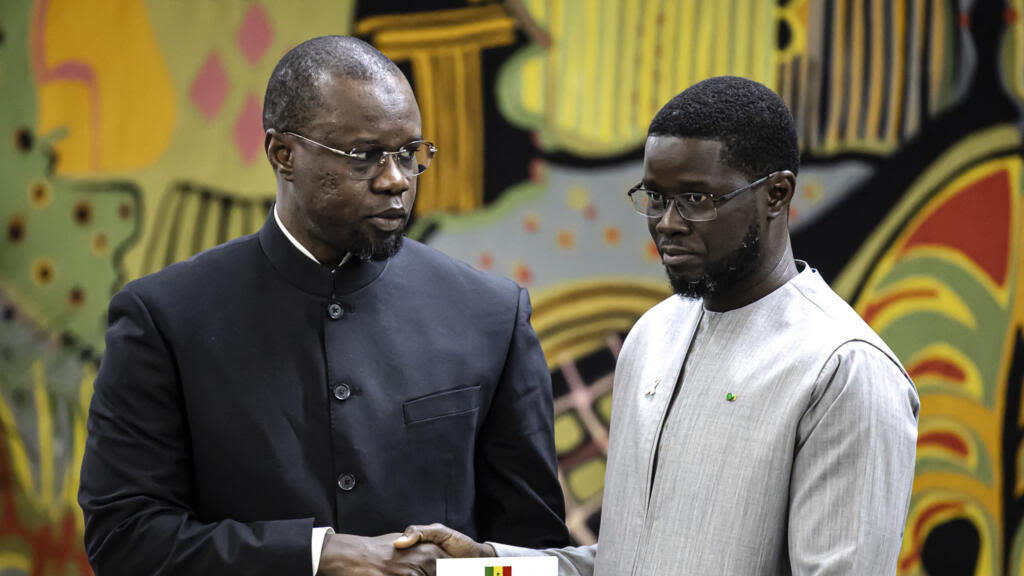
In a pivotal development, the government declared its intention to subject the provision mandating a double déclaration patrimoine (double declaration of assets) for high-ranking officials to a national referendum. This decision directly contrasts with the stance of Ousmane Sonko, the President of the National Assembly and a prominent figure within Pastef, who had explicitly urged President Bassirou Diomaye Faye to promulgate the law without resorting to a public consultation. Sonko’s argument was rooted in Article 103, paragraphs 4 and 5, of the Constitution, which stipulates that a referendum is rendered unnecessary if the President chooses to present the text solely to the National Assembly for approval. This particular measure, aimed at enhancing transparency, had garnered substantial support and was widely passed by deputies.
Legal and Constitutional Crossroads
The executive branch has concurrently voiced concerns that several parliamentary initiatives are encountering constitutional challenges, framing the current institutional dilemma as a choice among direct promulgation, a fresh legislative reading, or a national referendum. This complex interplay of options highlights the intricate balance of power within Senegal's governance structure.
Aminata Touré, who serves as the supervisor for the presidential party Kiiraay, has vehemently refuted any allegations of political obstruction on the part of the executive. Touré emphasized that the nation's Constitution should not be subjected to repeated modifications and suggested that the National Assembly ought to allow the government to concentrate its efforts on critical issues such as improving the purchasing power of citizens. The debate surrounding the Sénégal référendum double déclaration patrimoine underscores a fundamental question about the appropriate mechanism for enacting significant legislative changes.
The Secret Funds Controversy
Beyond the asset declaration, a second major point of contention revolves around the control and oversight of secret funds. The Pastef party advocates for a more robust system of scrutiny over these financial allocations, which are specifically earmarked for the prime minister's office and the presidency. Their proposal involves establishing a restricted commission composed of deputies to oversee these envelopes.
However, this initiative has met with resistance from the government, which, on August 18, once again referred the matter to the Constitutional Council. The executive's position is that the Assembly's proposed oversight mechanism encroaches upon competencies that are exclusively within the purview of the executive branch. Consequently, the examination of this proposed law, along with a related text on special credits, both scheduled for August 19 in the National Assembly, was suspended. This suspension, however, opens another institutional avenue for the President, as Article 73 of the Constitution grants him the prerogative to request a second reading of the bill, an option that remains compatible with the ongoing referral to the Constitutional Council.
Why It Matters: Executive Prerogatives and Political Dynamics
The ongoing disputes illuminate the dynamic and sometimes strained relationship between Senegal's legislative and executive powers. The government's actions, from proposing a referendum on the double déclaration patrimoine to challenging the secret funds bill, reflect a broader assertion of executive authority and a careful interpretation of constitutional boundaries.
Aminata Touré, when questioned about the recourse concerning the secret funds, reiterated a crucial point about Senegal's governmental structure: it does not operate under a purely parliamentary regime. She underscored that the President of the Republic possesses specific prerogatives that are clearly defined by law, implying a distinct separation of powers that limits the extent of parliamentary oversight in certain executive domains. As political analyst Thierno Bocoum succinctly put it, the ultimate decision-making power in these critical legislative matters now squarely rests with President Diomaye.
Source
Source: Original reporting via Yahoo
How does this affect you?
Get an AI analysis of this article grounded in your jurisdictions, practice areas, and any policy documents you've uploaded to Wansom.
Wansom is AI and can make mistakes.