
Sénégal IA Conflits Armés: Dakar Promeut Contrôle Humain
Summary
- Senegal, Switzerland, and the CICR met in Dakar to discuss human responsibility in military AI use.
- Jean-Nicolas Marty of the CICR emphasized that humans must intervene and take responsibility for AI-assisted military actions.
- Ibrahima Cissé of Senegal advocated for collective reflection and a global agreement to prohibit certain military AI applications.
- Existing international humanitarian law and the Geneva Conventions provide principles, but applying them to AI-assisted decisions presents a challenge.
- Senegal is committed to multilateralism and respecting international recommendations on AI in armed conflict.
International Dialogue on AI and Warfare in Dakar
Ibrahima Cissé powerfully articulated this necessity, stating that regarding the prospect of such a global agreement, "Even if it doesn't exist, it must be invented."
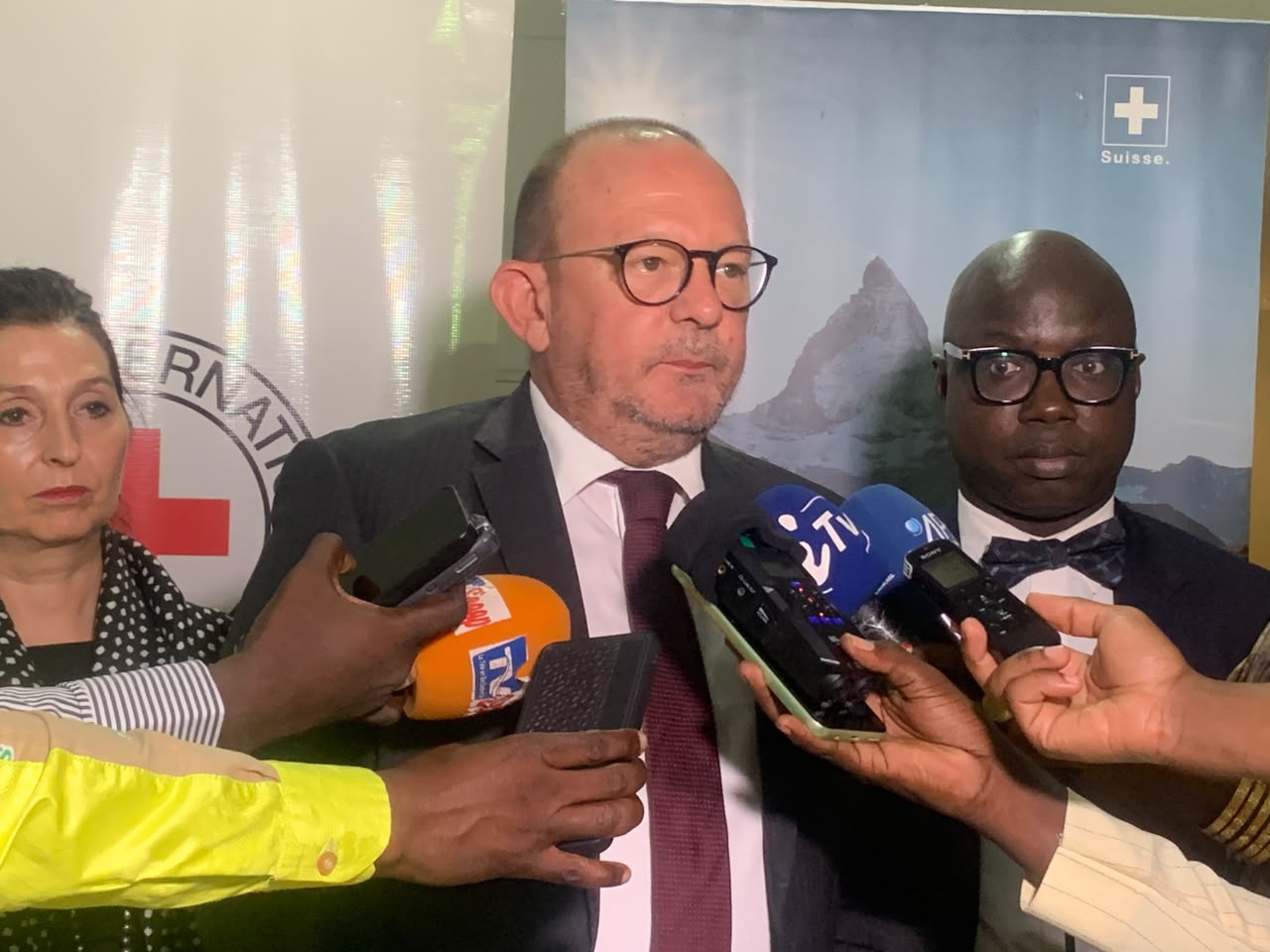
A recent high-level meeting in Dakar, Sénégal, brought together representatives from Senegal, Switzerland, and the International Committee of the Red Cross (CICR) to address the critical issue of artificial intelligence (IA) in armed conflicts. The central focus of these discussions revolved around establishing human responsibility in military decision-making processes that involve AI support. This engagement underscores the growing international concern regarding the ethical and legal implications of advanced technologies in warfare.
Jean-Nicolas Marty, who leads the CICR's regional delegation in Dakar, articulated a firm stance on the necessity of human oversight. He emphasized that a machine should not be empowered to make life-or-death decisions autonomously. According to Marty, a human operator must be involved and assume accountability for the consequences before any military action is initiated with AI assistance. He also acknowledged that despite the lack of precise documentation, AI tools are already being utilized at various operational levels within military contexts.
Senegal's Call for Human Control and Global Consensus
Ibrahima Cissé, an Ambassador-counselor within Senegal's Ministry of African Integration and Senegalese Abroad, advocated for a collaborative global reflection on regulating artificial intelligence, particularly when its application impacts human life. As reported by EMedia, Senegal has expressed its keen interest in actively participating in these international discussions alongside Switzerland and the CICR. Cissé affirmed Dakar's readiness to adhere to any recommendations that emerge from these crucial exchanges, highlighting the nation's commitment to multilateralism and the pursuit of international consensus on this complex matter.
Cissé underscored the potentially irreversible consequences of deploying these technologies without adequate control during wartime. He maintained that the international community must persist in its efforts to forge a global agreement prohibiting certain military applications of IA, even if achieving such a consensus appears challenging. This position reinforces the imperative for robust human control over autonomous systems in conflict scenarios.
Applying International Law to Digital Systems
Both Jean-Nicolas Marty and Tamara Mona, Switzerland's Ambassador to Senegal, stressed that artificial intelligence does not operate in a legal void. They affirmed that established international humanitarian law (Droit international humanitaire IA) and the Geneva Conventions already provide foundational principles governing armed conflict. These principles include the crucial distinction between civilians and combatants, the requirement for proportionality in attacks, the imperative of humanity, and the clear responsibility of command.
However, the core challenge lies in effectively applying these long-standing rules to modern digital systems and identifying the specific individual or entity accountable when a decision is made with the aid of an automated device. This legal and ethical quandary necessitates careful consideration of how existing frameworks can be adapted or supplemented to ensure accountability in the age of AI-driven warfare.
The Imperative for a New Global Framework
The discussions in Dakar highlighted the urgent need for the international community to develop clear guidelines and potentially new legal instruments to govern the use of AI in armed conflict. The call for a global agreement to ban specific military AI applications, though difficult to achieve, remains a critical objective for ensuring human control and preventing catastrophic outcomes.
Ibrahima Cissé powerfully articulated this necessity, stating that regarding the prospect of such a global agreement, "Even if it doesn't exist, it must be invented." This sentiment encapsulates the collective determination to proactively address the profound implications of IA militaire and uphold the principles of international humanitarian law in an evolving technological landscape.
Practical Implications
Lawyers advising governments or defense contractors should monitor international discussions on applying international humanitarian law to AI in armed conflict, focusing on evolving norms for human accountability and potential future regulatory frameworks.
Source
Source: Original reporting via EMedia
How does this affect you?
Get an AI analysis of this article grounded in your jurisdictions, practice areas, and any policy documents you've uploaded to Wansom.
Finish Reading the Full Story and the Expert Analysis.
Get the latest legal & regulatory intelligence in Senegal
Wansom is AI and can make mistakes.