
Sénégal Conseil Constitutionnel: Crédits Spéciaux Bill Inadmissible
Summary
- Sénégal's Constitutional Council rejected a bill proposed by PASTEF concerning the legal framework for special credits, following a government challenge under Article 83 of the Constitution.
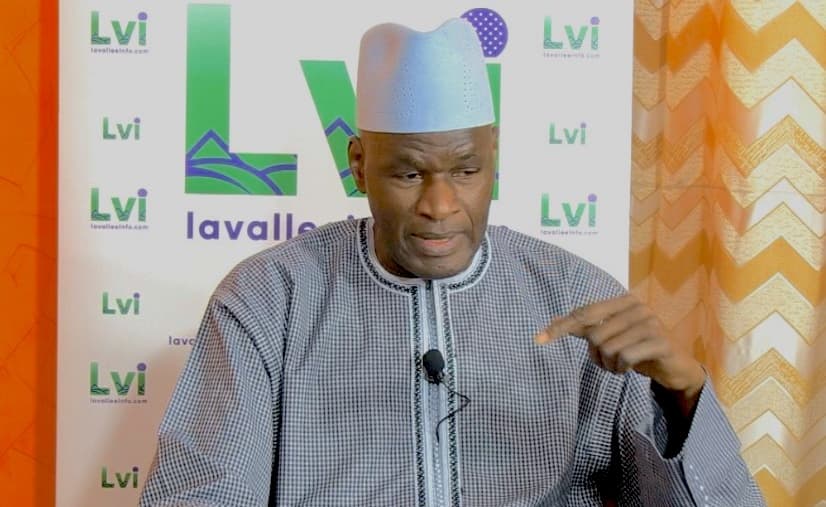
- Former minister Thierno Lô emphasized the critical need for traceability and control of all public funds, asserting that the Council's decision does not end the fundamental debate on transparency.
- Opposition figures, including Mamadou Sy Albert and Ismaila Diallo, criticized the perceived opacity in the management of political funds and questioned the government's commitment to transparency.
- The controversy has institutional significance, highlighting tensions between the Executive and the National Assembly over the oversight of special credits and the separation of powers.
- Thierno Lô advocated for a system that balances the protection of sensitive national security information with the imperative of public accountability, stating that public money must be traceable and controllable.
Constitutional Council Rejects Special Credits Bill
In a modern Republic, public money must be traceable and controllable.
The Constitutional Council of Sénégal recently declared a proposed bill concerning the legal framework for special credits inadmissible, a decision that has ignited a broader debate on public financial oversight. This legislative initiative, put forth by the political party PASTEF, aimed to establish a clear legal regime for these funds. The government had formally challenged the bill, invoking Article 83 of the Constitution of Sénégal to refer the matter to the Council, effectively contesting PASTEF's legislative endeavor.
Following the Council's ruling, a scheduled plenary session intended to deliberate on the text was subsequently canceled. This development has elevated the controversy beyond the specifics of the bill itself, imbuing it with significant institutional implications that underscore the ongoing tensions between the executive and legislative branches regarding the control of public finances. The decision, while legally binding on the admissibility of the bill, has not, however, resolved the underlying questions surrounding the transparency and accountability of special public funds.
Calls for Transparency Amidst Political Tensions
In the wake of the Constitutional Council's decision, prominent voices, including former minister Thierno Lô, have reiterated the critical importance of transparency and traceability for all public resources. Lô, in an interview reported by ndarinfo, asserted that no public expenditure should perpetually evade scrutiny, irrespective of its designated purpose. He emphasized that the Council's ruling, while addressing the legal form of the PASTEF proposition loi crédits spéciaux, does not diminish the necessity of maintaining rigorous inquiry into the control of public funds, particularly concerning outstanding demands for clarification regarding a 1.7 billion CFA francs dossier.
The political opposition has also voiced strong concerns. Mamadou Sy Albert suggested that PASTEF is engaged in a high-stakes confrontation with the Executive, alleging that political funds are currently managed with "total opacity." Deputy Ismaila Diallo echoed these sentiments, criticizing what he perceives as a contradiction with the government's stated commitments to transparency. Diallo further implied that President Diomaye is disinclined to permit either a parliamentary debate on fonds spéciaux or any legislative oversight of their utilization, thereby fueling the debate on transparence dépenses publiques Sénégal.
Balancing Secrecy and Public Accountability
While advocating for stringent control over public funds, Thierno Lô acknowledged that a degree of confidentiality might be justifiable for certain expenditures related to national security. However, he issued a cautionary note, stressing that state secrecy should not be exploited as a pretext for fostering opacity in public spending. Instead, Lô proposed the implementation of a comprehensive mechanism designed to simultaneously safeguard sensitive information, ensure the efficiency of state operations, and protect the financial interests of taxpayers.
This nuanced perspective highlights the complex challenge of balancing national security imperatives with the fundamental principles of public accountability and the contrôle fonds publics Sénégal. Aminata Touré further broadened the scope of the discussion, arguing that the issue extends beyond mere financial transparency to encompass the crucial principle of the separation of powers. She pointed out the existing divergence between the Executive and the National Assembly concerning the appropriate framework for managing these special credits. Ultimately, Thierno Lô encapsulated the core principle at stake, declaring that "In a modern Republic, public money must be traceable and controllable."
Source
How does this affect you?
Get an AI analysis of this article grounded in your jurisdictions, practice areas, and any policy documents you've uploaded to Wansom.
Finish Reading the Full Story and the Expert Analysis.
Wansom is AI and can make mistakes.