
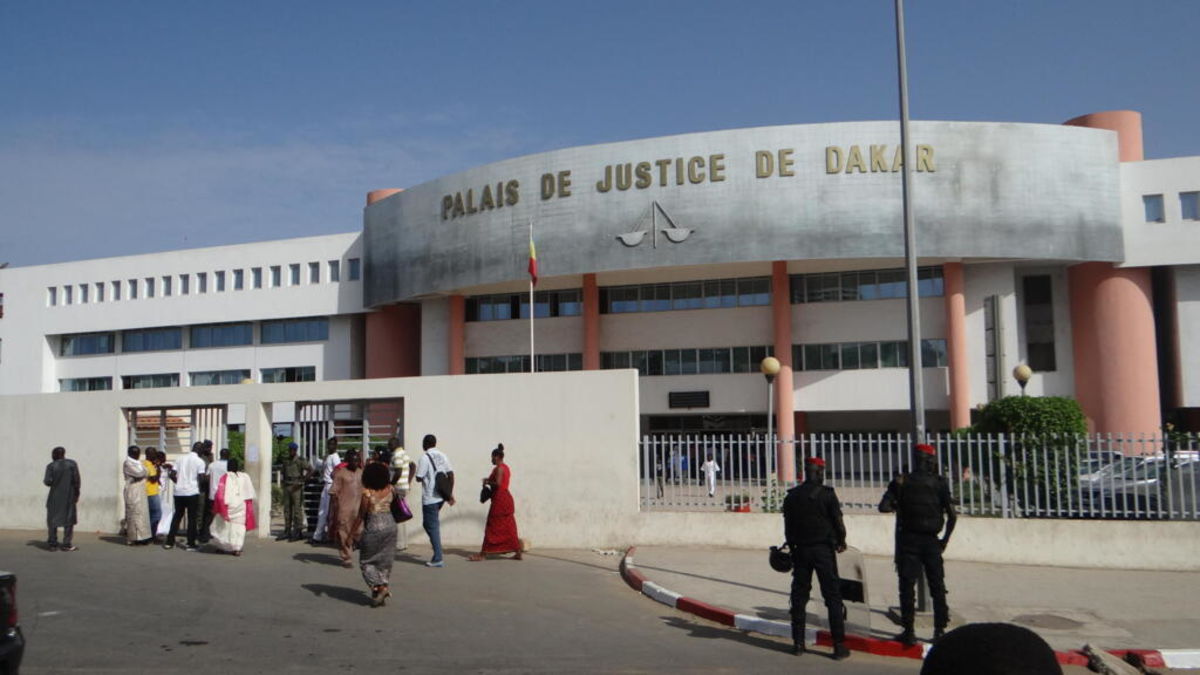
Sénégal: Agent Sécurité En Détention Pour Crime Contre Humanité
Summary
- A security agent from Cheikh Anta Diop University campus has been placed in pre-trial detention in Sénégal.
- He is accused of criminal association and a crime against humanity, specifically for acts of torture.
- This 'crime against humanity' charge allows bypassing the amnesty law adopted in March 2024.
- The charges are part of a wider judicial inquiry into political violence in Sénégal from 2021 to 2024, marking a first in the nation's legal history.
- The proceedings partly stem from a September 2024 complaint by Pape Abdoulaye Touré, an activist, who alleged illegal sequestration, abduction, and torture in June 2023.
Initial Charges and Detention
The classification of these alleged actions as a crime against humanity carries significant legal weight, particularly as it enables the circumvention of the amnesty law that was adopted in March 2024.
A security agent affiliated with the Cheikh Anta Diop University campus in Sénégal has been placed in pre-trial detention, facing grave accusations including criminal association and a crime against humanity, specifically citing acts of torture. This significant development is part of broader judicial actions initiated by the Dakar High Court on Tuesday, September 22, following a formal complaint filed by Pape Abdoulaye Touré. In total, three individuals have been indicted in connection with these proceedings.
Among the other two, one is identified as a member of the protocol team for former Youth Minister Pape Malick Ndour, who has been placed under an electronic bracelet. The third indicted individual is a member of Ndour's close guard, and is also accused of crimes against humanity. Separately, Ibrahima Diaw, a local security agent from the Bargny police station, stands accused of intentionally striking 53-year-old demonstrator Mamadou Ndoye during the period of political unrest.
Broader Investigation and Advocacy
These recent indictments and detentions are integral to a more extensive judicial inquiry into the political violence that occurred during demonstrations across Sénégal between 2021 and 2024. The Dakar Research Section has concluded its investigation into this period, leading to the unprecedented opening of a judicial inquiry for a crime against humanity – a first in Senegalese legal history. The investigations extend to members of the security forces.
Amnesty International, which provides support to the families of 65 victims documented in this case, has publicly welcomed these judicial decisions and has called for security forces to be thoroughly questioned by the justice system.
Legal Precedent and Amnesty Bypass
The classification of these alleged actions as a crime against humanity carries significant legal weight within the Senegalese judicial system. This particular qualification is crucial as it enables the circumvention of the amnesty law that was adopted in March 2024, which might otherwise shield individuals from prosecution for certain offenses committed during periods of political unrest. By applying this grave charge, particularly for acts of torture explicitly mentioned in the accusations against the university security agent, the justice system is setting a notable precedent.
This approach signals a potential shift in how political violence and alleged abuses by security personnel are addressed in Sénégal, emphasizing accountability even in the presence of broader amnesty provisions. The ongoing investigations, as reported by Yahoo, indicate that the two other individuals indicted are currently under judicial supervision while the inquiry proceeds, underscoring the sustained legal scrutiny in this complex case.
The Catalyst: Pape Abdoulaye Touré's Case
The current legal proceedings stem in part from a complaint filed in September 2024 by Pape Abdoulaye Touré, an activist, alleging "illegal sequestration and abduction." Touré recounted being arrested near his home during the night of June 2-3, 2023, by individuals who identified themselves as security agents of Pape Malick Ndour and uniformed gendarmes.
He further claimed that he was subsequently assaulted, subjected to torture, and received death threats during this ordeal. Images depicting Pape Abdoulaye Touré with a severely bruised face while being beaten circulated widely at the time, sparking considerable public indignation across the nation.
Practical Implications
This development signals a significant legal precedent in Senegal, demonstrating how 'crime against humanity' charges can be leveraged to circumvent amnesty laws, thereby increasing accountability for security forces involved in political violence. Lawyers should monitor these ongoing investigations for potential shifts in legal strategy regarding political unrest and human rights violations.
Source
How does this affect you?
Get an AI analysis of this article grounded in your jurisdictions, practice areas, and any policy documents you've uploaded to Wansom.
Finish Reading the Full Story and the Expert Analysis.
Get the latest legal & regulatory intelligence in Senegal
Wansom is AI and can make mistakes.