
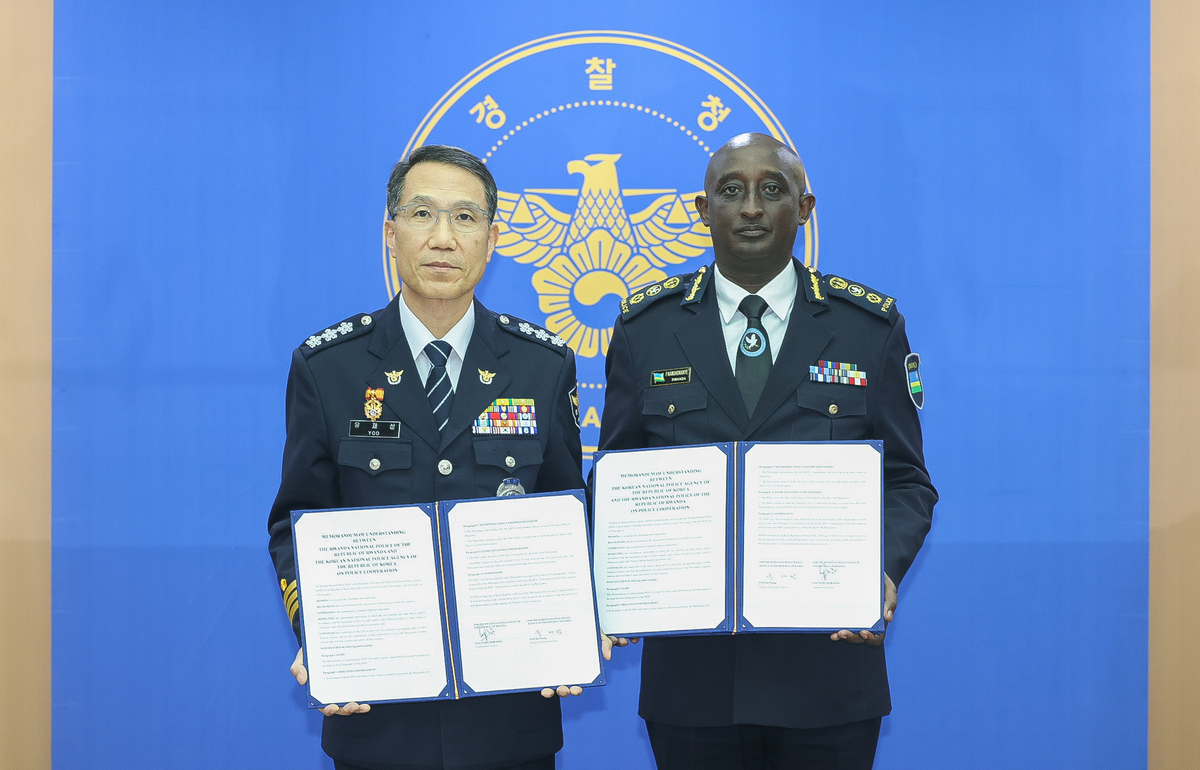
Rwanda and South Korea Sign Police Cooperation Agreement
Summary
- Rwanda and South Korea have signed a formal bilateral police cooperation agreement in Seoul to combat cross-border crime.
- The treaty establishes structured mechanisms for intelligence sharing and joint operational coordination between police forces.
- The agreement includes protective protocols for citizens residing or traveling in each nation's respective territory.
- Bilateral cooperation will also extend to United Nations policing frameworks and international peacekeeping operations.
- Legal counsel and compliance officers should anticipate enhanced mutual legal assistance and increased scrutiny over cross-border transactions.
Scope of the Bilateral Security Accord
A central component of the arrangement is the creation of a robust Rwanda National Police intelligence sharing treaty framework.
In a significant step toward bolstering intercontinental law enforcement ties, official representatives from Rwanda and South Korea have formally established a comprehensive Rwanda South Korea police cooperation agreement during high-level meetings in Seoul. The newly concluded pact establishes a structured framework designed to elevate bilateral policing coordination and foster direct operational ties between the two countries' law enforcement leadership.
Under the terms of the newly formalized framework, law enforcement agencies from Kigali and Seoul will engage in direct operational alignment aimed at curbing illicit activities that transcend international jurisdictions. The South Korea Rwanda law enforcement bilateral signals a growing commitment by both countries to modernize their security strategies through coordinated international partnerships and sustained law enforcement diplomacy.
Intelligence Exchange and Transnational Enforcement
A central component of the arrangement is the creation of a robust Rwanda National Police intelligence sharing treaty framework. This mechanism facilitates the reciprocal exchange of critical law enforcement data, enabling authorities in both Kigali and Seoul to identify, track, and disrupt sophisticated criminal networks operating across East Africa and East Asia.
The alliance specifically targets transnational crime cooperation Rwanda South Korea, focusing heavily on combatting organized criminal enterprises, financial fraud, human trafficking, and cyber-enabled offenses that cross international borders. By integrating their analytical capabilities, communication channels, and operational resources, both police forces aim to close jurisdictional loopholes that international offenders frequently exploit to evade detection.
Expatriate Protection and Peacekeeping Synergies
Beyond immediate investigative channels, the Rwanda South Korea cross-border crime pact addresses broader diplomatic and security concerns, including enhanced protective measures for citizens residing or traveling within each other's territories. As economic, diplomatic, and cultural ties expand between South Korea and Rwanda, both governments have prioritized establishing reliable police communication protocols to safeguard expatriate communities, foreign workers, and visiting nationals.
Furthermore, the partnership extends into multilateral arenas, incorporating collaborative frameworks related to United Nations policing initiatives and global peace operations. Both nations maintain active roles in international peacekeeping efforts, and this bilateral agreement provides a vital foundation for sharing standard operating procedures, joint training modules, and tactical expertise in support of UN missions worldwide.
Legal Practice and Corporate Compliance Realities
From a procedural and legal standpoint, criminal defense and extradition counsel should monitor for enhanced mutual legal assistance and streamlined evidence-sharing mechanisms between Rwandan and South Korean law enforcement. The formalization of these policing conduits is expected to expedite international evidence requests, rogatory letters, witness testimony gathering, and extradition proceedings for individuals facing criminal charges in either country.
At the same time, corporate compliance officers managing cross-border commercial links between East Africa and East Asia should prepare for heightened scrutiny regarding cross-border financial crime and Interpol notices. As regulatory oversight intensifies under this joint enforcement regime, organizations conducting business across both regions must ensure their anti-money laundering controls and internal reporting channels are sufficiently robust to withstand multi-jurisdictional inquiries.
Practical Implications
Criminal defense and extradition counsel should monitor for enhanced mutual legal assistance and streamlined evidence-sharing mechanisms between Rwandan and South Korean law enforcement. Compliance officers managing cross-border commercial links between East Africa and East Asia should prepare for heightened scrutiny regarding cross-border financial crime and Interpol notices.
Source
Source: Original reporting via KT Press
How does this affect you?
Get an AI analysis of this article grounded in your jurisdictions, practice areas, and any policy documents you've uploaded to Wansom.
Wansom is AI and can make mistakes.