
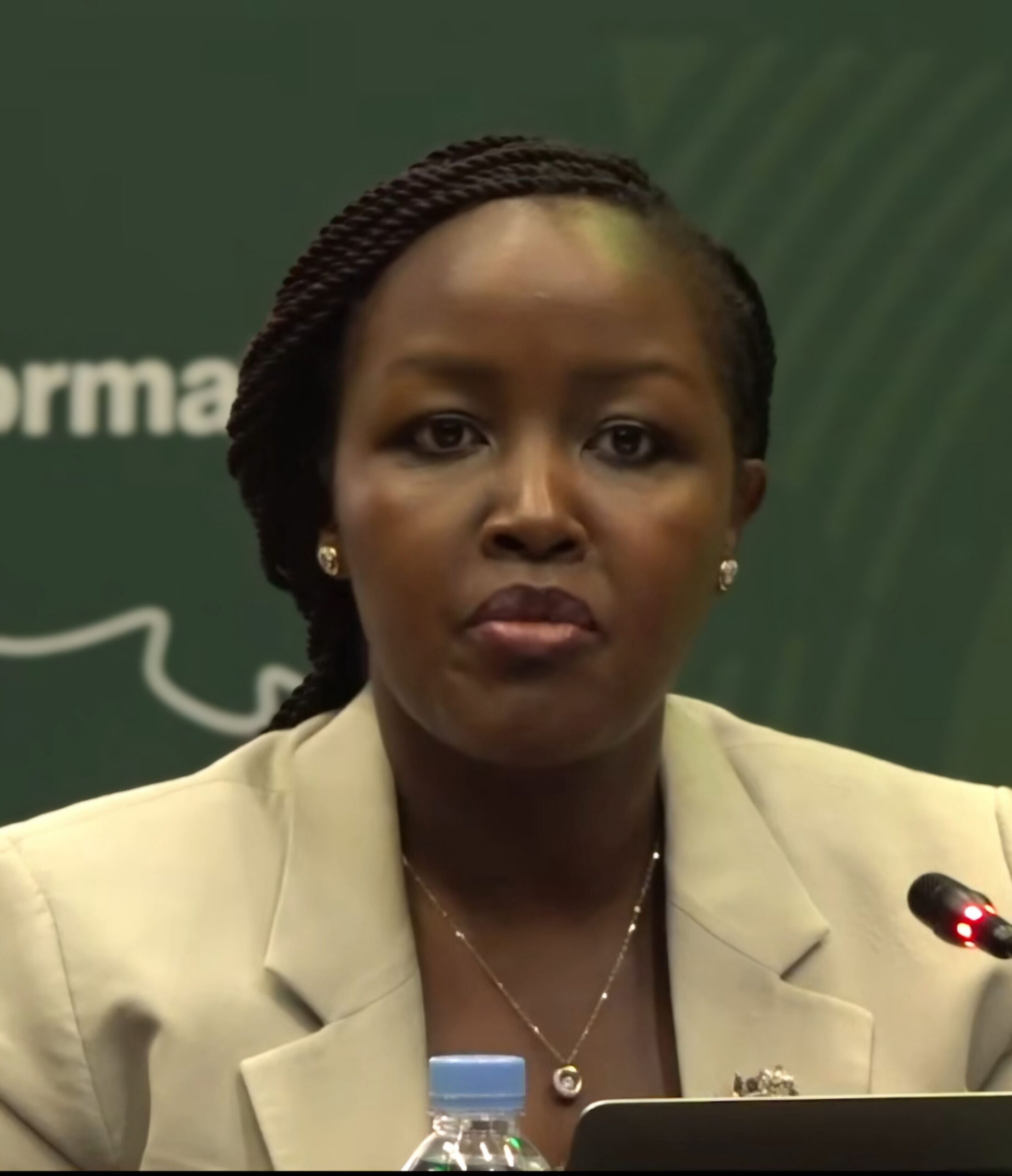
Rwanda's ICT Minister Details AI Plan for 2.5 Million Farmers
This is an intervention statement by Rwanda’s ICT and Innovation Minister Paula Ingabire at the Africa Food Systems Forum in Kigali, August 31 September 4, 2026. She was speaking during a high-level roundtable side event September 1, 2026. Read below: A few sectors illustrate both the promise and the urgency of how we can use AI, and I believe agriculture is clearly an example that shows the promise of AI applications, but also the urgency to leverage AI as we go forward. Let me start with a few statistics. When you look at employment across Sub-Saharan Africa, nearly half of the employment we have across the region is in agriculture. And yet millions of farmers continue to make some of the most consequential economic decisions of their lives — what they plant, when they plant, how much fertilizer to apply, whether a crop is diseased, when to harvest and where to sell — with too little information, or often receiving information a little too late in the process. For me, that statement of the problem is where I see the real opportunity of what AI can do for agriculture. It is not about replacing a farmer. It is not about replacing agronomists. It is really about putting better intelligence in the hands of both farmers and agronomists. Imagine, for a second, if a farmer could have access to an agronomist at any time — whether it is an agronomist, a weather expert or even a financial expert when they need funding. Imagine if those experts were available whenever the farmer needed them, in a language that they understand. How much potential and transformation would that provide to the farmer ecosystem, not just in Rwanda but across Africa? In many parts of Africa, we are starting to see what the future could look like. Just next door in Kenya, we have seen what PlantVillage Nuru does, where a farmer can use a smartphone to take a picture of a cassava leaf and identify whether the cassava plant has been affected by a particular disease. CGIAR research found that the technology could diagnose cassava disease symptoms more accurately than farmers and agricultural extension agents. Imagine what that means if we are able to scale such technology in places where there is not enough reach from agricultural extension workers across the farming ecosystem. That example from Kenya shows the potential of AI to address the shortage of agricultural expertise while complementing what is already there. In Zambia, they are tackling a different problem, where many smallholder farmers cannot access credit because they do not have a credit history. What Apollo is doing is combining different kinds of data, from remote sensing and satellite imagery to machine-learning models. That information is then used to connect farmers to inputs, financing and the advice they need. That really shows the potential of technology, and what AI can do in addressing financial exclusion for our farmers. There are many examples that we could talk about. In many ways, they could sound like separate innovations because they are happening in different countries across Africa — from crop diagnosis to credit scoring, weather prediction, agricultural extension and market intelligence. But in reality, they are not separate. Together, they point towards a fundamentally different agricultural system in which every farmer can make better decisions, every extension officer can reach more farmers than they would otherwise be able to, financial institutions can better understand agricultural risks, and markets can become more transparent. I know we have so many partners here, and I will be quoting some of the work many of you have been doing. The World Bank has specifically identified around 60 potential AI applications across agri-food systems , covering areas including climate research, climate-resilient seed research, pest detection, precision agriculture, logistics and price forecasting, among others. So our challenge today at this round table is not to demonstrate how AI can be
How does this affect you?
Get an AI analysis of this article grounded in your jurisdictions, practice areas, and any policy documents you've uploaded to Wansom.
Finish Reading the Full Story and the Expert Analysis.
Wansom is AI and can make mistakes.