
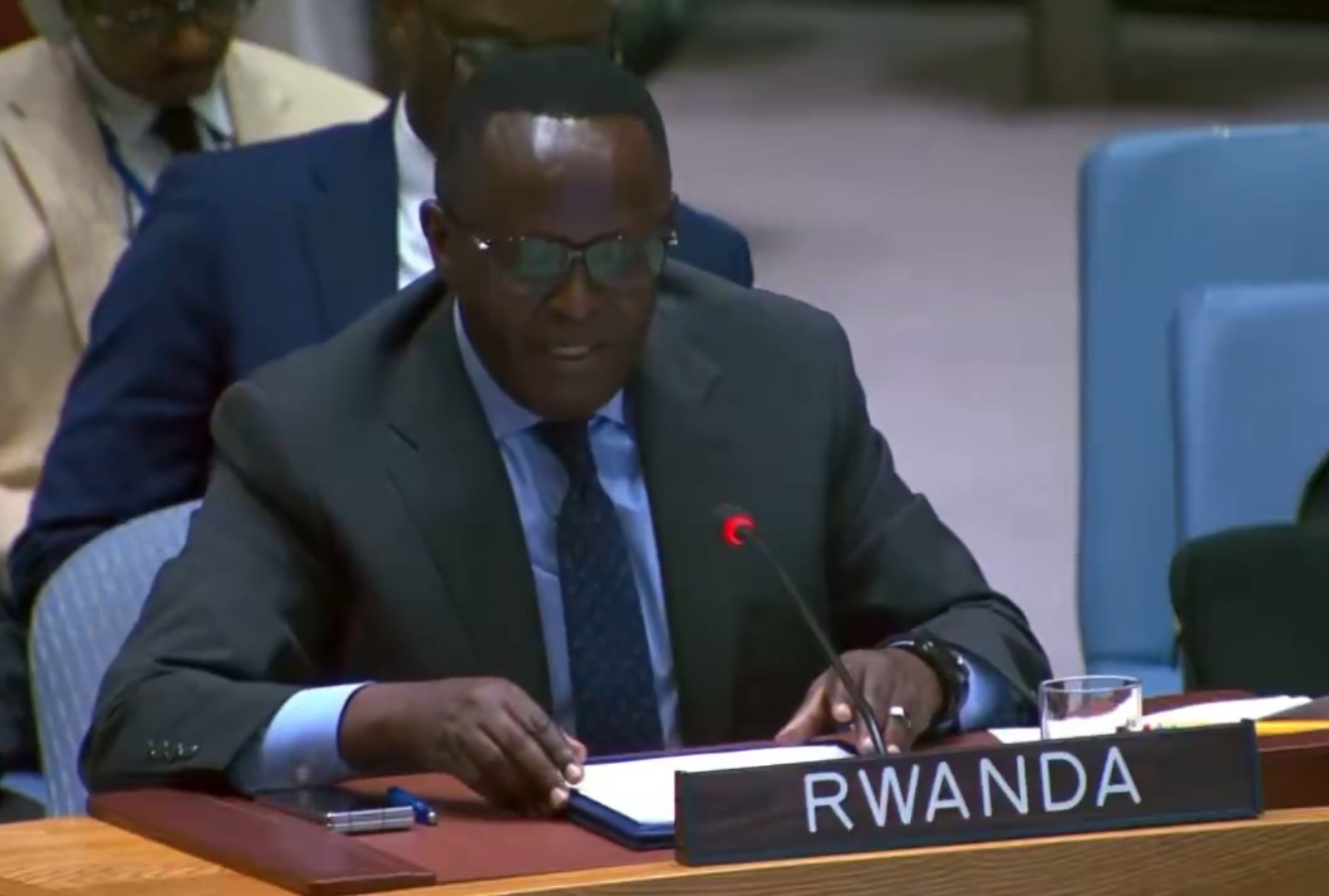
Rwanda: Proposes Tripartite Verification for DR Congo FDLR
Summary
- Rwanda accused the Democratic Republic of Congo of delaying the neutralization of the FDLR armed group, despite jointly mapping its locations.
- Rwanda alleged consistent operational cooperation between the Congolese army (FARDC) and the FDLR throughout 2026, citing multiple incidents of logistical support.
- Ambassador Martin Ngoga stated that existing verification mechanisms under the Washington Peace Agreement are clear and cannot be unilaterally altered or substituted.
- The UN Secretary-General's report confirms the FDLR remains operational in several eastern Congo regions, including Rutshuru and Masisi.
- Rwanda considers the FDLR's continued presence an existential security threat, citing its genocidal ideology and alleged support from the Congolese government.
Rwanda's Urgent Appeal to the UN Security Council
Rwanda views the persistent presence of the FDLR as a direct and existential security threat, exacerbated by what it describes as support from the Congolese government and the group's genocidal ideology.
Rwanda recently brought its concerns regarding the Democratic Republic of Congo's alleged inaction against the FDLR armed group before the United Nations Security Council. During a briefing on the UN stabilization mission in the Democratic Republic of Congo (MONUSCO), Rwanda's Permanent Representative to the UN, Martin Ngoga, asserted that both nations had successfully identified and mapped the locations of the FDLR, including its political and military command structures. This mapping effort, he noted, was conducted through the Joint Security Coordination Mechanism, a body established under the Washington peace process.
Ambassador Ngoga conveyed Kigali's accusation that Kinshasa has been delaying necessary actions to neutralize the designated armed group. He emphasized that the continued presence of the FDLR in eastern Congo, despite known locations and established agreements, cannot be attributed to a lack of information regarding its operations. The briefing, which also featured remarks from Special Representative James Swan, head of MONUSCO, served as a platform for Rwanda to highlight what it perceives as a critical security lapse.
Allegations of Cooperation and Non-Compliance
Rwanda presented detailed allegations of ongoing operational cooperation between the Congolese army (FARDC) and the FDLR, alongside Wazalendo militias and other allied forces, throughout 2026. According to information available to Rwanda, this collaboration included significant logistical support. Specific incidents cited by Ambassador Ngoga included a FARDC helicopter and military trucks transporting 13 tons of small-calibre ammunition to Pinga and Kibua on February 10 and 11, 2026, with six tons subsequently distributed to FDLR and other armed group commanders.
Further claims detailed a FARDC helicopter transporting 12 tons of ammunition and food rations to Ntoto on March 8, 2026, which were then shared among FARDC, FDLR, PARECO, and APCLS elements. On March 31, 2026, FARDC helicopters allegedly delivered 693 rifles, six tons of ammunition, and cash incentives directly to the FDLR and other armed groups. Rwanda also reported FARDC forces operating alongside CNRD/FLN, FDLR, and Wazalendo/Nyatura fighters in Walungu Territory on August 15, 2026, with similar activities continuing in April, June, and July of that year. This information, Ngoga stated, was shared in real-time through the Joint Oversight Committee and the Joint Security Coordination Mechanism, underscoring a consistent pattern of alleged cooperation from January to August 2026.
Legal Framework and Regional Security Implications
Ambassador Ngoga underscored that the Washington Peace Agreement, along with its agreed Concepts of Operations (CONOPS) and Operational Orders (OPORD), clearly outlines specific obligations, operational arrangements, sequencing, verification mechanisms, and implementation timelines for neutralizing the FDLR. He argued that these commitments cannot be unilaterally reinterpreted, subjected to new preconditions, or replaced by separate bilateral arrangements. The UN Secretary-General's report, he added, corroborates that the FDLR remains active in Rutshuru, Masisi, Nyiragongo, and Walikale.
Rwanda views the persistent presence of the FDLR as a direct and existential security threat, exacerbated by what it describes as support from the Congolese government and the group's genocidal ideology. Ngoga criticized what he termed an "arrangement" between the Congolese government and the FDLR, asserting that it does not constitute the neutralization agreed upon under the Washington process and was not part of the original accords. He characterized this as an attempt to substitute a separate arrangement for an existing clear commitment and a delaying tactic, noting that the Congolese government has concluded protocols with FDLR leaders and affiliated groups on multiple occasions, most recently on August 29, 2026. The obligation, he stressed, is for the FDLR to be neutralized effectively, completely, and verifiably.
Ngoga also highlighted the geographical proximity of eastern Congo to Rwanda, noting that key cities like Goma and Bukavu are only three to five hours by road from Kigali, yet approximately 1,500 kilometers from Kinshasa. He drew a comparison between Rwanda's size, akin to Maryland in the United States, and the Democratic Republic of Congo, which is roughly the size of Western Europe, to illustrate the immediate and disproportionate impact of instability in the eastern region on Rwanda's security.
Practical Implications
Compliance officers and legal counsel for entities operating in the Great Lakes region should assess potential geopolitical risks and implications for international humanitarian law due diligence, given Rwanda's allegations of DR Congo's non-compliance with peace agreements and FARDC cooperation with the FDLR, a designated armed group.
Source
How does this affect you?
Get an AI analysis of this article grounded in your jurisdictions, practice areas, and any policy documents you've uploaded to Wansom.
Finish Reading the Full Story and the Expert Analysis.
Get the latest legal & regulatory intelligence in Rwanda
Wansom is AI and can make mistakes.