
Ruto: KSh6.5 Billion Rironi-Mau Summit Road Payout Ends Deal
Summary
- President Ruto announced a KSh6.5 billion payout to terminate the Rironi-Mau Summit road concession.
- This payment was made to exit a previous contract and avoid ongoing litigation.
- Ruto stated that continuing the lawsuit could have cost between KSh25.8 billion and KSh38.7 billion.
- The President emphasized that a prolonged court battle would have also prevented the road's construction.
- The KSh6.5 billion road contract termination was deemed a more cost-effective and project-oriented solution.
What Happened
This development illustrates the Kenyan government's pragmatic approach to resolving complex public infrastructure contract disputes, prioritizing settlement to avoid protracted and potentially more costly litigation.
President William Ruto recently disclosed the Kenyan government's decision to disburse KSh6.5 billion as an exit payment for a previously negotiated Rironi-Mau Summit road concession. This substantial sum was paid to terminate an existing contract related to the critical infrastructure project. The move signals a definitive conclusion to a contentious agreement that had stalled progress on the vital road network.
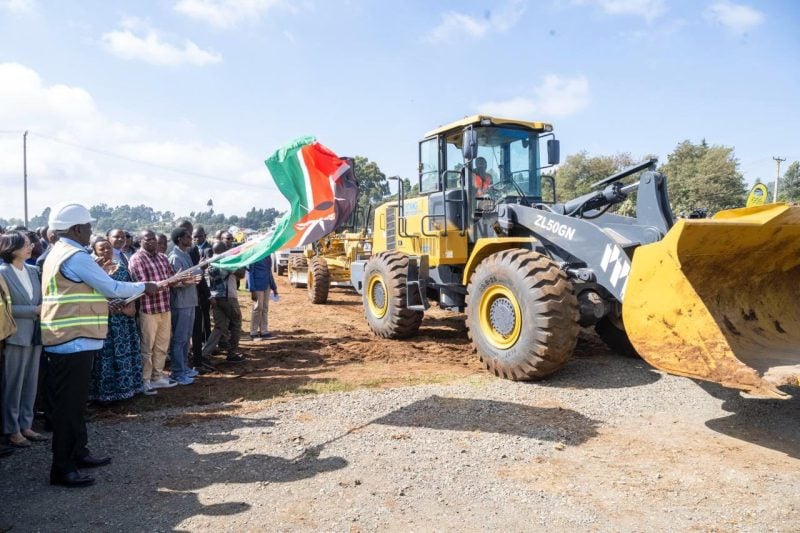
The Rironi-Mau Summit road deal, a significant public-private partnership, had faced considerable challenges, leading to a legal dispute. The government's payment of $50 million, equivalent to KSh6.5 billion, was a strategic maneuver to extricate itself from the contractual obligations and associated legal entanglements. This action cleared the path for a new approach to the road's development; construction on the project began in November 2025 and is now 40% complete, aiming to accelerate its completion.
The President's Rationale
President Ruto articulated that the decision to authorize the KSh6.5 billion payout was a calculated move to mitigate greater financial exposure and ensure the eventual construction of the road. He emphasized that continuing with the existing court case, initiated by the French contractor, would have incurred significantly higher costs for the Kenyan taxpayer. The President projected that protracted litigation could have resulted in expenses ranging from $200 million (KSh25.8 billion) to $300 million (KSh38.7 billion).
Crucially, President Ruto highlighted that pursuing the lawsuit to its conclusion would not only have been far more expensive but would also have guaranteed that the Rironi-Mau Summit road would never be built. This pragmatic assessment underscored a preference for a definitive, albeit costly, settlement over an uncertain and potentially ruinous legal battle. The KSh6.5 billion road contract termination was thus framed as a financially prudent and project-oriented resolution.
Strategic Infrastructure Management
This development illustrates the Kenyan government's pragmatic approach to resolving complex public infrastructure contract disputes, prioritizing settlement to avoid protracted and potentially more costly litigation. The decision to pay KSh6.5 billion to exit the Rironi-Mau Summit road concession reflects a strategic shift towards efficient project delivery and fiscal responsibility in large-scale public works. It sets a precedent for how the administration intends to manage future challenges in its ambitious infrastructure agenda, emphasizing practical solutions over prolonged legal battles.
Lawyers advising on large-scale public-private partnerships or government contracts in Kenya should consider this precedent when assessing dispute resolution strategies and negotiating exit clauses, particularly regarding the cost-benefit analysis of litigation versus out-of-court settlements. The government's willingness to absorb a substantial payout to prevent an even larger financial drain and ensure project viability offers valuable insight into its operational philosophy for major infrastructure undertakings. This approach aims to prevent projects from being indefinitely stalled by legal wrangling, ensuring that essential infrastructure eventually serves its intended purpose for the public, thereby minimizing the overall Ruto infrastructure project cost in the long run.
Practical Implications
This development illustrates the Kenyan government's pragmatic approach to resolving complex public infrastructure contract disputes, prioritizing settlement to avoid protracted and potentially more costly litigation. Lawyers advising on large-scale public-private partnerships or government contracts in Kenya should consider this precedent when assessing dispute resolution strategies and negotiating exit clauses, particularly regarding the cost-benefit analysis of litigation versus out-of-court settlements.
Source
How does this affect you?
Get an AI analysis of this article grounded in your jurisdictions, practice areas, and any policy documents you've uploaded to Wansom.
Finish Reading the Full Story and the Expert Analysis.
Get the latest legal & regulatory intelligence in Kenya
Wansom is AI and can make mistakes.