
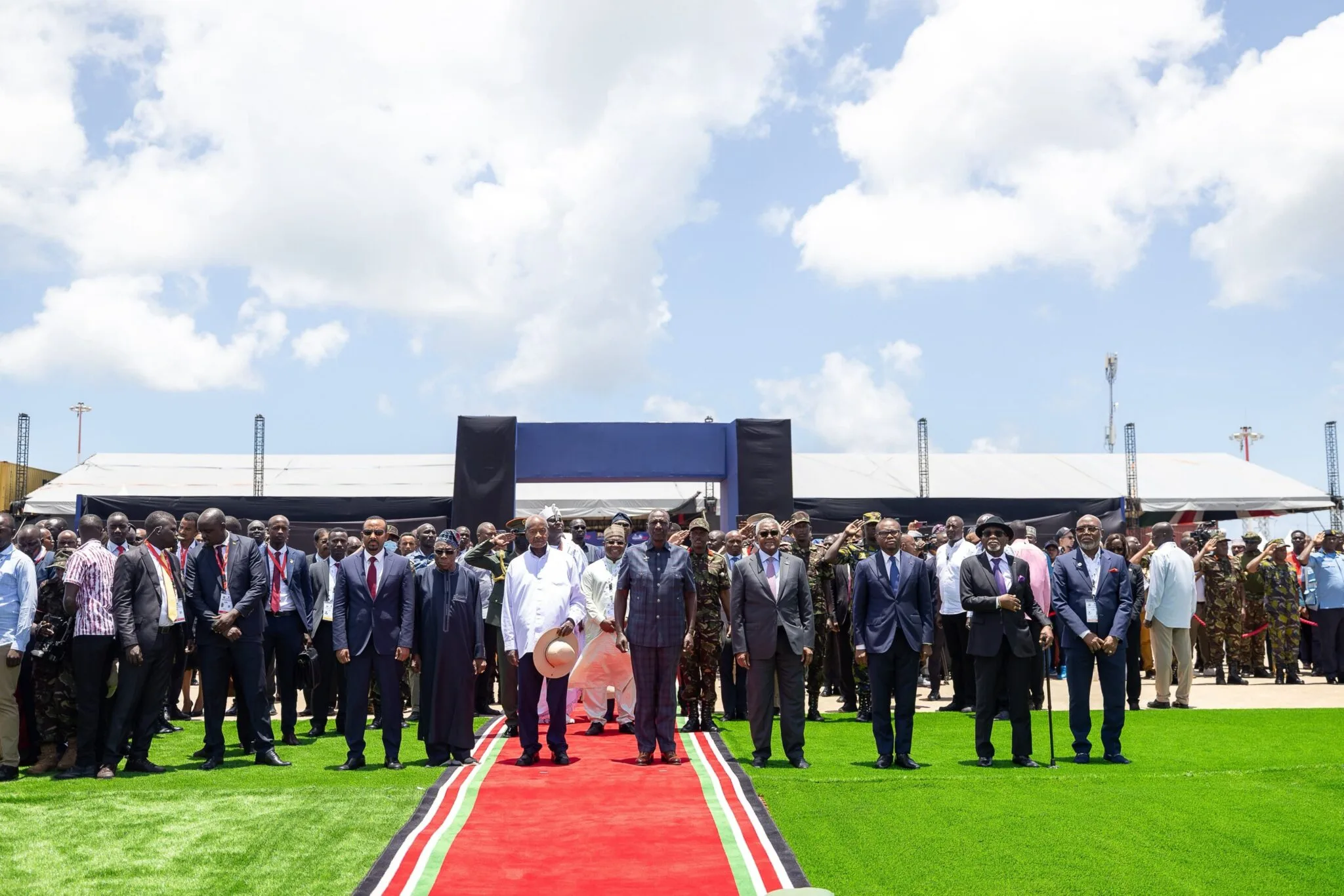
Ruto Government: Acquires Direct Stake In Lamu Oil Refinery Project
Summary
- The Kenyan government will acquire a direct stake in the Sh2.2 trillion Lamu oil refinery project.
- President William Ruto announced the use of public assets and the National Infrastructure Fund to finance this investment.
- The refinery, developed by Aliko Dangote, is projected to process up to 700,000 barrels of crude oil daily and create 60,000 jobs.
- The project faces existing legal and community challenges related to land ownership, compensation, and public participation.
- The government is also encouraging private Kenyan and institutional investors to participate through the Nairobi Securities Exchange.
Government Takes Direct Stake in Lamu Refinery
This direct state financial interest marks a significant shift from merely providing regulatory and policy support, signaling a deeper commitment to the project's success.
President William Ruto has announced that the Kenyan government will acquire a direct ownership stake in the ambitious Sh2.2 trillion Lamu oil refinery project. This significant move positions the state as a key investor in the facility, which is being developed by Nigerian billionaire Aliko Dangote. The government plans to contribute to this massive undertaking by deploying existing public assets and leveraging resources from the National Infrastructure Fund.
President Ruto emphasized that this participation signifies the government's intention for direct involvement in the refinery's ownership. While the specific value of the assets to be deployed and the exact size of the government's proposed stake were not immediately disclosed, the announcement underscores a strategic commitment to the project. This direct financial interest marks a significant shift from merely providing regulatory and policy support, signaling a deeper commitment to the project's success.
Funding and Public Participation Strategy
Beyond utilizing public assets, the National Infrastructure Fund is earmarked to mobilize additional resources for the refinery investment. This approach aligns with the government's broader strategy to encourage widespread participation in the project. President Ruto has actively called upon both individual Kenyans and institutional investors to engage with the refinery through opportunities presented on the Nairobi Securities Exchange (NSE).
Framing investors as integral partners in Kenya's development, the President has urged citizens to seize this investment opportunity. This dual strategy of direct state investment alongside public and institutional participation aims to broaden the project's financial base and ensure a wider distribution of potential benefits across the Kenyan economy.
Project Scope and Economic Vision
The Lamu refinery, for which groundbreaking is scheduled for September 30, 2026, is designed to be a substantial industrial hub, boasting a processing capacity of up to 700,000 barrels of crude oil per day upon completion. It is envisioned as a cornerstone of Kenya's petroleum and industrial development strategy, targeting not only the domestic market but also the broader East African region's energy demands.
The project is anticipated to generate significant economic activity, supporting numerous associated industries and creating extensive employment opportunities during both its construction and operational phases. Aliko Dangote has projected the creation of approximately 60,000 jobs. Furthermore, a dedicated training school is planned for Lamu, intended to equip local engineers with the specialized skills required for work at the refinery and in related operations, fostering local talent and expertise. The government's aim is to establish Lamu as a major energy and industrial center, attracting further investment from various stakeholders.
Navigating Legal and Community Challenges
The government's intensified commitment to the Lamu refinery project comes amidst ongoing legal and community concerns, particularly regarding the land designated for its development. Residents have voiced issues pertaining to land ownership, fair compensation, and adequate public participation in the project's planning and execution. These concerns have led to legal proceedings challenging various aspects of the initiative.
Despite these challenges, the government consistently maintains that the refinery represents a vital strategic investment for Kenya and continues to back its development. With construction officially commencing, marked by a groundbreaking ceremony on September 30, 2026, and the arrival of heavy equipment at Lamu Port, the government's proposed equity participation introduces a new dimension to the project, particularly as Kenya seeks to attract capital while simultaneously ensuring both the state and its citizens benefit from the refinery's operations. President Ruto has reiterated the government's unwavering support for the project and its encouragement for Kenyans to participate in its ownership.
Practical Implications
The Kenyan government's direct equity participation in the Lamu oil refinery, using public assets and the National Infrastructure Fund, introduces new dimensions to existing legal and community challenges. Lawyers advising on infrastructure projects or representing stakeholders in Lamu should assess how this direct state financial interest impacts regulatory oversight, land compensation disputes, and public participation requirements, potentially influencing the project's legal and operational risks.
Source
How does this affect you?
Get an AI analysis of this article grounded in your jurisdictions, practice areas, and any policy documents you've uploaded to Wansom.
Finish Reading the Full Story and the Expert Analysis.
Get the latest legal & regulatory intelligence in Kenya
Wansom is AI and can make mistakes.